
Last Updated on 21st June 2026 by admin
It’s easy to see why Paris tops almost everyone’s travel bucket list. Between the cobblestone side streets, the smell of fresh espresso from sidewalk cafés, and a history that is baked into every stone wall, the city has a pull that is hard to ignore. But if you are planning a trip, looking at a map of the city can feel overwhelming. There are simply too many museums, monuments, and iconic views fighting for your attention.
To help you sort through the noise, this guide cuts straight to the 16 absolute best sights in Paris. Whether you want to stare at legendary masterpieces, stand where historic revolutions went down, or just find the prettiest spots to relax, these are the essential landmarks that make the city what it is.
1. Eiffel Tower
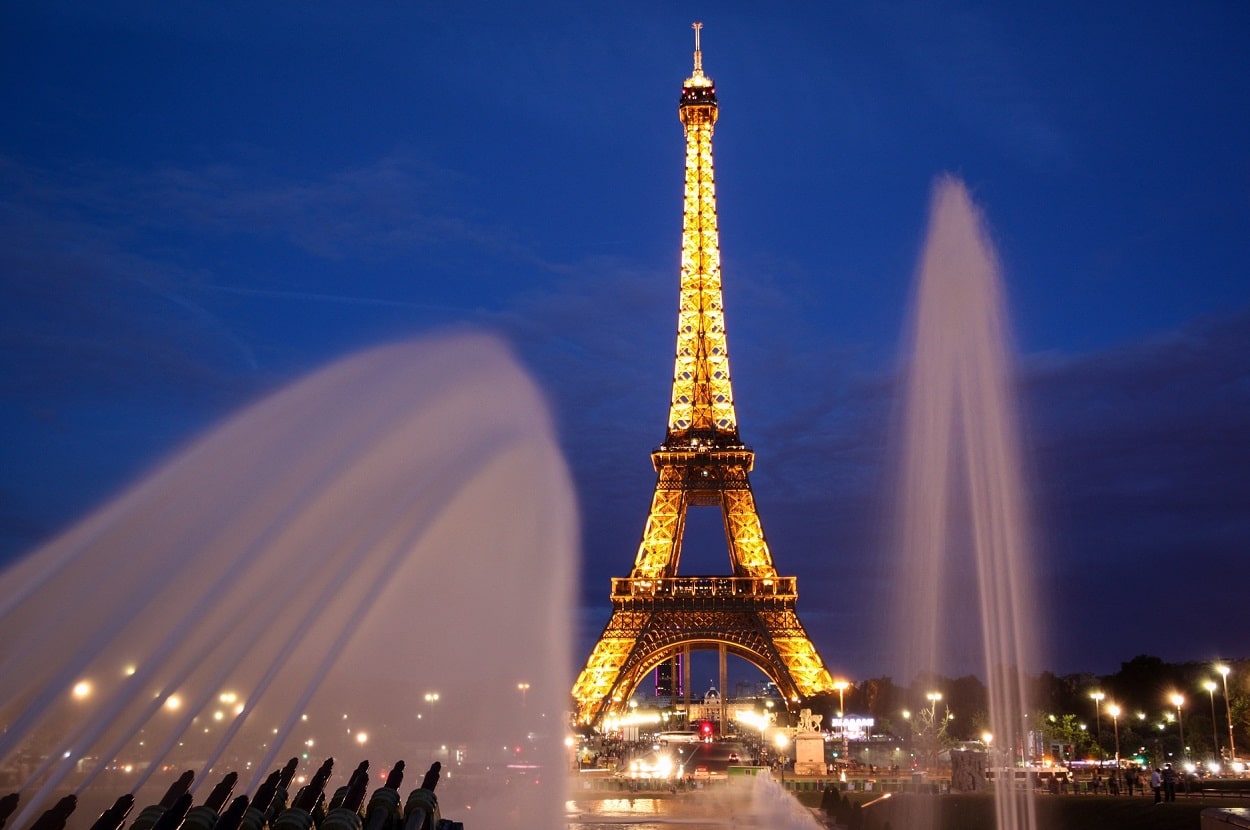
The Eiffel Tower is undoubtedly one of the most recognized structures in the world, and one of the most iconic tourist attractions of France. Rising 330 meters over the Paris skyline, the Eiffel Tower is a massive iron lattice structure designed by Gustave Eiffel for the 1889 World’s Fair. Local artists originally hated it and called it a giant eyesore, but today it is the ultimate symbol of France.
It still works as a major broadcast tower for radio and TV. The tower is one of the most famous towers in the world and has three levels you can visit. You can take the 704 stairs or ride the elevators to the first and second floors, which have glass floors, history displays, and expensive restaurants.
The top summit sits at 276 meters. You have to take a separate glass elevator to get up there, where you can see Eiffel’s private historic office with old wax models inside. At night, 20,000 golden lights flash for five minutes every hour on the hour. It looks amazing and makes for a perfect travel photo.
2. Louvre Museum

The Louvre Museum is one of the top tourist attractions of Paris. As one of the largest museums in the world, the Louvre is a massive treasure trove housed inside a former royal palace. It features an overwhelming collection of over 38,000 artworks and ancient artifacts that span from prehistoric times right up to the 19th century.
The sheer size of the place is wild. Once you walk through the famous glass pyramid, it is easy to get lost among the endless galleries and exhibits. Most visitors head straight for Leonardo da Vinci’s famous painting, the Mona Lisa, but the museum contains thousands of other artworks and historical treasures that are just as impressive.
Some of the Louvre’s most famous treasures include the Venus de Milo, the Winged Victory of Samothrace, and a huge collection of paintings, sculptures, royal furniture, and decorative arts. Whether you are interested in ancient history, Renaissance masterpieces, or French royal collections, there is enough here to keep you exploring for hours.
3. Notre-Dame Cathedral

Located right in the center of Paris on a small island called Île de la Cité, Notre-Dame is a massive Catholic cathedral and one of the oldest churches around. Construction started way back in 1163 and took almost 200 years to finish, making it one of the oldest churches in the world.
It is super famous for inspiring Victor Hugo’s classic book, The Hunchback of Notre-Dame, and it’s the exact spot where Napoleon Bonaparte crowned himself Emperor in 1804. Notre-Dame Cathedral is most famous for its stunning Gothic architecture, which is considered one of the finest examples of French Gothic architecture in the world. Outside, you can’t miss the two giant twin towers that climb 69 meters high, or the creepy stone gargoyles hanging off the edges.
Inside, the space is huge, featuring a giant pipe organ from the 1700s and incredible, colorful stained-glass windows. Its coolest features are definitely the three massive rose windows, which are round and measure a whopping 30 feet across.
4. Arc de Triomphe

Sitting right in the middle of a massive, crazy traffic circle called Place Charles de Gaulle, the Arc de Triomphe is a huge monument dedicated to France’s military history. Napoleon Bonaparte ordered it to be built in 1806 to celebrate his big battlefield victories, though it wasn’t actually finished until 1836. The monument is one of the most famous tourist attractions in Paris and attracts millions of visitors each year from around the world.
The arch stands 50 meters high and is covered in detailed sculptures showing intense battle scenes. The monument is a major spot for national pride. Right underneath the arch’s vault lies the Tomb of the Unknown Soldier, which has an eternal flame that gets rekindled every single evening to honor the soldiers who died in World War I.
It’s also the main focal point for the big Bastille Day military parade every July 14th. If you don’t mind climbing 284 steps to the top, the viewing deck gives you an awesome, straight-line view right down the famous Champs-Élysées avenue and the rest of the city.
5. Sainte-Chapelle

Tucked away on the Île de la Cité, Sainte-Chapelle is a beautiful 13th-century Gothic chapel that looks like a massive jewelry box from the inside. King Louis IX built it back in the mid-1200s for a very specific reason: he needed a secure, grand place to store his prized collection of Christian relics, including what he believed to be Christ’s Crown of Thorns.
The building is split into two levels. The lower chapel was meant for the palace servants, but the real showstopper is the upper chapel, which was reserved strictly for the king and his close circle. Even today, people come here mainly to see the incredible stained-glass windows that cover almost every wall of the upper chapel.
Today, because the room has such incredible acoustics, it’s a super popular spot to buy tickets for evening classical music concerts. What makes it world-famous is its stained glass. It holds 15 huge vertical windows from the 1200s that cover almost the entire room, showing over 1,100 colorful biblical scenes that look incredible when the sun shines through.
6. Avenue des Champs-Élysées

Stretching for about 1.2 miles from Place de la Concorde to the Arc de Triomphe, the Avenue des Champs-Élysées is easily one of the most famous streets in the world. Flanked by beautiful 19th-century buildings and rows of trees, this grand boulevard has been the site of major moments in French history, from military parades to massive victory celebrations.
Today, the avenue is split into two distinct vibes. The lower section near Place de la Concorde is lined with green spaces and cultural hubs like the Grand Palais. The upper section is packed with luxury stores, famous cafés, theaters, and some of the busiest shopping spots in Paris. You’ll find flagship stores from brands like Louis Vuitton and Chanel, along with historic cafés and entertainment venues.
There are also several museums and landmarks nearby in Avenue des Champs-Élysées, including the Grand Palais and the Petit Palais, which offer a glimpse into Paris’s rich cultural history. It is also the famous final sprint line for the Tour de France cycling race every summer, making it a must-stroll spot for anyone visiting the city.
7. Musée d’Orsay (Orsay Museum)

If you want to see incredible art but find the Louvre too massive and overwhelming, the Musée d’Orsay (Orsay Museum) is the perfect spot. It is a one of the famous museums located on the left bank of the Seine River in Paris. The building itself is awesome, it used to be a grand Beaux-Arts railway station built for the 1900 World’s Fair. You can still see the huge, beautiful station clocks inside, which make for amazing photos.
The museum bridges the gap between old-school history and modern art, housing the biggest collection of Impressionist and Post-Impressionist masterpieces in the world. It’s the place to go if you want to see famous paintings by legends like Vincent van Gogh, Claude Monet, Renoir, and Edgar Degas.
Because it’s set up along the old train tracks under a giant barrel-vaulted glass roof, the lighting is fantastic and it’s much easier to navigate than a typical museum maze. Visitors to the Musée d’Orsay can marvel at its stunning architecture while exploring its extensive collection of art and sculpture.
8. Montmartre

If you want a break from the classic city grid, head up north to Montmartre. It is a is a beautiful and historic hill neighborhood located in the 18th arrondissement of north Paris. It’s a historic neighborhood sitting on a huge hill, it completely feels like an old French village dropped right into the city. Back in the day, legendary artists like Picasso and Van Gogh lived and worked here because the rent was cheap and the vibe was totally bohemian.
The main reason people climb the steep streets or take the funicular cable car is to see the Basilique du Sacré-Cœur. It’s a massive, bright white church sitting at the very top of the hill, and the steps out front give you one of the absolute best panoramic views of Paris without paying a dime.
Down the street, you’ll run into Place du Tertre, a lively square packed with local painters doing portraits for tourists. It’s also right near the Pigalle district, where you can snap a photo of the iconic red windmill outside the famous Moulin Rouge cabaret.
9. Seine River Cruise

If your feet are completely shot from walking all day, booking a Seine River cruise is the best lazy way to see the city. You just hop on one of the open-top boats, grab a seat, and let the city drift past you. Most of them have audio guides in a bunch of languages so you actually know what you’re looking at.
The whole selling point here is the view from the water. One of the main draws of a Seine River cruise is the opportunity to see Paris from the water. Since the river cuts right through the middle of Paris, you get an uninterrupted look at the Eiffel Tower, the Louvre, and Notre-Dame without dealing with traffic or crowds.
It’s also super popular to go right at sunset. Passing under Pont Neuf, the oldest stone bridge in the city – while all the monuments start to light up is a pretty incredible experience, whether you’re traveling solo or on a romantic trip.
10. Palace of Versailles

The Palace of Versailles is a stunning architectural masterpiece located about 19 kilometers southwest of Paris in Versailles. You’ll have to take a 40-minute train ride out of the city center to get here, but Versailles is totally worth the trip. It started out as just a modest hunting lodge in the 1600s, but King Louis XIV turned it into a massive, gold-covered palace to show off his absolute power.
The main thing everyone crowds into is the Hall of Mirrors. It’s a giant, 73-meter-long gallery lined with hundreds of mirrors on one side and massive windows looking out at the gardens on the other. It’s pretty jaw-dropping, though it gets packed fast. The Palace of Versailles is a famous sightseeing place in Paris, and it attracts millions of visitors every year.
The palace is known for its incredible size, has a total of 2,300 rooms, including 1,000 rooms in the palace itself and the rest in various outbuildings and auxiliary structures. Don’t spend all your time inside, though. The backyard is a massive, 800-hectare landscape of manicured gardens, hidden mazes, and over 50 historic fountains. It is so big that you can actually rent golf carts or a rowboat to explore it all.
11. Centre Pompidou

You honestly can’t miss this building because it looks completely out of place in the middle of a historic neighborhood. The Centre Pompidou is a massive modern art museum designed inside-out. The architects basically decided to put all the building’s guts – like color-coded water pipes, electrical ducts, and giant elevators – on the outside of the structure so the inside would be wide open.
The museum named after French President Georges Pompidou, who commissioned the building in 1971, and was inaugurated on 31 January 1977 by President Valéry Giscard d’Estaing. Inside, it holds the largest collection of modern and contemporary art in Europe. If you like weird, abstract, or thought-provoking art, this is your spot.
You’ll find everything from classic paintings by Matisse and Picasso to bizarre modern installations that make you question what art even is. Even if you aren’t a massive art fan, it’s worth visiting just to ride the massive covered escalator climbing up the outside of the building. The view from the top floor is easily one of the best vantage points in Paris.
12. Luxembourg Gardens

If you need a break from the standard museum crowds and concrete, the Luxembourg Gardens are a fantastic green space right in the 6th arrondissement. Built back in 1612 for a queen who missed her home country, the park was eventually opened to the public after the French Revolution, and locals have been hanging out here ever since.
The park is huge, covering 23 hectares of lawns, neat hedges, and massive shady trees. You’ll see people reading on the iconic green metal chairs scattered everywhere, playing tennis, or just taking a midday nap. The center of the whole place is a large octagonal pond where kids have been renting and racing vintage wooden toy sailboats for generations.
Keep an eye out while you walk around – the grounds are dotted with over a hundred famous statues. You can find everything from statues of old French queens to a miniature bronze replica of the actual Statue of Liberty, the famous New York City landmark, hidden among the trees.
13. Place de la Concorde

Sitting right at the end of the Champs-Élysées, Place de la Concorde is the biggest public square in Paris. It has a pretty wild history. During the French Revolution, this exact spot was where they set up the infamous guillotine and executed King Louis XVI and Marie Antoinette.
Today, the vibe is completely different. Right in the middle of the square, you’ll see a massive, 3,000-year-old Egyptian obelisk covered in hieroglyphics. It was a gift from Egypt in the 19th century, and it’s actually the oldest monument in the entire city.
The square is also famous for its two massive fountains, especially the Fontaine des Mers. Visitors can stroll around the square, admire the landmarks, and take photos of the these impressive fountains. They are made of green and gold iron and feature detailed sculptures of sea creatures spraying water, making it a great spot to snap a few quick photos while exploring.
14. Palais Garnier

Palais Garnier, also known as the Opera Garnier, is a grand opera house located in the 9th arrondissement of Paris. It is one of the most famous and iconic landmarks of the city. If you want to see pure, over-the-top luxury, the Palais Garnier is a must-visit. It’s a massive, grand opera house designed by an architect named Charles Garnier in the late 1800s.
It took over 14 years to finish, and it actually served as the real-life inspiration for the famous story The Phantom of the Opera. The outside is beautiful, but the inside is where things get wild. The grand staircase is made entirely of white marble with heavy gold leaf accents, and it feels like stepping straight into a royal ballroom.
The absolute highlight is the massive auditorium ceiling. Back in 1964, the famous artist Marc Chagall painted a huge, colorful mural up there that shows scenes from legendary operas and ballets. Even if you don’t buy tickets for a live show, you can take a self-guided tour of the building during the day just to look at the architecture.
15. Pantheon

Located right in the middle of the lively Latin Quarter, the Pantheon is a massive, historic building that looks like it was taken straight out of ancient Rome. It was originally built in the late 1700s as a church, but after the French Revolution, the government turned it into a grand secular mausoleum to bury the country’s most famous citizens.
The building is an engineering marvel, especially its giant dome that you can see from all over the city. Inside, the main floor features Foucault’s Pendulum – a massive, heavy metal ball swinging from a long wire that literally proves the Earth is rotating. Its giant dome and grand neoclassical design make it one of the most recognizable buildings in the city.
But the real reason to visit is to head downstairs into the chilly, sprawling crypt. This is where France honors its absolute icons. You can walk right up to the tombs of legendary figures like Victor Hugo, Voltaire, Rousseau, and Marie Curie, making it an incredible stop for history buffs.
16. Musee Rodin

If you want a totally different museum experience, the Musée Rodin is an absolute gem. It’s dedicated entirely to the works of Auguste Rodin, the guy who basically invented modern sculpture. The museum houses an impressive collection of over 6,600 sculptures, around 8,000 old photographs and around 7,000 objets d’art relating to the life and works of Auguste Rodin.
The museum is situated in a beautiful garden, which is spread over three hectares and features some of Rodin’s most famous works and provides a peaceful environment. You’ll find his most famous masterpieces, like The Thinker and The Gates of Hell, sitting right out in the open among the trees and rose bushes. It feels way more like taking a relaxing stroll through a grand estate than standing in a stuffy art gallery.
Inside the mansion, you can check out his clay sketches, plaster casts, and even his personal art collection, which includes paintings by Van Gogh. It’s the perfect, quiet spot to wind down your Paris trip away from the massive crowds.
Paris is packed with bucket-list spots, but these 16 famous tourist attractions truly live up to the fame. Whether you’re staring up at the Eiffel Tower, exploring world-famous museums or relaxing in a historic garden, each place gives you a real taste of the city’s magic. Have an amazing trip!