
Last Updated on 30th May 2026 by admin
Are you fascinated with engineering marvels and great infrastructure works? Do you want to know more about the longest tunnels in the world, and how they have been made? Tunnels are one of the most popular and challenging technical projects humanity have tried to complete.
They allow us to connect two places that are divided by a mountain, a river or even a sea. Tunnels have long been a sign of human innovation and tenacity, from ancient Roman tunnels to modern-day technological and technical wonders.
The Longest Tunnel in the World
Various tunnels for transportation have held the title of longest tunnel in the world over the years. Currently, there are two tunnel transit modes: train and road.
The Gotthard Base Tunnel is the longest tunnel in the world, a railway tunnel that stretches for 57.1 kilometers (35.5 miles) through the Swiss Alps. The tunnel, which connects the Swiss towns of Erstfeld and Bodio, was inaugurated in 2016.
While the Lærdal Tunnel is the longest road tunnel in the world, located in western Norway, connecting the towns of Aurland and Lærdal. It consists of a two-lane tunnel that traverses the steep terrain covering a distance of 24.5 kilometres (15.2 miles).
In this article, we’ll be focusing on the longest tunnels in the world – the Gotthard Base Tunnel and the Lærdal Tunnel. We will take a look at the history of these tunnels, the struggle that engineers had to go through when constructing them, and their influence on transportation and commerce.
The Longest Rail Tunnel in the World: The Gotthard Base Tunnel
History and Design
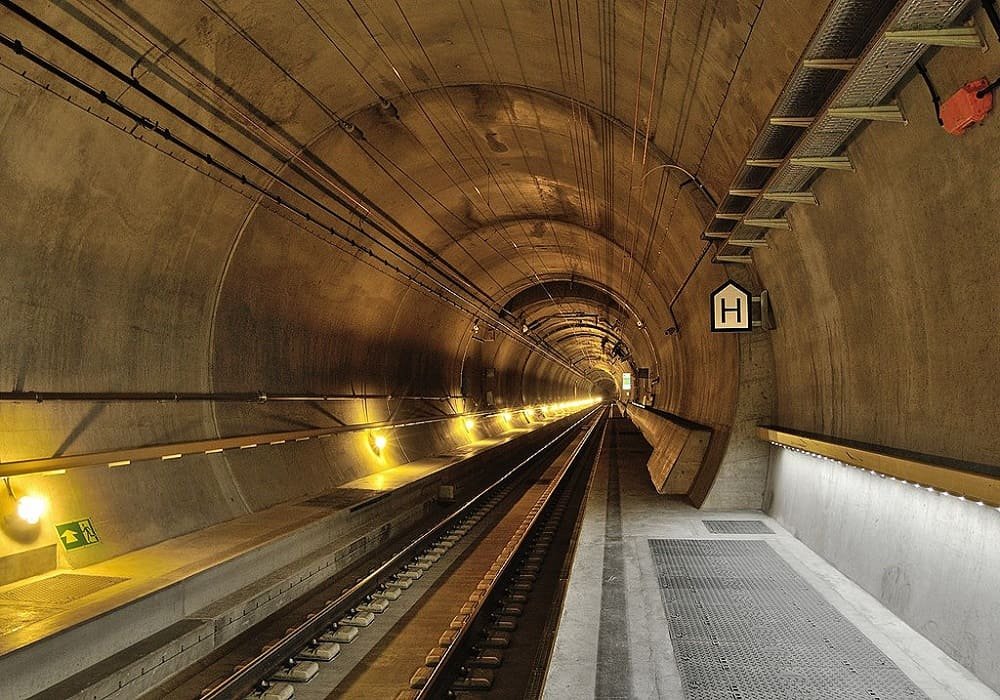
The Gotthard Base Tunnel in Switzerland is the longest rail tunnel in the World. It was completed in 2016 and links Erstfeld and Bodio. TIt was finished in 2016 connecting Erstfeld and Bodio. The tunnel was constructed to enable the trains to pass faster and in a more effective manner across the Alps so that the connections between North and South Europe would take less time. It was constructed in 17 years and it cost over 12 billion Swiss francs.
The purpose of the construction of the tunnel was to accommodate high-speed trains and to increase the capacity of the rail system. It consists of 2 single track tunnels (28.5 feet (8.7 m) in diameter) linked by cross passes every 820 feet (250 m). The maximum gradient of the tunnel is 2.6% compared to the previous Gotthard railway route, and therefore, the trains find it easy to ascend the steep terrain of the Alps.
Construction Challenges and Innovations
The Gotthard Base Tunnel is an outstanding technical effort that requires tunnelling through some of the most difficult Alps rocks. The tunnel passes through the Gotthard Mountain and includes cutting-edge security features such as a highly sophisticated ventilation system that provides fresh air circulation and eliminates harmful gas accumulation. The tunnel also has fire detection and suppression systems, as well as emergency response stations.
Significance and Impact
The Gotthard Base Tunnel is a great technical undertaking which involves tunnelling through some of the most challenging Alps rocks. The tunnel will help to connect more and faster, and there will be more trade and tourism between the two areas. It is also more environmentally friendly alternative to flying, which reduces the carbon emissions and air pollution.
The Longest Road Tunnel in the World: The Lærdal Tunnel
History and Design
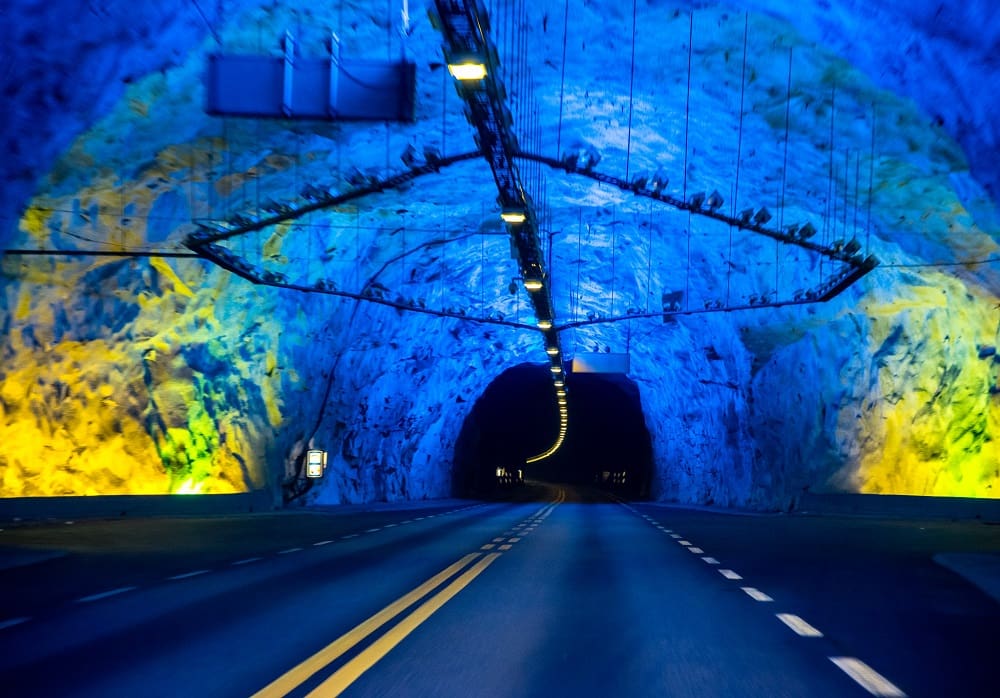
The Lærdal Tunnel (Lærdalstunnelen) in Norway is the longest road tunnel in the world. It opened in 2000, connecting the towns of Aurland and Lrdal. The tunnel was constructed to offer an effective and secure passage between the two regions owing to the mountain ranges. It was constructed in five years and cost approximately 1.1 billion Norwegian kroners.
The design of the Laerdal Tunnel is incredible, as the tunnel integrates several features that enhance the driving experience. The tunnel, including, has a ceiling that is light and can simulate sunshine, which assists in removing claustrophobia and fatigue. The tunnel is also equipped with air purifiers that get rid of the pollutants and regulate air temperature, which means that the driver is in a comfortable and healthy environment.
Construction Challenges and Innovations
Lærdal Tunnel (Lærdalstunnelen) is a spectacular engineering project and demands the excavation through some of the most challenging rocks in the world. The tunnel goes through a mountain range and contains a number of safety features to ensure the safety of the motorists.
At the regular intervals the tunnel is provided with fire extinguishers, cameras, and the emergency phones, the network of fire, smoke, and traffic movement detecting sensors. It also has a central control room which oversees the traffic and safety system 24 hours.
Significance and Impact
The positive thing about the Lærdal Tunnel is that it saves a lot of time that could be used on the road between the two regions that it links. There was no tunnel in place and therefore before the construction of the tunnel, vehicles were forced to either ride ferries or drive through a small and winding mountain road that was often blocked over the winter period. The tunnel has boosted both tourism and commerce in the area since travelling in it is quite quicker, safer and more enjoyable.
Comparing the Gotthard Base Tunnel and Lærdal Tunnel
The world’s longest road and rail tunnels have set new standards in tunnel construction and engineering. Both are famous tunnels in the world and also world’s top tourist attractions. Let’s compare the Lærdal Tunnel and the Gotthard Base Tunnel.
Length and Dimensions
The longest rail tunnel in the world is the Gotthard Base tunnel, which is a 35.5 miles (57.1 kilometres) long tunnel. The Gotthard Base Tunnel is also the deepest tunnel in the world and reaching a maximum depth of 1.4 miles (2.3 kilometres) below the surface.
In comparison, the Laerdal Tunnel is the world’s longest road tunnel, measuring 15.23 miles (24.51 km). Despite their length discrepancies, the two tunnels are superb technical constructions that have been of great advantage to the traffic in their areas of operation.
Purpose and Use
The Gotthard Base tunnel was created to enhance the effectiveness of the passage between northern and southern Europe. The tunnel links Erstfeld to the north end with Bodio on the south end and this has made it possible to travel between Switzerland and Italy by train in a less time and more often.
The Laerdal tunnel on the other hand was built to enhance safety and efficiency of the traffic along the popular E16 route in Norway. The tunnel does not go through a dangerous mountain path and has considerably reduced the number of hours that were spent crossing between Bergen and Oslo.
Technology and Sustainability
The Gotthard Base Tunnel as well as the Laerdal Tunnel is advanced in technologies and design concepts which are ecologically friendly. The ventilation system of the Gotthard Base Tunnel is a pioneer and it provides the travellers with clean air and consumes less energy.
Besides, the tunnel has regenerative braking that converts the kinetic energy of reducing trains into electricity. The Lærdal tunnel also features the same kind of ventilation system and saves on energy consumption through the use of LED lights and reflective surfaces.
Future of Tunnels: Trends and Innovations
Tunnel constructing is evolving as technology progresses and the world’s transportation demands change. The development of “smart tunnels” that can monitor and respond to traffic, as well as innovative construction methods that reduce costs and environmental effect, are two of the most fascinating advancements in tunnel technology.
The use of “tunnel boring machines,” which can create tunnels fast and efficiently with minimum harm to the surrounding environment, is one revolutionary tunnel building technology. Another trend is the use of “green tunnels” that combine plants and other natural elements into tunnel construction to improve air quality and lessen the urban heat island effect.
Finally, the Lærdal tunnel (Lærdalstunnelen) and the Gotthard Base tunnel are two remarkable works of human invention and engineering. They are the ultimate achievements of contemporary technology and design, offering safe, efficient, as well as enjoyable means of transportation across some of the most challenging conditions in the world. Whether through the road or the train, these tunnels have transformed the mode of transportation and presented new possibilities in trading, tourism and communication.