
Last Updated on 26th June 2026 by admin
Are you looking for some inspiration to visit the beautiful country of Italy and want to see its most famous attractions? We have put together a complete list of the most famous tourist attractions in Italy. The landscape is rich with beautiful destinations and unique building styles that bridge the ancient and modern worlds. You will find so many beautiful cities, a rich history, stunning sights, and gorgeous Mediterranean islands here.
Beyond its famous landmarks, Italian food is another major reason travelers visit the country, adding yet another layer to Italy’s global appeal. It is easily one of the favorite travel destinations in Europe, if not the entire world. So, let’s dive into some of the most famous tourist attractions in Italy where everyone loves to go.
1. Colosseum, Rome

The Colosseum is one of the wonders of the world located right in the center of Rome, the ancient city of Italy. It is considered to be one of the largest elliptical amphitheaters ever built in the country, and it stands as a great example of ancient Roman architecture and engineering. The oval structure was built massive enough to hold anywhere from 50,000 to 80,000 spectators at a time.
The entire area of the Colosseum spreads out over 24,000 square meters of land. It measures about 189 meters long, 156 meters wide, and the height of its outer walls reaches 48 meters, which is equal to 157 feet. Today, it is listed as one of the New 7 Wonders of the World and remains one of the world’s famous tourist attractions, with thousands of visitors coming inside every single year to see the ruins.
Construction on the Colosseum was started by Emperor Vespasian between 70 AD and 72 AD. Built by the Flavian dynasty and officially opened in AD 80 under Emperor Titus, the amphitheater became famous for hosting gladiator contests, animal hunts, and large public spectacles. Back in ancient times, the building was used regularly for public entertainment, theatrical performances, and sports.
2. Grand Canal, Venice

The Grand Canal, or Canalazzo as locals call it, is the main water highway cutting through the center of Venice, one of Italy’s most beautiful cities. Stretching for nearly 4 kilometers, this wide channel loops through the city in a giant S-shape and acts as the essential lifeline for moving people and goods. Since Venice has no traditional roads, everything from emergency services to delivery boats relies entirely on this waterway to get around.
What makes a trip down the canal so special is the view along the banks. It is surrounded by over 170 magnificent buildings and palaces dating from the 13th to 18th centuries. For centuries, the canal played a vital role in Venice’s maritime trade network, while the famous Rialto Bridge, completed in 1591, became one of the city’s most important commercial crossings and remains one of the world famous bridges today.
As the canal winds through the city, it passes under four historic stone bridges, including the famous ancient Rialto Bridge, a historic architectural masterpiece. Whether you take a budget-friendly vaporetto water bus or a classic gondola ride, seeing the city from the Grand Canal is the best way to explore Venice.
3. Santa Maria Del Fiore, Florence

The Cathedral of Santa Maria del Fiore, known simply as the Duomo, stands prominently in Florence’s skyline with its giant red-brick dome. Named after the city’s patron saint, this iconic landmark is the third-largest church in the world today. However, when workers finally finished it back in 1436, it stood as the largest church in the world at the time of its completion, holding up to 30,000 people.
Construction began in 1296 under architect Arnolfo di Cambio, while Filippo Brunelleschi’s revolutionary dome was completed in 1436. Today, the cathedral forms part of Florence’s UNESCO-listed historic center. Filippo Brunelleschi designed the famous dome, building it without any traditional scaffolding over the ruins of a 7th-century church. The outside is wrapped in a striking pattern of pink, white, and green marble panels that contrast sharply with the surrounding terracotta rooftops.
Inside, the vast, open space feels more like a grand public square than a dark cathedral, drawing millions of global travelers annually. Visitors can climb the 463 narrow stone steps up the interior curve of the dome for panoramic views of the Tuscan hills. Seeing the monument from the streets below remains an essential, unforgettable part of visiting Florence.
4. Leaning Tower of Pisa

The Leaning Tower of Pisa is easily one of the most recognizable structures in the world, famous entirely for its accidental tilt. Originally designed simply as a freestanding bell tower for the city’s cathedral, construction began way back in 1173. The monument stands just under 56 meters tall, and visitors who don’t mind climbing the winding spiral steps inside can reach the open-air viewing deck at the very top for great views of the surrounding square.
The building’s famous lean is actually a classic case of medieval engineering going wrong due to soft, unstable ground. It only took about five years for the structure to start sinking on one side, right as workers were finishing up the third floor in 1178. Because of the shifting foundation, construction was paused for nearly a century, which ironically gave the soil enough time to compact and kept the tower from collapsing completely.
It remains one of the most famous towers in the world and has been recognized as a UNESCO World Heritage Site since 1987. The tower required a massive rescue project between 1993 and 2001 to keep it safe for travelers. Engineers managed to reduce the dangerous tilt from 5.5 degrees down to a stable 4 degrees, ensuring it stays standing for generations to come.
5. Trevi Fountain, Rome

The Trevi Fountain, known locally as Fontana di Trevi, is tucked away in a tiny, crowded square right in the heart of Rome’s Trevi district. Standing out as one of the most famous water features on earth, this massive Baroque masterpiece was designed by Italian architect Nicola Salvi. Construction kicked off in 1732, and it took another thirty years before Giuseppe Pannini finally finished the project in 1762, drawing huge crowds to the capital ever since.
As one of the oldest water sources in Rome, the fountain’s history connects directly back to ancient Roman aqueducts. The intricate stone design tells a dramatic story, showcasing Oceanus, the god of the sea, riding in a shell-shaped chariot pulled by Tritons and wild sea horses. Built mostly out of glittering white travertine stone, the entire structure stands an impressive 85 feet tall and measures about 161 feet wide.
Throwing a coin into the water over your left shoulder is a massive tradition here, which travelers do to guarantee a return trip to Rome. Visitors toss more than €1 million worth of coins into the fountain each year, with the money donated to charity. As one of the famous fountains in the world, the Trevi Fountain welcomes millions of visitors each year. The landmark also gained international fame after appearing in the classic 1960 film La Dolce Vita.
6. Duomo di Milano, Milan

The Milan Cathedral, known as the Duomo di Milano, is one of Milan’s most recognizable landmarks and is widely regarded as one of the famous churches in the world. Construction began in 1386 and was completed in 1965, with generations of architects, engineers, and sculptors contributing to its remarkable design.
As the largest church in Italy and one of the world’s most impressive Gothic cathedrals, the structure stands out for its unique blend of traditional Renaissance and grand Gothic styles. It is dedicated to Santa Maria Nascente, and the entire exterior is covered in a brilliant white Condoglia marble. The cathedral features more than 3,400 statues and around 135 spires, including the famous golden Madonnina statue that overlooks the city from its highest point.
Soaring columns and brilliant, colorful glass line the vast interior, creating a dramatic backdrop for its hundreds of years of sacred history. For most travelers, the highlight of a visit is taking the stairs or the elevator up to the open-air roof terrace. Walking along the rooftop gives you a close-up view of the marble spires and an incredible panoramic look across Milan.
7. Pantheon, Rome

The Pantheon stands as one of the famous Roman buildings and one of the best-preserved monuments from the ancient world, located in the bustling center of Rome. Originally built as a temple dedicated to all Roman gods, the current structure was rebuilt by Emperor Hadrian around AD 125 and remains one of the best-preserved monuments of ancient Rome.
The structure features an oculus measuring 8.2 meters (27 feet) across and serves as the final resting place of the Renaissance artist Raphael. Its survival through the centuries is mostly due to the fact that it was converted into a Christian church back in the year 609, keeping it safe from being torn down for materials. What makes the building a true wonder of ancient engineering is its massive concrete dome.
Even after nearly two thousand years, it remains the largest unreinforced concrete dome on earth. The contrast between the towering, classic Greek-style columns out front and the giant circular space inside makes it a favorite stop for travelers. It is also the final resting place for several historical figures, including the famous Renaissance painter Raphael and Italian kings.
8. Roman Forum

The Roman Forum, known locally as the Foro Romano, sits right next to the Colosseum in a vibrant valley between the Palatine and Capitoline hills. For centuries, this rectangular plaza was the absolute beating heart of ancient Rome, serving as the city’s main marketplace, political center, and the grand stage for triumphant triumphal processions.
What makes a stroll through the Forum so fascinating is the sheer layer of history packed into a single space. The site is covered in the architectural fragments of ancient government buildings, towering marble temple columns, and historic triumphal arches that date back over two thousand years. Instead of a single preserved building, it functions as a sprawling, open-air archaeological park that shows you exactly how the ancient city grew and evolved over time.
Important monuments within the complex include the Temple of Saturn, the Arch of Septimius Severus, and the Curia, where the Roman Senate once met. Because it is an fascinating archaeological site with scattered ruins, the site is best experienced slowly to really picture the ancient crowds that used to gather here for daily speeches and elections.
9. Lake Como
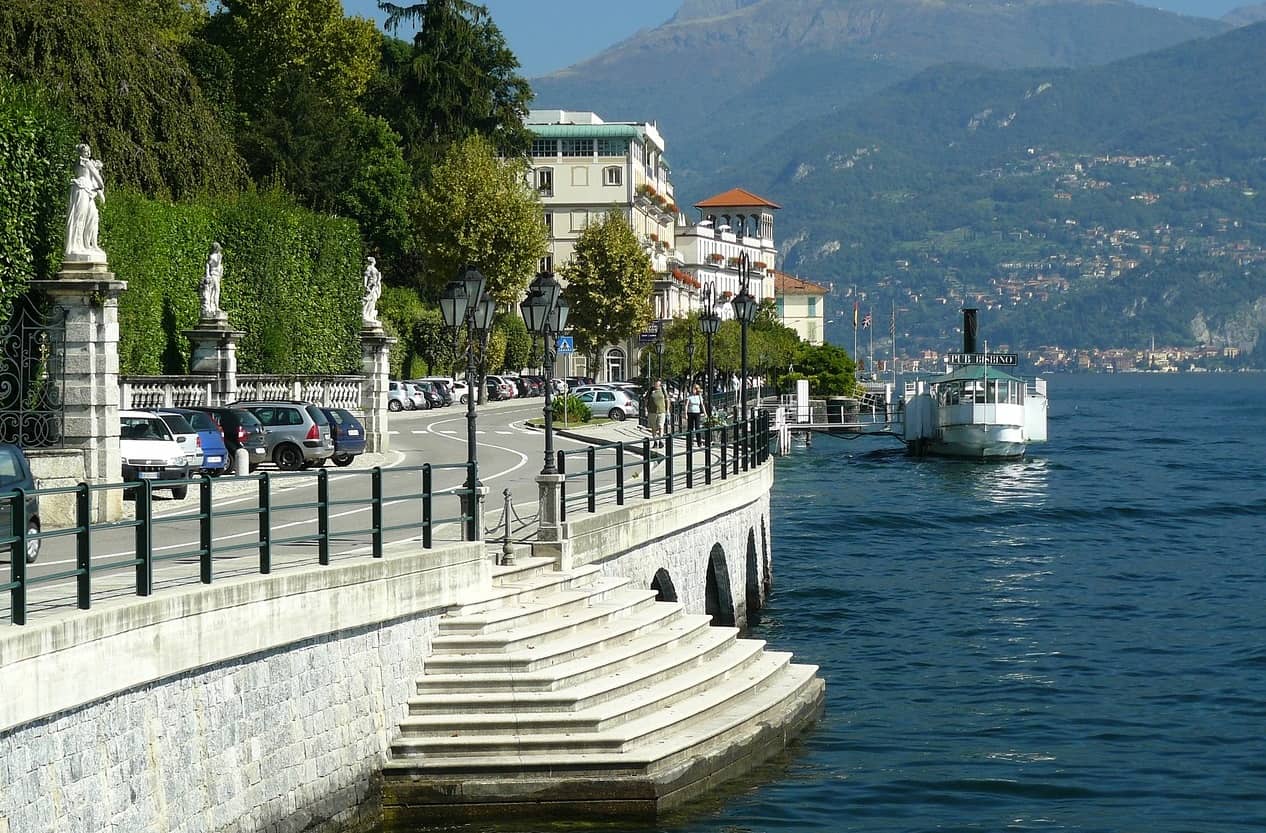
Lake Como, or Lago di Como in Italian, is an upscale resort area nestled right against the foothills of the Alps in Northern Italy. Shaped like an upside-down letter Y, this deep glacial lake has been a popular retreat for wealthy visitors and aristocrats since ancient Roman times. With a maximum depth of about 410 meters (1,345 feet), Lake Como is one of Italy’s deepest lakes and has attracted visitors.
What makes a trip to the lake so memorable is exploring the picture-perfect lakeside villages that hug the water. Towns like Bellagio, Varenna, and Menaggio are filled with colorful houses, steep cobblestone alleys, and historic waterfront promenades lined with cafes. Traveling between these spots is incredibly easy thanks to a network of local passenger ferries, which offer some of the best views of the massive mountain peaks reflecting off the water.
Beyond the natural beauty, the area is known for its incredible historic estates and lush, terraced gardens that stretch right down to the shore. Visiting places like Villa Carlotta or Villa del Balbianello lets you walk through manicured hedges and elegant rooms filled with classic art. Whether you are taking a relaxed boat cruise or enjoying a lakeside espresso, it provides a peaceful look into the slower pace of Italian lake life.
10. St. Peter’s Basilica, Vatican City

St. Peter’s Basilica, known as the centerpiece of the Vatican, is the most famous landmark in Vatican City and sits right on the edge of Rome. This grand church was built between 1506 and 1626 over the traditional burial site of Saint Peter, one of Jesus’ apostles. As one of the largest Renaissance churches in the world, the structure stands out for its unique blend of classical harmony and grand Baroque styles.
Renowned architects including Bramante, Michelangelo, and Bernini contributed to its design, while Michelangelo created the magnificent dome. Just a short walk from the church is the Vatican Museums, which one of the largest museums in the world. The basilica can accommodate more than 60,000 worshippers and is among the largest churches in the world.
The entire exterior is framed by a sweeping stone colonnade that helps define the appearance of the public square. With its massive pillars and giant, detailed sculptures, the stunning front entrance is one of the world’s most popular photo spots. The vast interior is filled with impressive columns, stunning golden mosaics, and hundreds of years of religious history.
11. The Uffizi Gallery, Florence
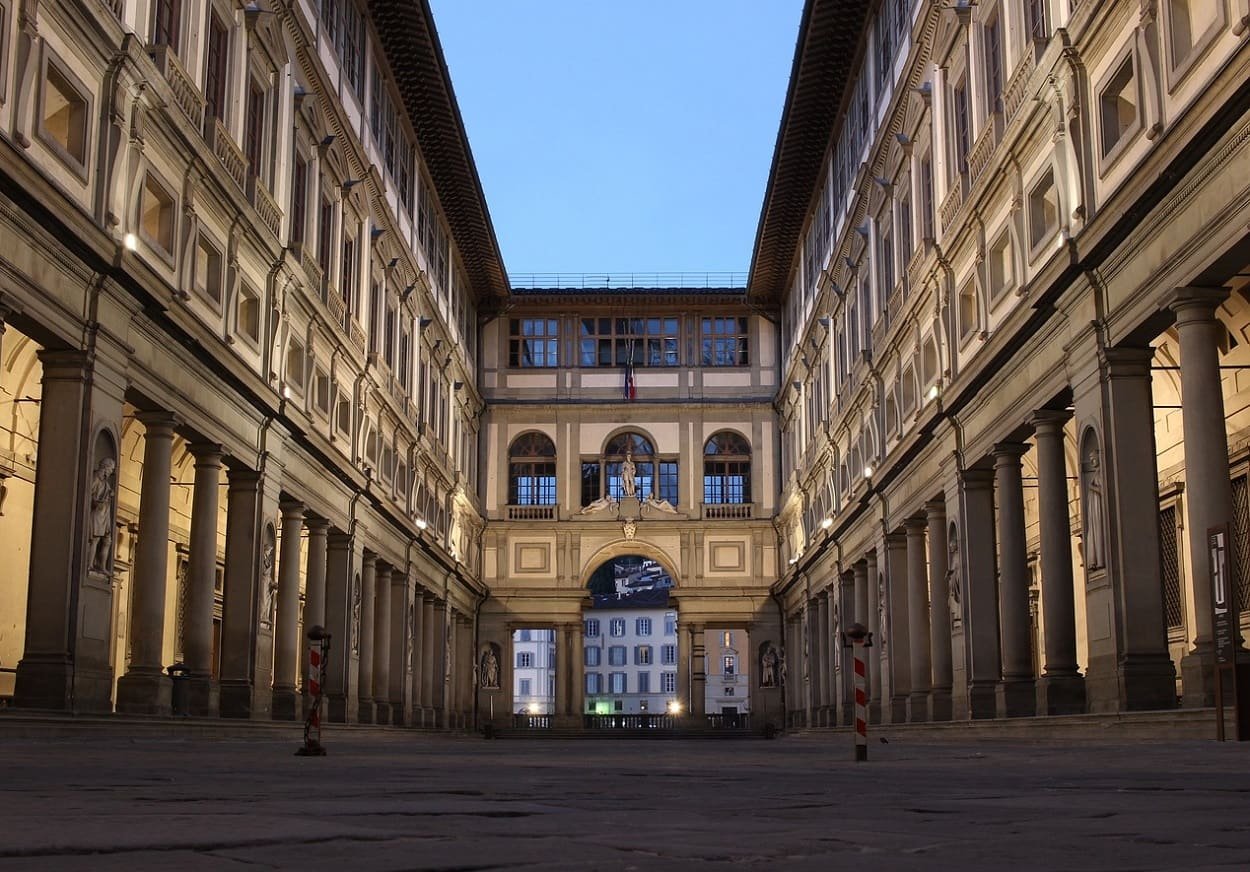
The Uffizi Gallery, known as the one of the world’s most important collections of Renaissance art, is the most important art museum in the city and sits right next to its main political square. This grand palace was built over a 21-year period, with groundbreaking starting in 1560 and final completion wrapping up in 1581.
Commissioned by the influential Medici family, the gallery opened to the public in 1769 and today houses masterpieces such as Botticelli’s The Birth of Venus and Primavera, alongside works by Leonardo da Vinci, Raphael, and Michelangelo. Historical statues and rows of stone columns cover the main exterior, striking a distinctive appearance that makes it a heavily photographed city icon.
Inside, the grand layout is features towering galleries, painted ceilings, and a world-renowned collection of historic artwork. Visitors come here to admire world-famous Renaissance masterpieces, including Botticelli’s The Birth of Venus, along with remarkable works by Leonardo da Vinci, Michelangelo, Raphael, and other legendary Italian artists.
12. The Valley of Temples, Sicily

The Valley of the Temples, known as the one of the finest examples of ancient Greek architecture, is the most recognizable archaeological landmark in Sicily and sits right outside the modern city of Agrigento. This immense park came together over a 100-year period, with initial groundbreaking on the temples dating back to the 6th century BC before final completion in the 5th century BC.
As one of the most important archaeological sites in the Mediterranean, the area stands out for its unique blend of traditional Doric architecture and grand historical layouts. The entire landscape is built from a brilliant golden-yellow tufa stone dedicated to Olympian gods, completely altering the look of the coastal hills. It was given World Heritage status by UNESCO in 1997.
Located in Agrigento, the site contains several temples built during the 5th century BC, including the Temple of Concordia, widely regarded as one of the best-preserved ancient Greek temples in existence. The main ridge is home to seven individual temple ruins and detailed stone columns, making it one of the most photographed monuments in southern Italy.
13. Amalfi Coast, Salerno
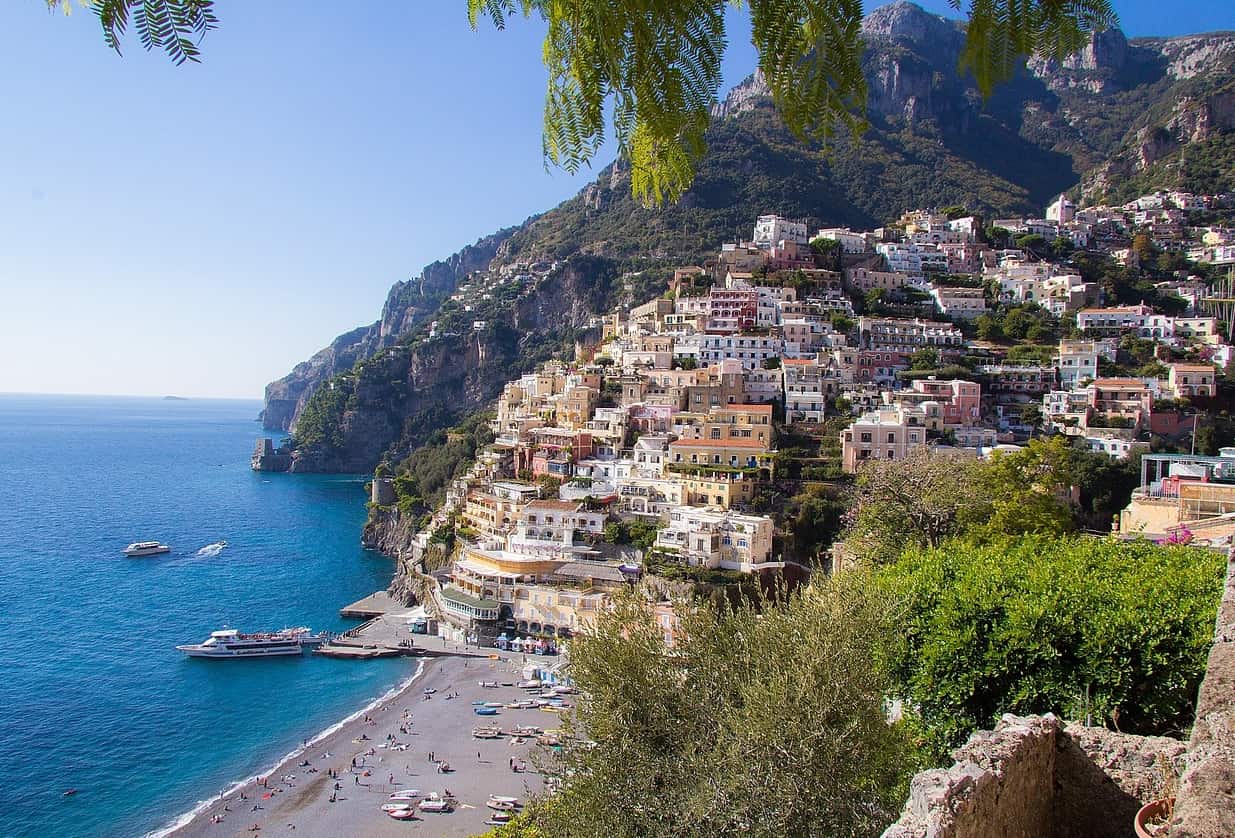
The Amalfi Coast is one of the most beautiful places in the world, stretching along the southern edge of the Sorrentine Peninsula. This scenic coastline is known for its dramatic cliffs, picturesque villages, and breathtaking views of the Mediterranean Sea. Roman pioneers, medieval builders, and local stone masons all left a distinct imprint on the region’s final design over the generations.
The Amalfi Coast is one of Italy’s most spectacular coastal regions, stretching along the southern edge of the Sorrentine Peninsula. Roman pioneers, medieval builders, and local stone masons all left a distinct imprint on the region’s final design over the generations.
The rugged coast took ten centuries to develop, with cliffside building spanning from the 4th to the 14th century. Recognized as a UNESCO World Heritage Site in 1997, the coastline is home to famous towns such as Amalfi, Positano, and Ravello. Amalfi itself was once a powerful Maritime Republic and an important Mediterranean trading center.
This stretch unites thirteen old seaside villages, where rows of brilliant pastel paint strike a sharp contrast against the dramatic coastal cliffs. Framed by thousands of sharp hairpin turns and historic stone watchtowers, the winding coastal highway stands as one of southern Italy’s most photographed routes.
14. Pompeii, Naples
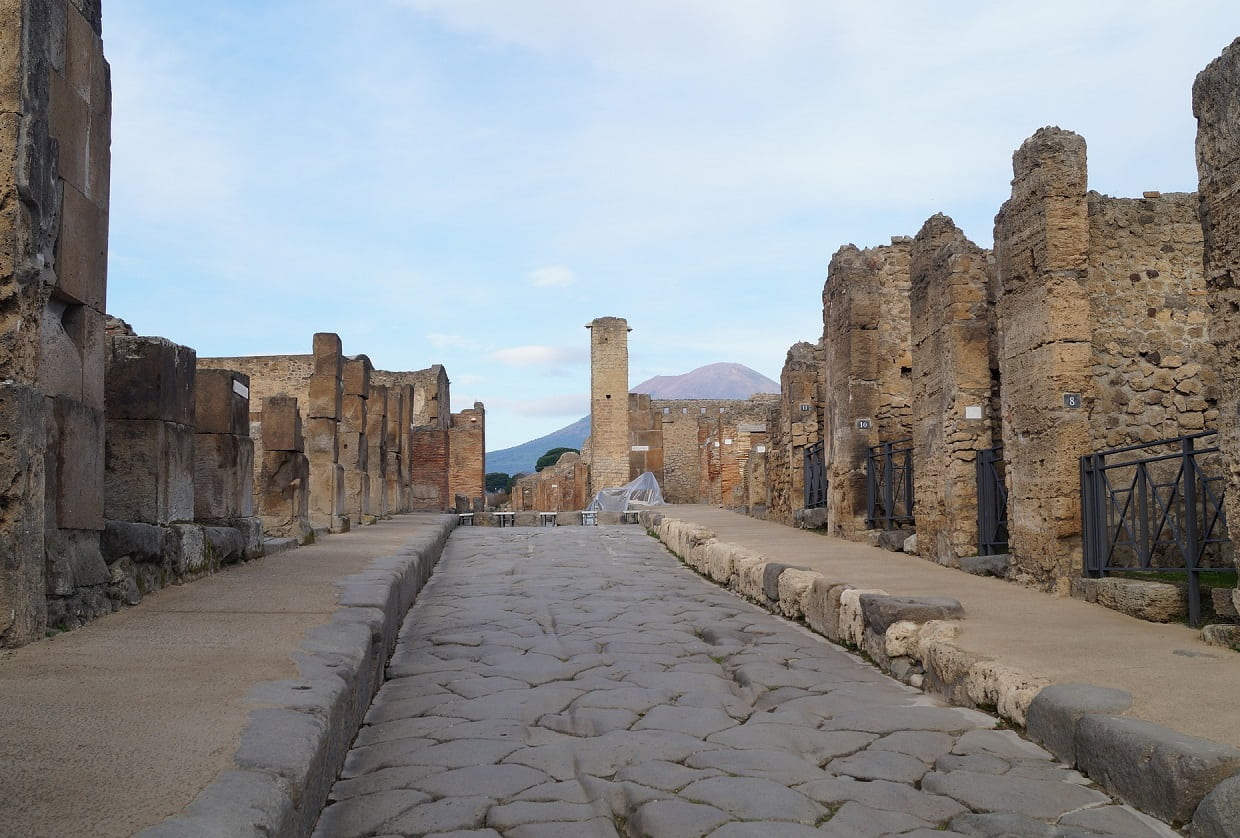
Pompeii, recognized as the one of the best-preserved Roman archaeological sites, serves as the premier archaeological landmark in the Naples region, situated right at the base of Mount Vesuvius. This sprawling ancient city developed over nearly six centuries, with initial construction beginning in the 6th century BC and halting abruptly in 79 AD due to a catastrophic volcanic eruption.
The city was buried when Mount Vesuvius erupted in AD 79, preserving streets, homes, and public buildings beneath volcanic ash. Rediscovered in 1748, Pompeii is also known for its famous plaster casts that reveal the final moments of its residents, whose population is estimated to have exceeded 10,000 people.
Originally built as a thriving commercial port, the entire street grid is paved in heavy, dark volcanic stone that beautifully defines the ancient grid system. The ruined market square features rows of broken pillars and beautifully preserved wall paintings, making it a popular attraction for photographers.
15. Cinque Terre, Liguria
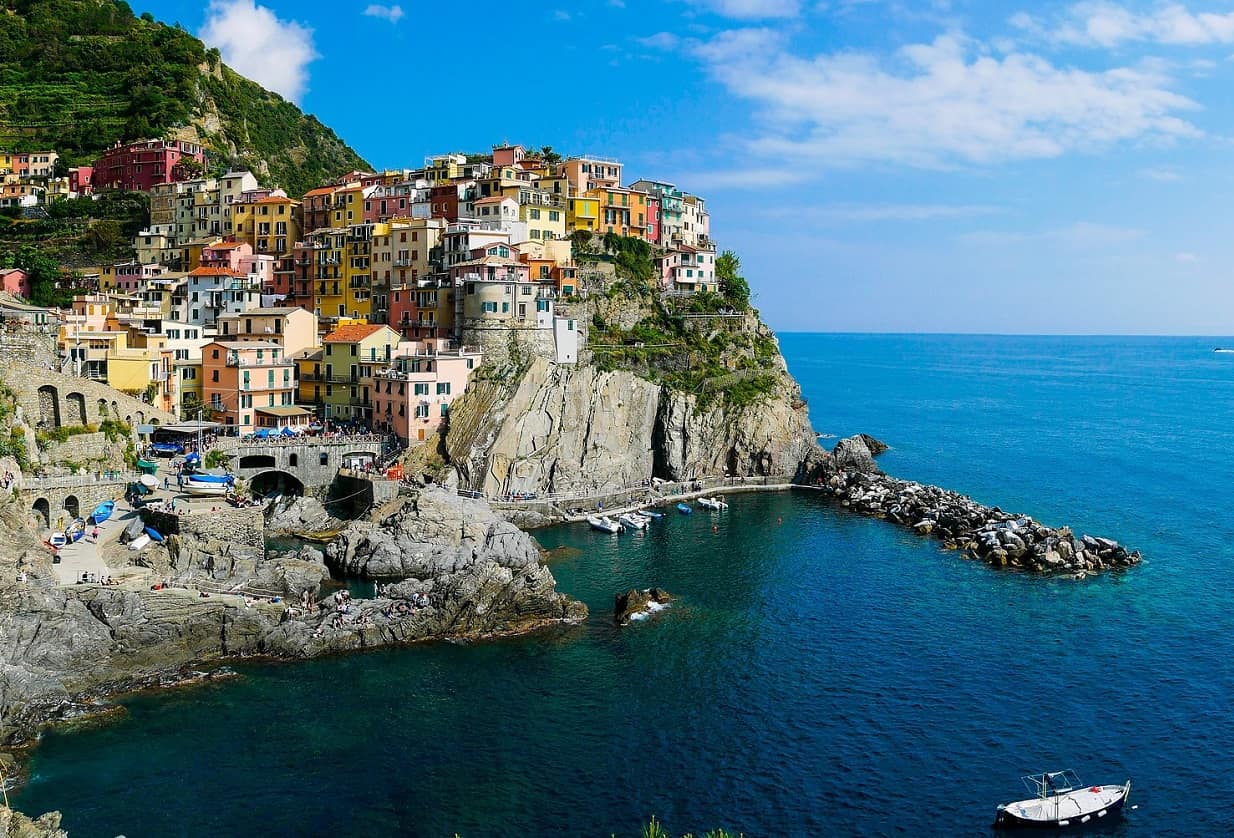
Cinque Terre is a stunning coastal destination in the Liguria region of northwestern Italy. Famous for its colorful cliffside villages, scenic hiking trails, and breathtaking views of the Ligurian Sea, it is one of the country’s most popular travel destinations.
Recognized as a UNESCO World Heritage Site in 1997, Cinque Terre consists of five historic villages: Monterosso al Mare, Vernazza, Corniglia, Manarola, and Riomaggiore, each connected by scenic coastal trails and railway links. This sprawling network of fishing villages developed over nearly eight centuries, with initial fortification beginning in the 11th century and transforming gradually into a protected national park today.
The villages feature a distinct architectural style consisting of colorful tower houses built directly into the rock faces. Cinque Terre is one of Italy’s most famous tourist attractions, part of the Cinque Terre National Park. Featuring beaches, beautiful villages, and rolling hills. Beautiful view of sunset or sunrise, making it a favorite destination for travelers.
From ancient Roman landmarks and Renaissance masterpieces to picturesque coastlines and charming villages, Italy offers unforgettable experiences for every traveler. With ancient ruins and iconic cathedrals, gorgeous coastline and lovely villages, each and every corner has something magnificent. Regardless of your preference of culture, architecture or nature, Italy will be remembered and will remain your favorite travel destination in the world.