
Last Updated on 13th March 2026 by admin
World is filled with beautiful churches in every corner of the world, and these all are not just a worship place. Many of them are also remarkable landmarks that reflect history, culture, and extraordinary architecture. There are many famous churches in the world, some of them have become famous not only for their religious importance but also for their beauty and the stories connected to them.
From beautiful domes rising above historic cities to unique designs that attract peoples from every corner of the world, these churches continue to inspire millions of visitors every year. Some are centuries old, while others represent modern architectural creativity.
In this article, we will explore 15 of the most famous churches in the world, each church known for its history, stunning design, and cultural importance to its region and the nation.
1. St. Peter’s Basilica – Vatican City
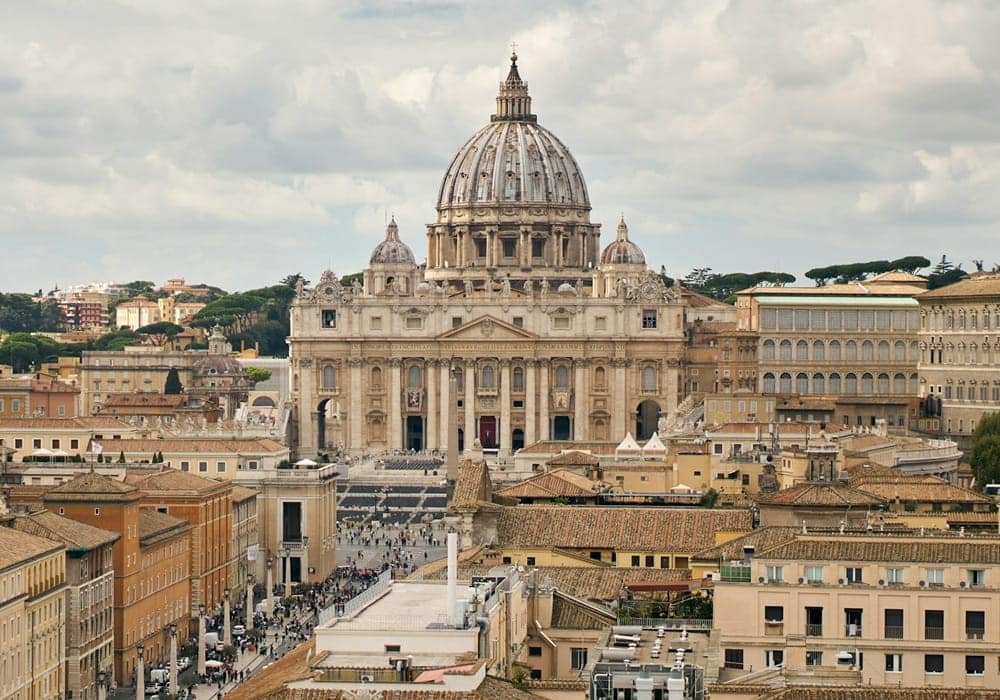
When people talk about the most famous church in the world, St. Peter’s Basilica in Vatican City may be always comes to mind first. Basilica located at the heart of the Catholic Church, it is one of the greatest architectural and religious landmarks ever created. When visitors come to Rome, the first sight of its huge dome rising above the city skyline is truly memorable.
The basilica was completed in the 17th century, but the site itself holds deep historical significance. It is traditionally believed to be the burial place of Saint Peter, one of the apostles of Jesus and the first pope. Because of this connection, the church has long been an important pilgrimage destination of Christians worldwide.
Saint Peter is a breathtaking basilica architecturally. Designed by a great artist Michelangelo, the grandiose dome takes up the skyline, and it is still one of the most iconic domes ever constructed. The interior features a huge interior with marble, mosaic and impressive pieces of art. Michelangelo sculpture Pieta is one of the most regarded sculptures that show Mary with the body of Jesus.
St. Peter Basilica is a place that is visited annually by millions of people attracted by its history, spiritual significance, and unbelievable beauty.
2. Sagrada Família – Barcelona, Spain
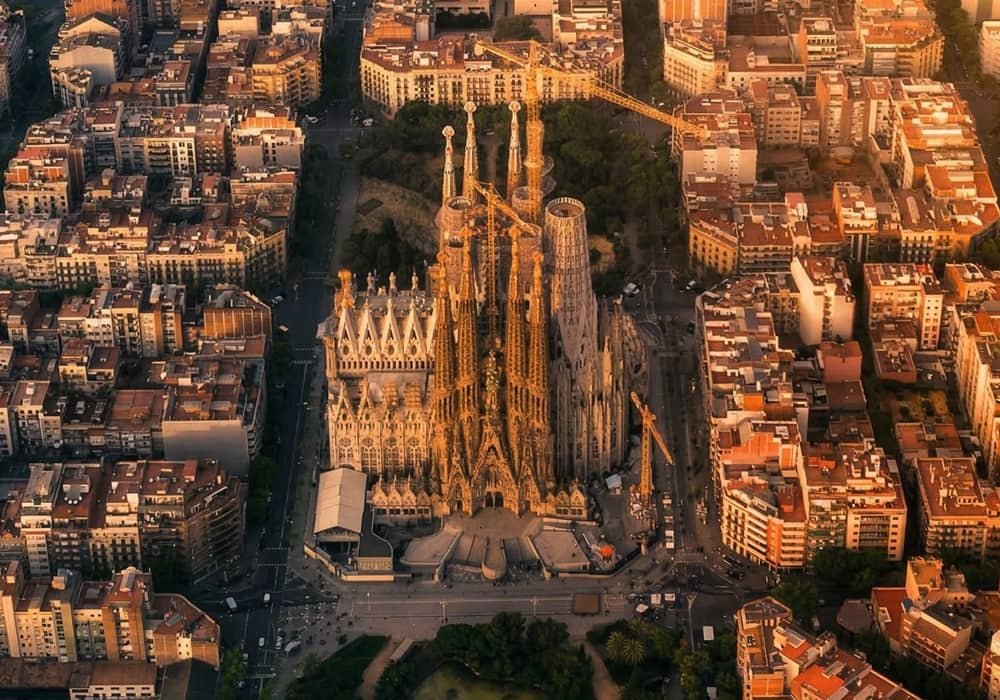
There is a church in Barcelona in the middle of the city which looks not similar to any other in the world. Sagrada Familia is not only a worshiping place but also a masterpiece of imagination and creativity designed by the famous architect Antoni Gaudí. The basilica still fascinates both travelers, artists and architects, after more than a century.
The church was started to be built in 1882, and Gaudí later transformed the project into something extraordinary. He designed a building that was inspired by nature rather than the traditional Gothic or classical designs. The towers seem to be massive sandcastles or mountain tops and the facades are detailed with sculptures that narrate the life of Jesus.
Step inside, and the experience becomes even more remarkable. Tall columns branch out like trees, giving the interior the feeling of standing inside a colorful stone forest. The sunlight is reflected through the stained-glass windows, and the room is filled with different blue, red, and gold colors during the day.
The Sagrada Família, although being one of the most visited churches in the world, the Sagrada Família is still under construction.Once it is completed, it will not only become a famous landmark in Spain but also one of the most unique churches ever built.
3. Notre-Dame Cathedral – Paris
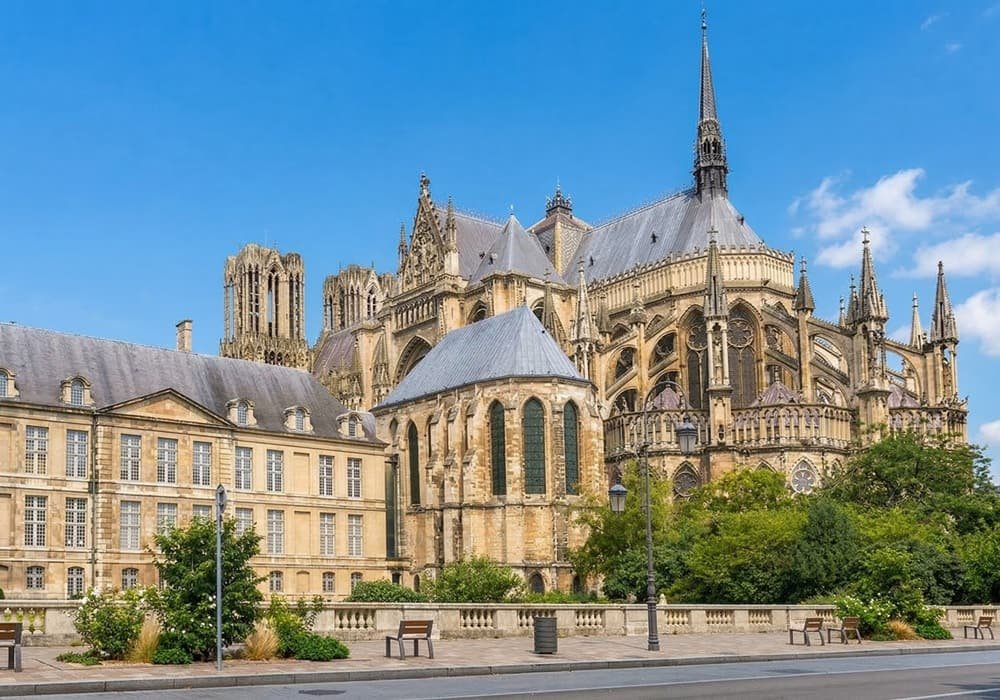
Notre-Dame Cathedral is located on a small island, in the middle of the Seine River, and has long been one of the most famous landmarks in Paris. The cathedral with its large towers, detailed stone carvings, and traditional Gothic architecture has been attracting visitors more than eight centuries.
The construction of Notre-Dame started in the 12th century and was completed in almost 200 years. The builders had made something unique to its era, a cathedral with its pointed arches, huge stained-glass windows, and flying buttresses that allowed the walls to be higher than previous churches. The beautiful rose windows are one of its greatest attractions as they are colored when the sun rays through the glass.
Along with its architecture, Notre-Dame has also experienced numerous significant historical events in France. It has hosted coronations, national holidays and big events throughout the centuries. The cathedral also became famous worldwide through Victor Hugo’s novel The Hunchback of Notre-Dame, which helped renew interest in the building during the 19th century.
The cathedral was seriously damaged by a fire in 2019, but it is being restored and brought back to life. Today, Notre-Dame is still a symbol of the history of Paris, its strength, and the eternal beauty.
4. St. Basil’s Cathedral – Moscow, Russia
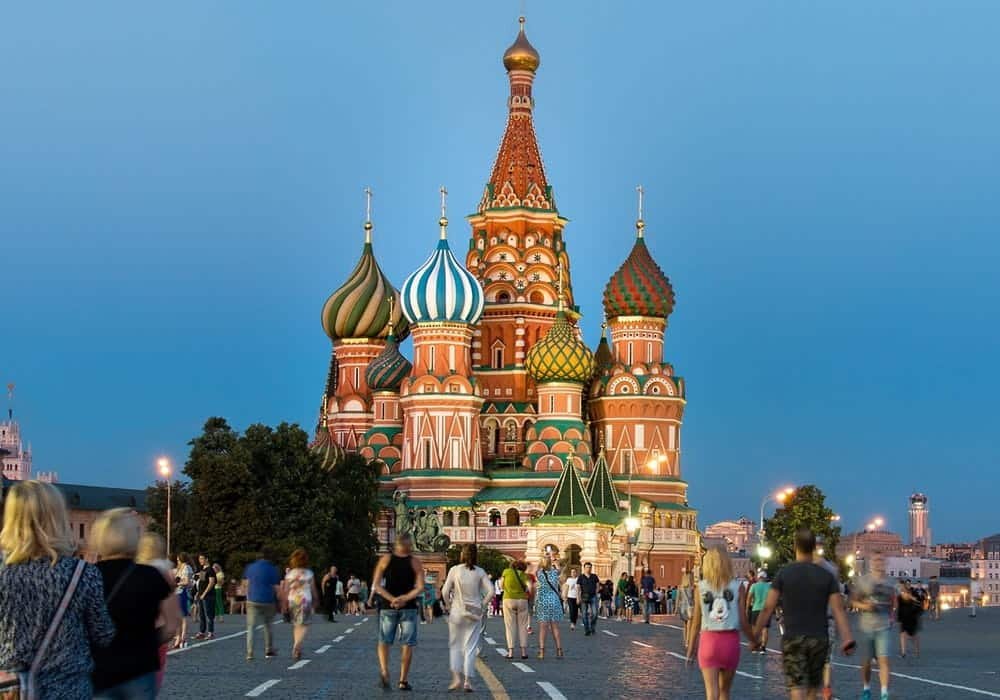
St. Basil’s Cathedral in Moscow is the only church in the world that looks like it belongs in a fairy tale. The church with its bright-colored onion-shaped domes and strange structure has become one of the most famous landmarks in Russia. It is located at the edge of Red Square, and it immediately draws the attention of anyone visiting the city.
Construction of the cathedral took place in the 16th century under the reign of Ivan the Terrible to celebrate the victory of Russia over the Khanate of Kazan. Its architects did not use the common style of European churches but made something completely unique. In reality, the building consists of a number of smaller chapels around a central tower, each with its own unique dome.
The cathedral almost looks playful at the distance with patterns and colors that are painted in the form of flames or swirling candies. However, inside it feels much more intimate. The visitors pass through narrow corridors and small chapel rooms where religious paintings and historical details are depicted.
St. Basil’s Cathedral has undergone wars, political transitions, as well as threats of destruction, which have spanned over the centuries. Today it is one of the most photographed buildings in Moscow and a strong icon of the history and culture of Russians.
5. Westminster Abbey – London, UK
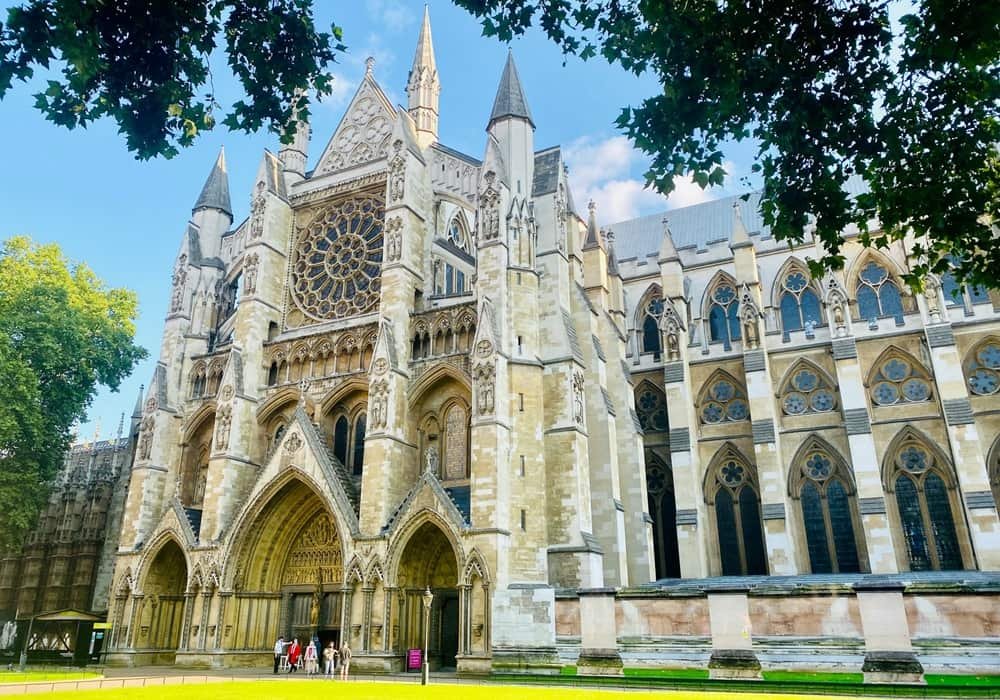
Westminster Abbey is one of the most ancient religious structures in Britain and it is located on the very edge of the city, directly next to the Houses of Parliament. However, many famous churches that are known mainly for their architecture, this abbey is deeply linked to the history of the British royal family and the whole country.
Westminster Abbey is the historic place of coronation in Britain, having been used almost a thousand years. The ceremony of coronation of English and British kings and queens here dates back to 1066, and it is one of the most significant ceremonial places in the United Kingdom. The abbey has also hosted numerous royal weddings and funerals including the highly viewed wedding of Prince William and Catherine Middleton in 2011.
As an architectural work, Westminster Abbey is a beautiful example of Gothic style with high pointed arches, grand stained-glass windows, and soaring interior ceiling that gives the space a dramatic sense of height. Strolling through its halls is like going through the British history.
A very interesting place within the abbey is Poets Corner where most of the most celebrated writers and poets of Britain are buried or honored with memorials. William Shakespeare, Charles Dickens, and Geoffrey Chaucer are some of the names that are remembered. Today, Westminster Abbey remains both a working church and one of London’s famous tourist attractions.
6. Basilica of Our Lady of Guadalupe – Mexico City
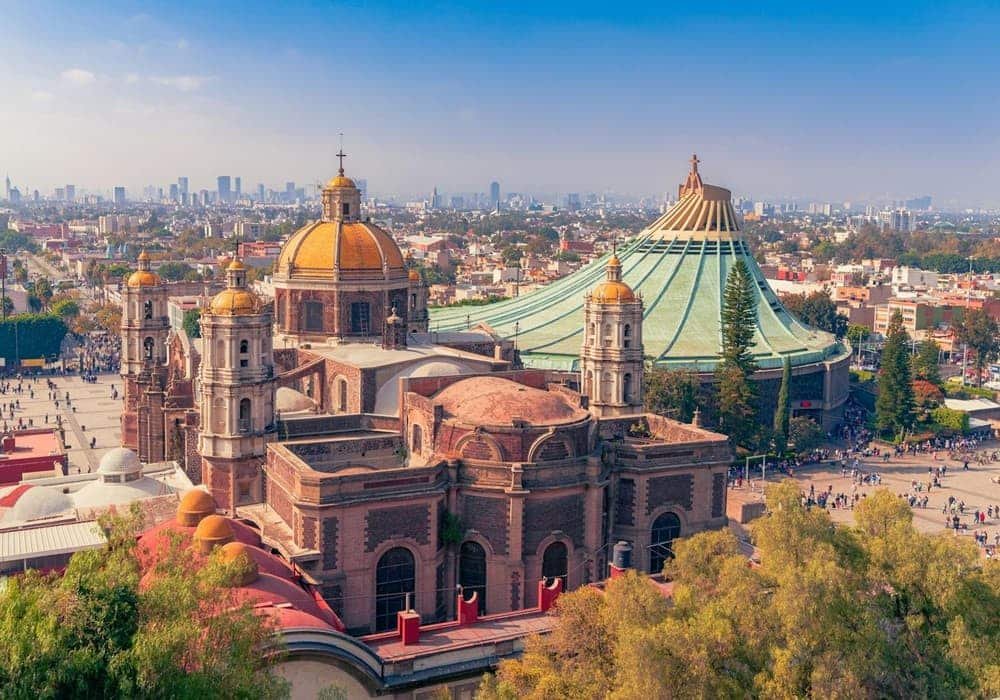
The Basilica of Our Lady of Guadalupe is one of the most visited Catholic pilgrimage destinations in the world and one of the most important religious landmarks in Mexico, located in Mexico City. Millions of people come to pay tribute to the Virgin of Guadalupe every year, who is an important part of Mexican faith and culture.
The story connected to this basilica dates back to 1531, when a local man named Juan Diego reported seeing a vision of the Virgin Mary on a hill called Tepeyac. According to tradition, she asked for a church to be built at that location. The image believed to have appeared on Juan Diego’s cloak, known as the tilma, is still preserved and displayed inside the basilica today.
Due to the number of visitors to the site, a modern basilica was constructed in the 1970s alongside the old church. The new building is a big circle to enable thousands of pilgrims to be in the building and still view the holy image before the altar.
The atmosphere around the basilica is often lively and emotional. Pilgrims come in various parts of Mexico and other countries, some of them walking long distances to access the shrine. This is more than a visit to many believers because it is a spiritual journey that is very personal.
7. Santuário Nacional de Nossa Senhora Aparecida, Brazil
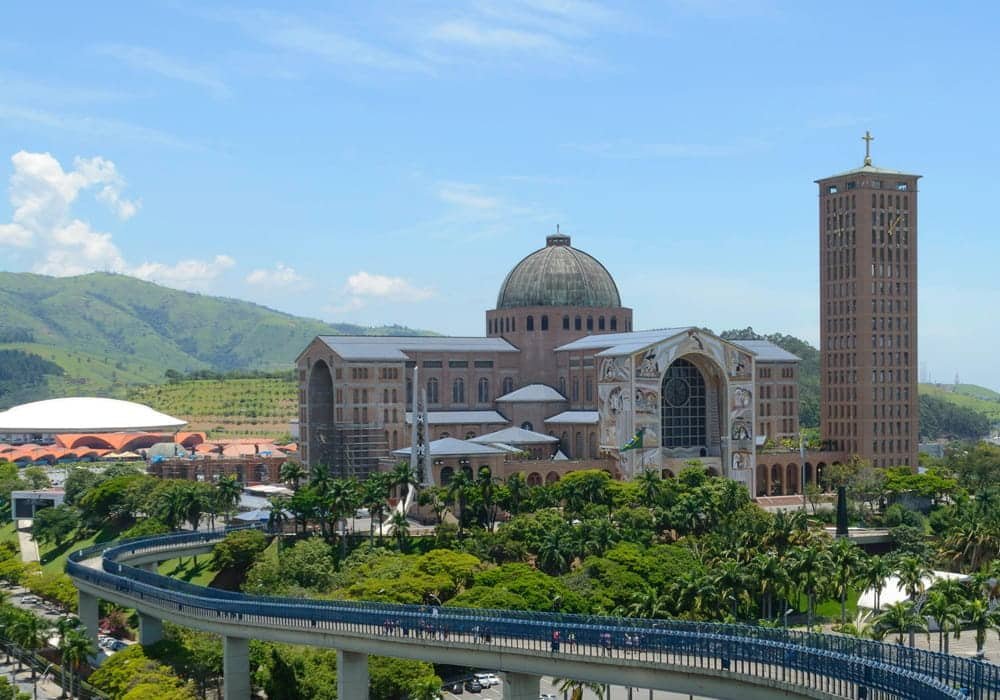
There are numerous impressive churches in Brazil, but none holds the same national importance as the Santuário Nacional de Nossa Senhora Aparecida. This massive basilica is situated in the city of Aparecida and has become a strong icon of faith to millions of Brazilians.
Interestingly, the history of the shrine began in a very simple way. A small dark statue of the Virgin Mary was pulled out of the Paraiba river in 1717 by a group of fishermen. According to local tradition, their fishing nets later on were instantly filled with fish, and people shortly started believing that the statue had some relation with miracles. With time, the devotion towards Our Lady of Aparecida expanded over the nation and ultimately resulted in her becoming a patron saint of Brazil.
Today the modern basilica built in her honor is enormous. In fact, it is believed to be one of the largest churches in the world, and it could receive tens of thousands of pilgrims simultaneously. Large open area, massive dome, and red-brick building render the complex nearly a mini city of faith.
During major religious days, especially on October 12, the place is full of pilgrims who travel from every corner of Brazil to pay their respects. For many visitors, arriving here is not just seeing a famous church but a visit to a place with a great national and spiritual meaning.
8. Duomo di Milano – Milan, Italy
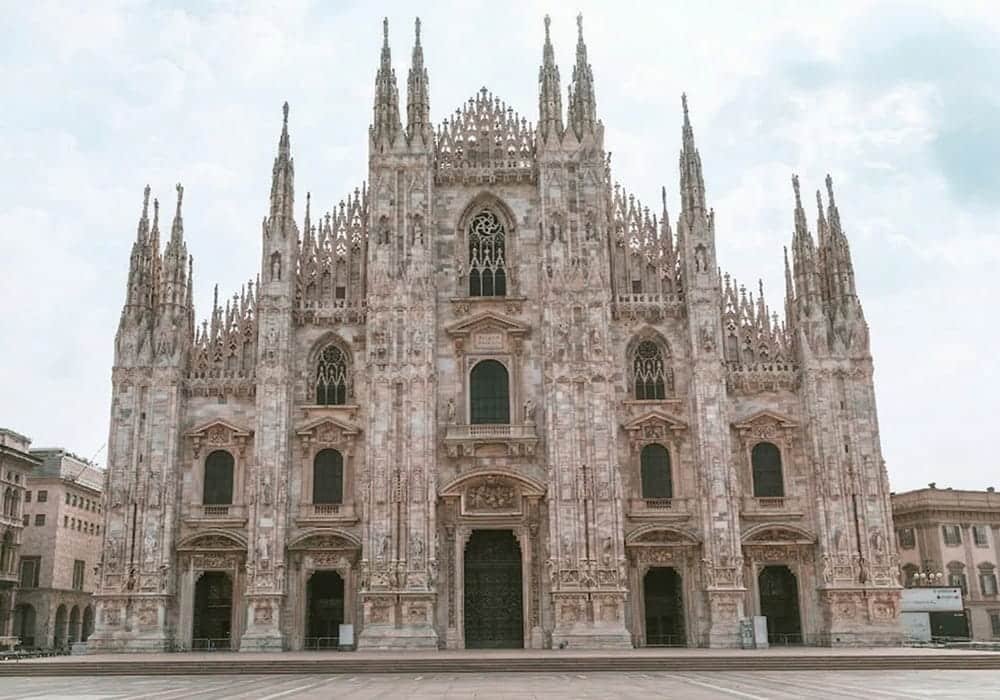
Right in the center of Milan, there is a church that instantly captures attention with its stunning detail, the Duomo di Milano or Milan Cathedral. The building itself resembles at first sight a lace made of stone. The cathedral has hundreds of delicate spires that curve towards the sky and provides it with one of the most dramatic silhouettes in Europe.
The Duomo started to be built in 1386, and interestingly, it took nearly six centuries to fully complete. Various architects and artists worked on the project at different periods of time, and that is why the cathedral combines several styles while still maintaining its strong Gothic character. This whole building is composed primarily of white and pink marble and it is glittering under the Italian sunlight.
Step inside and the atmosphere changes completely. The interior is spacious and quiet, with giant pillars that appear to extend endlessly upwards. The huge stained-glass windows are pierced by light that adding color and depth to the already impressive space.
One of the most memorable experiences here is walking on the cathedral rooftop. From there, visitors can see the forest of marble spires in close-up and have fantastic views of the city of Milan. Nowadays Duomo di Milano remains not only a religious landmark but also one of the most admired architectural masterpieces in Italy.
9. Cologne Cathedral – Cologne, Germany
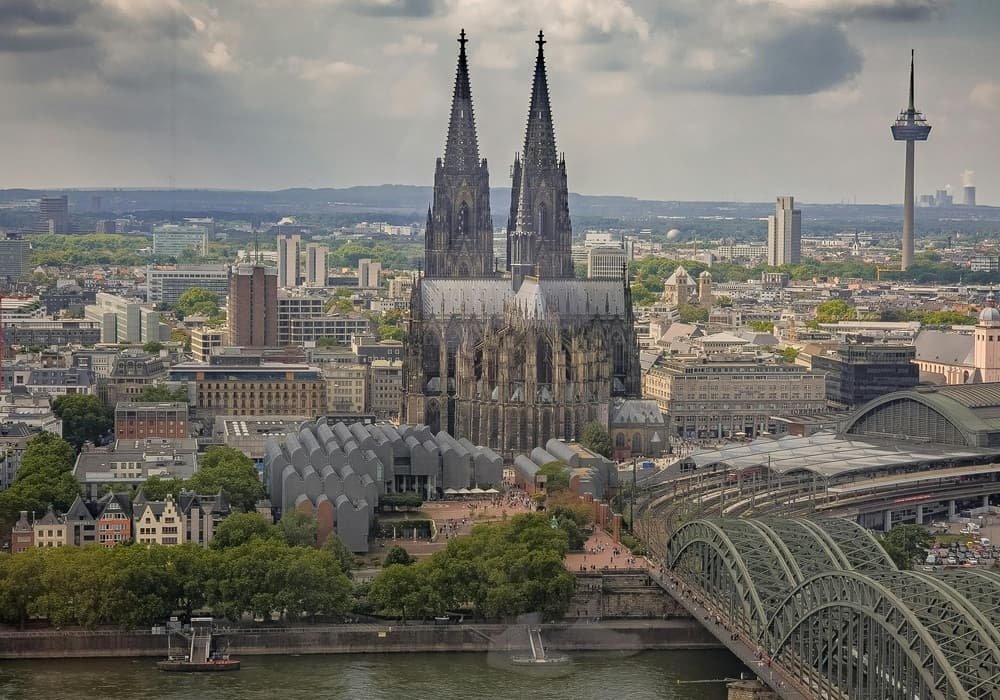
The towering presence of the Cologne Cathedral is almost impossible to miss, when you visit in the German city of Cologne. The massive Gothic structure rises beautifully beside the Rhine River, with twin spires more than 150 meters in the sky. The cathedral is the first sight of many travelers stepping out the main train station of Cologne and it is impressive at first sight.
What makes this cathedral even more interesting is the time that it took to be completed. The construction was started in 1248, but not having enough money and political troubles it turned out to be interrupted centuries. It was eventually completed in 1880, or the project took over 600 years. Luckily, even with this long time interval, the builders remained loyal to the original Gothic design.
Inside, the cathedral feels both spacious and peaceful. The columns of stone rise high to the vaulted ceiling, and colored stained-glass windows light up the interior. The Shrine of the Three Kings is one of the most valued items stored here because it is thought to have the relics of the Magi mentioned in the Bible.
Over the centuries, Cologne Cathedral has survived wars, bombings, and major historical changes. Today it remains not only Germany’s most famous church but also a powerful symbol of resilience and architectural beauty.
Cologne Cathedral has seen war, bombing, and other significant changes in history. It is not only the most well-known church in Germany today but also a strong emblem of strength and beauty.
10. St. Paul’s Cathedral – London, UK
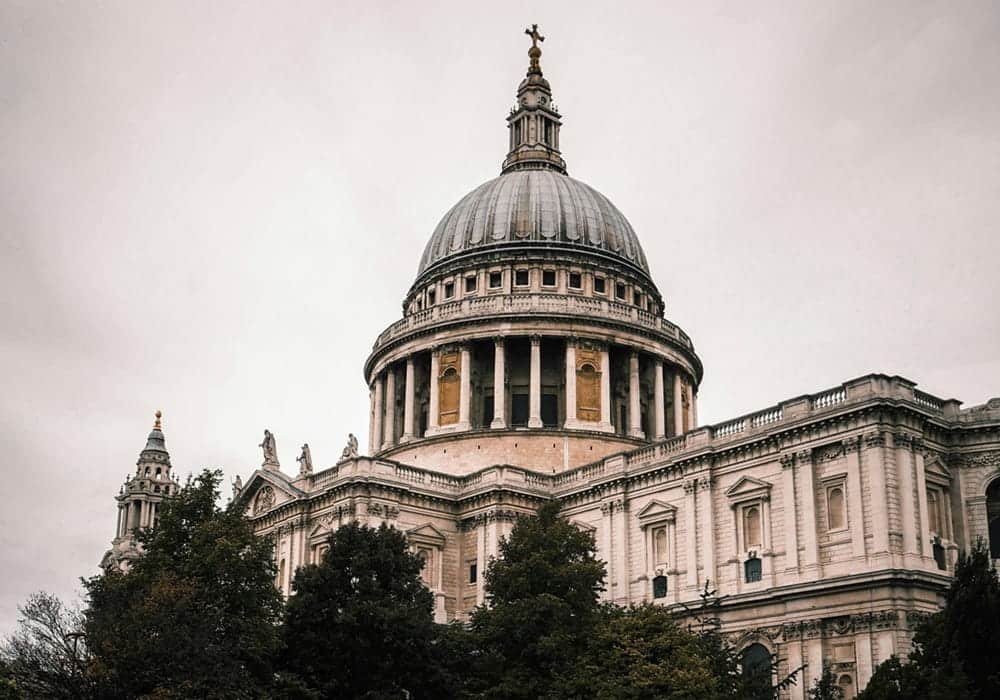
The St. Paul’s Cathedral stands on Ludgate Hill, the tallest hill in the ancient city of London, has overlooked the capital more than 300 years. The London skyline is most recognizable because of its huge dome which could easily be spotted several miles away.
The cathedral which can be seen today and it was built by the famous architect Sir Christopher Wren and was completed in 1710. It was built as a replacement of a previous church that was destroyed by the Great Fire of London in 1666, one of the most epic events in London history. The design of Wren was a mixture of classical inspiration and English style of architecture making the building look and feel elegant and powerful even today.
The Whispering Gallery is one of the most interesting parts of the cathedral. Due to curved form of the dome, a whisper spoken along the wall on one side can be clearly heard on the other side. It is a minor detail, yet it has been known to have left a lasting impression on visitors.
St. Paul’s Cathedral has also witnessed numerous important events in the history of the nation such as the state funeral of Winston Churchill and the wedding of Prince Charles and Princess Diana in 1981. The cathedral is not only a place of worship, but also one of the most popular historic buildings in London even today.
11. Sacré-Cœur Basilica – Paris, France
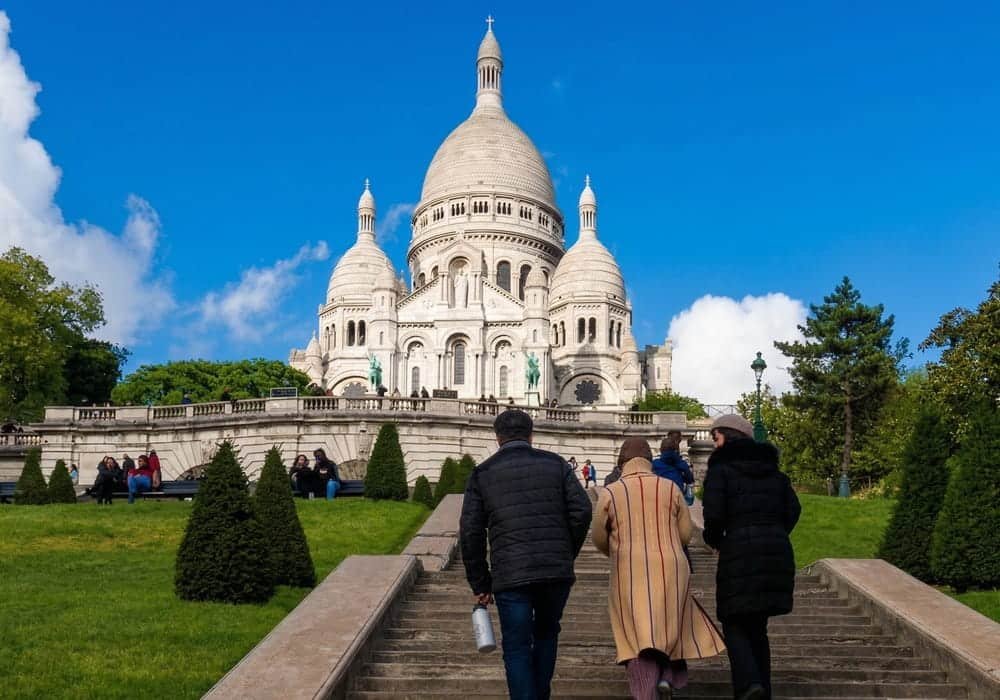
Sacré-Cœur Basilica stands high at the top of the hill of Montmartre and overlooks Paris in a way that not many buildings can. The view of the entire city is available from its steps and it is one of the most popular places in Paris for both visitors and locals. It is a place where many people go initially because of the view and after a short period, the basilica itself becomes the main point of interest.
Unlike the darker Gothic cathedrals found in many European cities, Sacré-Cœur stands out with its bright white domes. The church was constructed using a special kind of stone that emits white mineral known as calcite during rain. This process of nature continues to make the basilica appear clean and bright even after it is over a hundred years old.
The construction started in 1875 and was finished in 1914. This architectural work was built in a Roman-Byzantine style that makes it look softer and rounded appearance compared with the sharp lines of Gothic churche. Inside, the atmosphere feels calm and reflective, and the ceiling of the altar is covered with one of the biggest mosaics in the world.
Sacré-Cœur is not only a place of worship but also one of the most famous landmarks in Paris, attracting millions who climb the Montmartre hill annually.
12. Hagia Sophia – Istanbul, Turkey
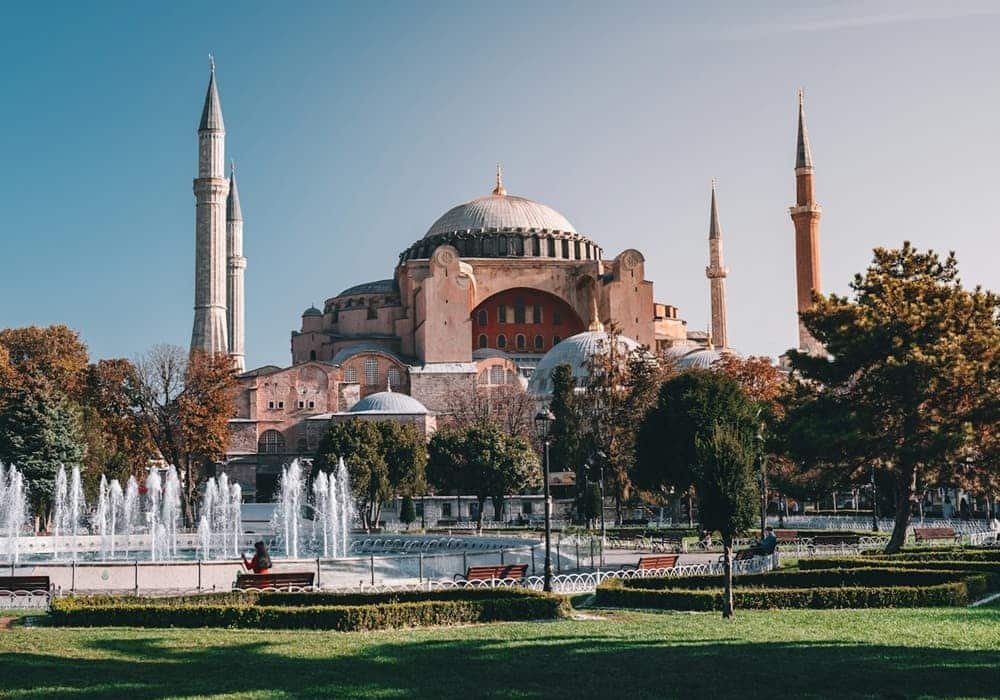
There are some buildings that silently bear witness of the history and there are those that appear to have history within their walls. One of such rare places is the Hagia Sophia in Istanbul. This great building located between Europe and Asia has witnessed the empires rise and fall, but still dominates the city’s skyline even after built nearly fifteen hundred years ago.
Hagia Sophia also consider as one of the oldest churches in the world, and at the time it was completed in 537 AD, it was unmatched in the world. Its massive central dome made it seem open-spaced and astonished the visitors of the Byzantine period. According to many historians, the first time people stepped in to the church, they thought that the dome was almost floating above them.
The most interesting fact about Hagia Sophia is that its identity varied over time. Originally it was the largest Christian cathedral of the Byzantine Empire, and was later turned into a mosque following the Ottoman conquest of Constantinople in 1453. Then afer, It was converted to a museum and today operating once more as a mosque.
Its tells a multi layered story within the building. There are ancient Christian mosaics and also huge panels of Islamic calligraphy, making a unique combination of two great traditions under one roof. Instead of being a representative of a single culture or a historical period, Hagia Sophia feels like a monument to the entire history of Istanbul itself.
13. Santa Maria Del Fiore – Florence, Italy
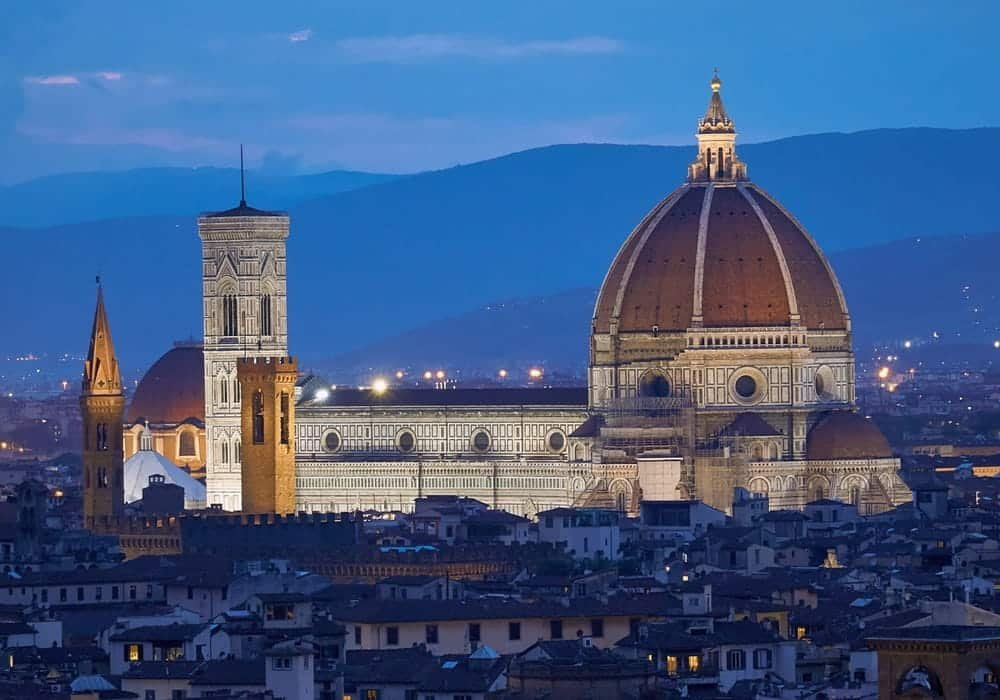
Strolling through the old streets of Florence, sooner or later you will find yourself standing in front of a building, that feels almost impossible to ignore, the Florence Cathedral, or the official known as Santa Maria del Fiore. The city is crowned by its massive red dome that is one of the most famous landmarks in Italy.
One of the most interesting things about this cathedral is the history of its renowned dome. At the beginning of the 15 th century, nobody could tell how to construct such a huge dome without its collapse. It was later resolved by the genius architect Filippo Brunelleschi whose unique design became one of the greatest engineering breakthroughs of the Renaissance.
The exterior of the cathedral is equally spectacular. White, green, and pink marble panels adorn the exterior and provide a unique and graceful look to the building, which appears remarkable in the Piazza del Duomo. Interior is surprisingly spacious and simple in comparison with the exterior that is in detail.
One of the world’s famous painting, Last Judgement is shown in a dramatic fresco painted high above the altar on the inside of the dome, and makes the vast ceiling be filled with color and movement. Florence Cathedral is a powerful reminder of the artistic and architectural brilliance that defined Renaissance Italy.
14. St. Patrick’s Cathedral – New York City, USA
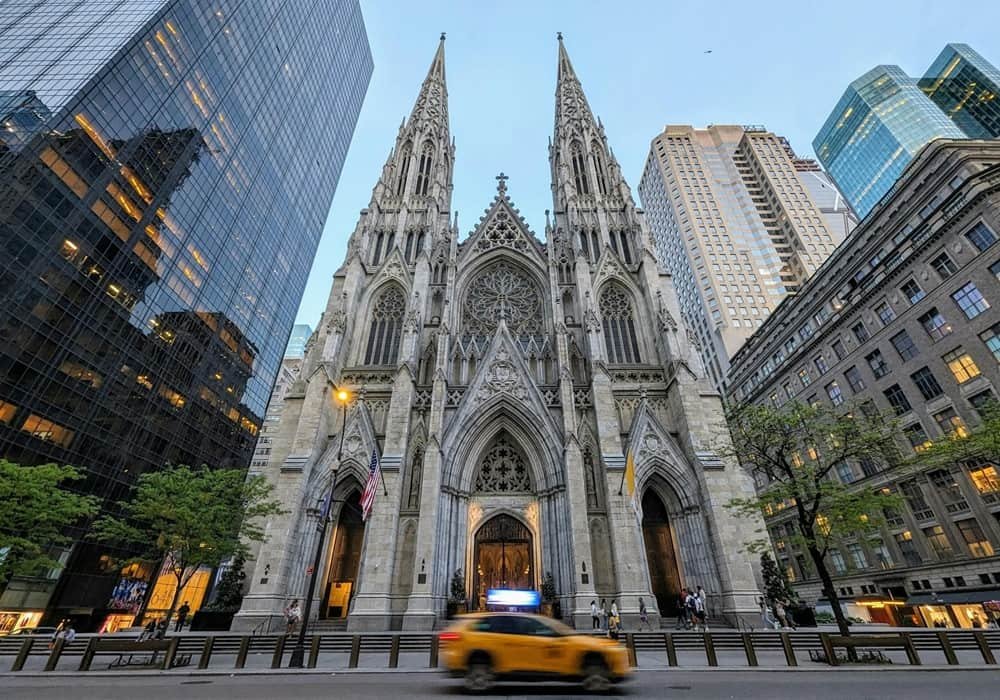
St. Patrick Cathedral is located in the bustling streets of Manhattan, amidst the towering skyscrapers, which provide an unexpected feels of calm. The cathedral is located on Fifth Avenue, home to many of New York City’s famous landmarks. Across the street, facing Rockefeller center, and it almost like a quiet pause in one of the world’s busiest cities.
The church was constructed in 1878 in a Neo-Gothic style inspired by the huge cathedrals of Europe. When it was built, the surrounding area looked very different than the current skyline does. Over the decades, as New York City grewlarger and busier, the cathedral remained a steady landmark, its twin spires still standing proudly among modern buildings.
However, you enter the building and you are in another world. The ceiling is high, the arches are long, and the windows are filled with colored stained glass, which are in complete different to the hustle and bustle of outside world. The interior is so large and grand, which surprises many visitors.
St. Patrick’s Cathedral also plays an important role in American religious life. It serves as the seat of the Archbishop of New York and hosts major ceremonies, especially during Christmas and Easter. For millions of visitors each year, the cathedral represents a unique blend of faith, history, and the spirit of New York itself.
15. Sanctuary of Our Lady of Fátima – Portugal
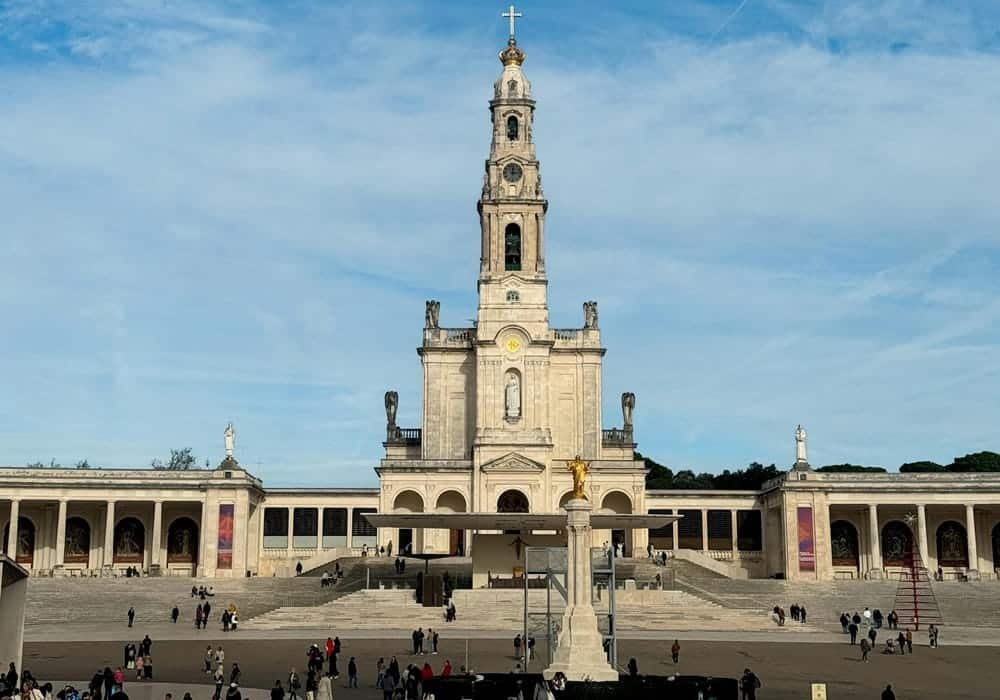
There are religious places that are famous due to their architectural designs whereas others are due to events that happened there. The Sanctuary of Our Lady of Fátima in Portugal belongs to the second category. It was once a quiet rural location in the early 20th century, but later it had become one of the most significant pilgrimage sites in the Catholic world.
The story dates back to 1917, when three young shepherd children claimed to have witnessed the appearance of the Virgin Mary over the village of Fátima. News of these events spread quickly, and with time the site was turned into a place where believers gathered to pray and reflect. With the growth of pilgrims, the churches and spacious areas were constructed to accommodate the people.
The sanctuary complex has a number of buildings today, one of them being the Basilica of Our Lady of the Rosary and other one being the modern Basilica of Our Lady of the Rosary. But the most impressive part of the site is the huge square between the two, on which thousands of pilgrims gather during major religious celebrations..
During important dates, especially May 13 and October 13, the sanctuary fills with candlelight processions and visitors from around the world. For many people, the experience is not about architecture but the overpowering feeling of piety and belonging that is felt here as a place of worship.
These famous churches are strong reminders of history, religion and human ingenuity in every corner of the world. Whether it is the majestic dome of St. Peter’s Basilica or the vibrant towers of Sagrada Família, every church tells a unique story that was shaped and decided by the culture and the era during which the church was constructed. Being admired because of architecture, religious significance, or historical facts, these beautiful churches still impress millions of visitors annually and remain to be some of the most amazing landmarks on Earth.