Last Updated on 19th June 2026 by admin
It is so easy to see a modern highway or a tall building or a detailed satellite map, and imagine that we have got this whole planet under control. We have explored the deepest ocean trenches, sent high-tech rovers to explore distant planets and split down the smallest particles of matter. It gives you the feeling that there isn’t much left to uncover.
However, the truth is completely different! If you explore the world’s less populated and remote regions, you will find natural oddities that seem completely illogical. These are places where nature seems to ignore the rules found in science textbooks. Here water seems to act in ways that would be physically impossible, landscapes defy basic geological laws and the world’s greatest scientific minds are left completely stumped.
If you love real-world mysteries, strange landscapes, and facts that challenge exactly what we are taught in classrooms, you are in the right place. Let’s take a look at 5 Places on earth where modern science stumbles.
1. Shanay-Timpishka (The Boiling River) — Peru
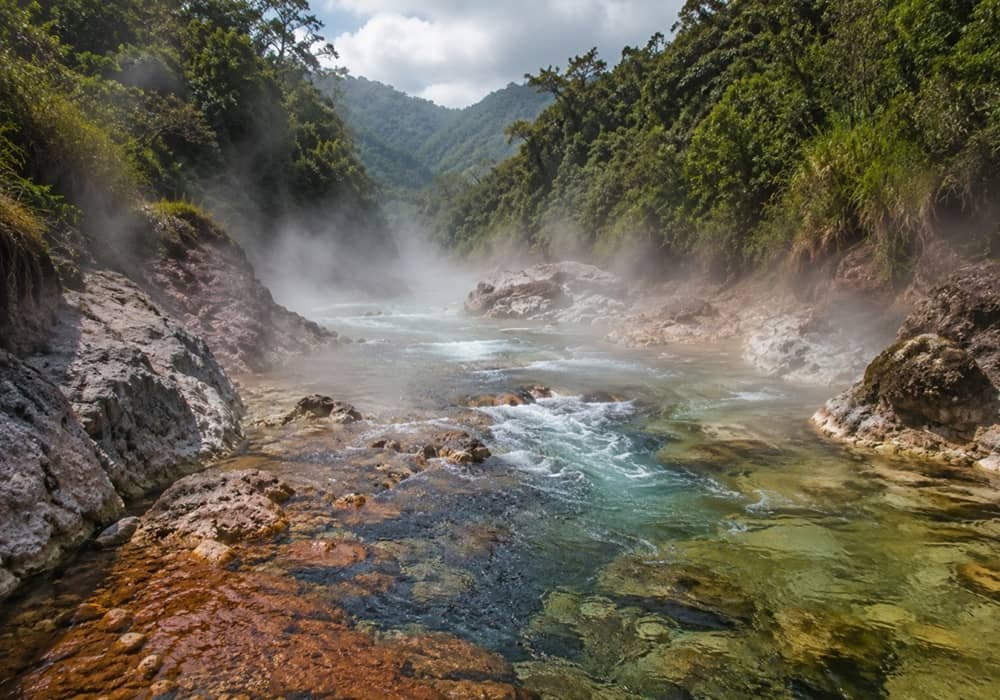
Shanay-Timpishka, also called the Boiling River, is located deep in Peru’s Amazon rainforest in the Huánuco region (District of Honoria, Puerto Inca Province). It is about 6.4 km (4 miles) long, up to 30 meters wide, and 4.5 meters deep. The water reaches 86–100°C (187–212°F), hot enough to cause severe burns in seconds or kill small animals.
The local Asháninka people consider it sacred and use it for healing. It was confirmed and studied by Peruvian geoscientist Andrés Ruzo. Modern science was confused because the river boils without any nearby volcano, the closest volcanic system is over 700 km away, and ordinary geothermal springs don’t cover such a large area.
Scientists now believe rainwater seeps deep underground through cracks and fault lines, heats up by Earth’s natural geothermal gradient, and rises rapidly as superheated water, creating the largest fault-fed hydrothermal system known.
Accessing Shanay-Timpishka is difficult since it lies deep in untouched Amazon jungle. Visitors must travel from the town of Chivillo by boat, then hike through rainforest for about 2.5 hours to reach the nearest point. The river flows into the Amazon River system and supports unique heat-resistant microbes that scientists study to understand how life survives extreme conditions.
2. Richat Structure (The Eye of the Sahara) — Mauritania
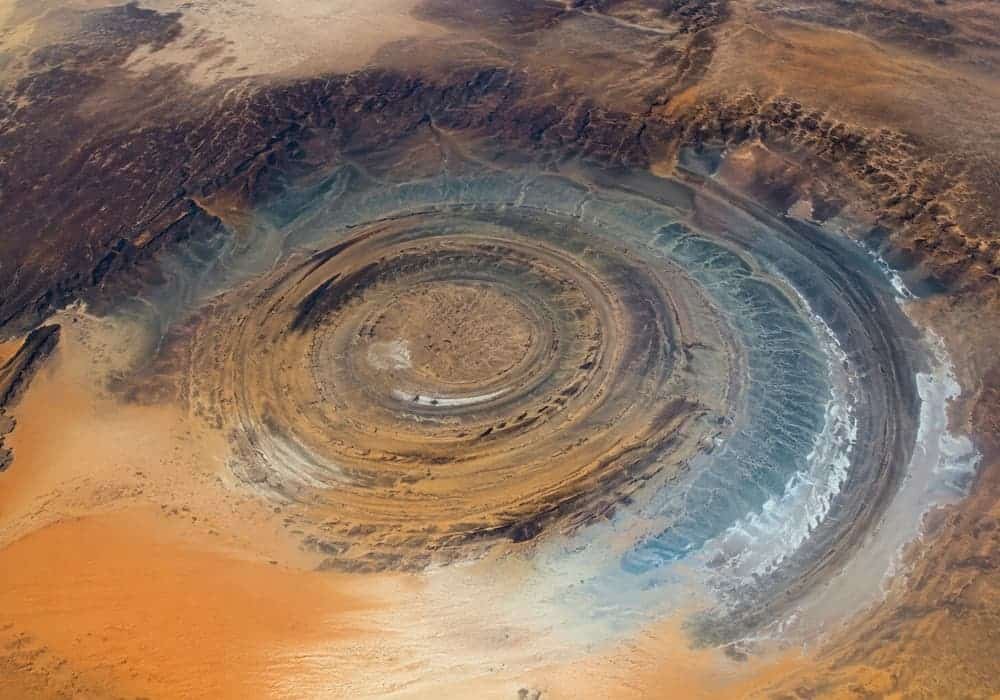
The Richat Structure, also known as the Eye of the Sahara, is a massive circular formation in the Sahara Desert of Mauritania, close to the Adrar Plateau and the old town of Ouadane. It is one of those distinct places on Earth that don’t look real; from space, it looks like a giant eye or bullseye because of its wide concentric rings.
The whole thing is about 40 to 50 kilometers across, making it huge and visible even from orbit. It sits in a dry part of the desert, and persistent northeasterly winds keep much of the dome free from sand, so the rock layers stay exposed. For many years people thought it was a meteor impact crater, but that was wrong. Scientists say it formed from geologic uplift when a volcanic dome hardened and then slowly eroded over millions of years.
The rings are made of sedimentary and volcanic rocks, and at the center there are ancient Precambrian formations. The outermost rings measure around 40 km across. It was one of the first features astronauts noticed in the Sahara because it stands out so clearly.
The structure is not an alien mark or Atlantis site as some crazy people claim. It is a natural rock dome shaped by Earth’s own forces. You can see it in satellite images from NASA and Landsat. It is also on the IUGS list of important geoheritage sites. The area is very hot and dry, and there are almost no people living near it.
3. The Catatumbo River (The Endless Lightning Storm) — Venezuela
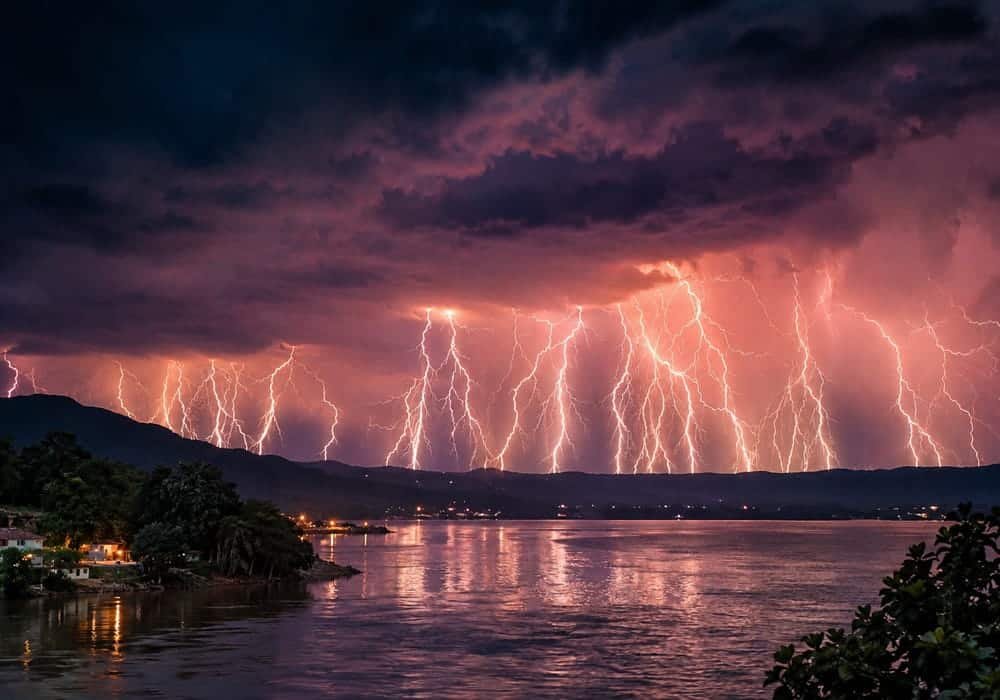
The Catatumbo River is located in northwestern Venezuela and flows into Lake Maracaibo, one of the largest lakes in South America. This area is famous for a natural phenomenon called Catatumbo Lightning, a storm that produces lightning on a very regular basis.
The lightning usually appears where warm, moist air from the Caribbean meets cooler air coming from the Andes Mountains. The storms occur on about 140 to 260 nights each year and can last up to 10 hours in a single night. During peak activity, the sky may produce up to 280 lightning flashes per hour.
Because of its brightness, sailors in the past used the lightning as a natural guide while traveling near the lake. Scientists know that the region’s geography, humidity, mountains, and wind patterns help create these storms.
However, modern science still does not fully understand why the lightning happens so often in the same place and why it is stronger than in most other parts of the world. Even today, researchers continue studying the area to better understand this unusual weather event.
4. Movile Cave (The Sealed Underground Ecosystem) — Romania
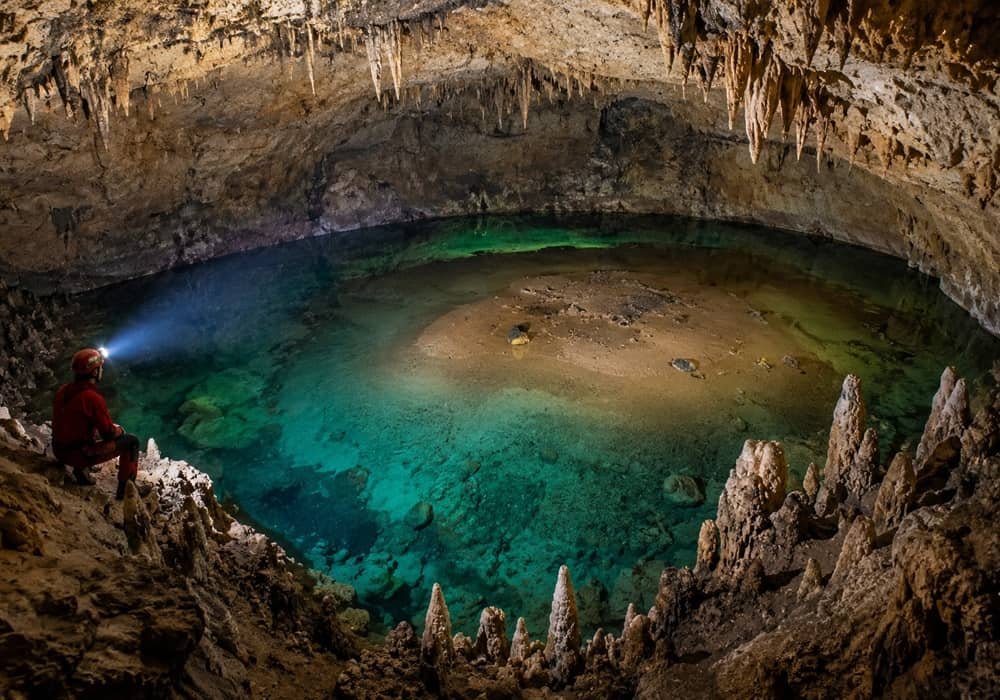
Movile Cave is in southeastern Romania, near the town of Mangalia in Constanța County, just a few kilometers from the Black Sea coast. It was discovered in September 1986 when workers drilling for the Candea Power Plant broke through the ground into the cave. The cave is about 350 meters long with a 27-meter deep underground pond.
The cave has been completely sealed from the outside world for 5.5 million years. No sunlight has entered, and the only connection to the outside is a small entrance shaft. Inside, the air is toxic and dangerous. Oxygen levels are only 7–16% (normal outside air has 21%), while carbon dioxide is 1.5–3.5% (normal is 0.04%). The air also contains hydrogen sulfide, methane, and ammonia. Temperature stays constant at 21°C (70°F) with 100% humidity.
Despite these harsh conditions, over 50 species of invertebrates live there. Scientists found spiders, leeches, water scorpions, snails, mites, centipedes, isopods, and tiny crustaceans, truly some of the strangest things in the world. Thirty-seven of these species are endemic, meaning they only exist in Movile Cave and nowhere else on Earth.
The entire ecosystem works without sunlight. It’s powered by chemosynthesis instead of photosynthesis. Special bacteria use chemicals in the air, such as hydrogen sulfide and methane, to make energy through chemical reactions. These bacteria form microbial mats that cover the water surface and cave walls. The mats are the base of the food chain, making Movile Cave one of the most unusual ecosystems ever discovered.
5. The Eternal Flame Falls (The Sub-Zero Fire) — New York, USA
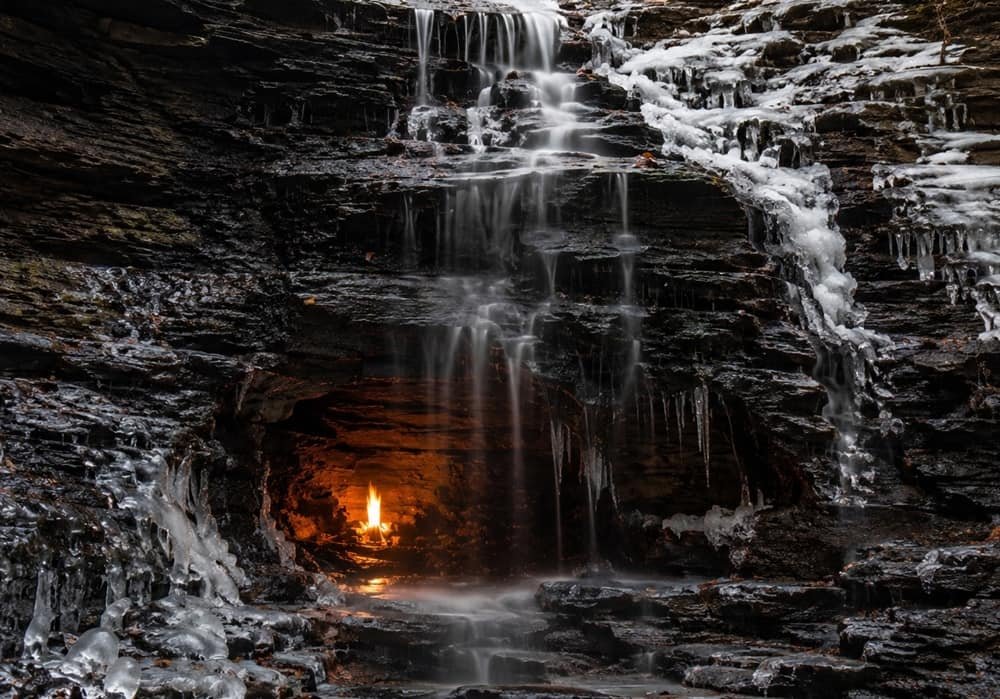
Eternal Flame Falls is a unique, eight-foot-tall waterfall tucked inside the Shale Creek Preserve, which is part of Chestnut Ridge Park near Buffalo, New York. What makes this spot special is a small grotto at the bottom of the waterfall that leaks natural gas.
When lit, a bright four-to-eight-inch flame dances right behind the rushing water, surviving the damp conditions and creating a striking contrast between fire and ice during winter. The flame at Eternal Flame Falls has likely been burning for hundreds or even thousands of years, although not continuously.
For years, scientists believed this phenomenon worked like other natural gas leaks worldwide, where old, incredibly hot volcanic rocks deep underground cook the shale to release gas. However, modern science stumbled when researchers tested the site. They discovered the rocks underneath this waterfall are only about as warm as a cup of tea. The temperature is simply not high enough to break down the carbon in the shale rock naturally.
This means scientists still do not fully understand why this site produces natural gas under relatively cool geological conditions. Scientists only know that the gas travels up from highly pressurized, shallower layers of rock through tiny cracks. To see it, visitors take a moderate hike through a forested ravine, often bringing a lighter just in case wind or water accidentally puts the fragile flame out.
Our planet keeps its secrets in incredibly stubborn ways. These five places show that there is still much about our planet that scientists are working to understand. From rivers that boil without volcanoes to caves thriving on toxic gas, these spots completely disrupt our standard rules. They serve as a stark reminder that despite all our advanced technology, the Earth still has plenty of corners where our best explanations are still incomplete.