
Last Updated on 30th May 2026 by admin
When people think about remarkable engineering achievements, they usually think about skyscrapers or massive bridges. Yet some of humanity’s most impressive creations lie hidden beneath mountains and deep under the sea. Tunnels have transformed transportation by overcoming natural barriers, turning dangerous journeys into faster and safer routes.
But tunnels are more than just passageways. Each tunnel has its own story of incredible risks, brilliant design, and determination. From ancient hand-carved passages to modern high-speed rail links beneath the ocean, these 10 famous tunnels have changed the way people travel around the world.
1. The Channel Tunnel (The Chunnel)
- Location: Folkestone, United Kingdom to Coquelles, France
- Construction Period: 1988 – 1994 (Opened May 6, 1994)
- Length: 31.4 miles (50.5 km) – 23.5 miles entirely under the sea floor
- Type: Undersea Rail Tunnel
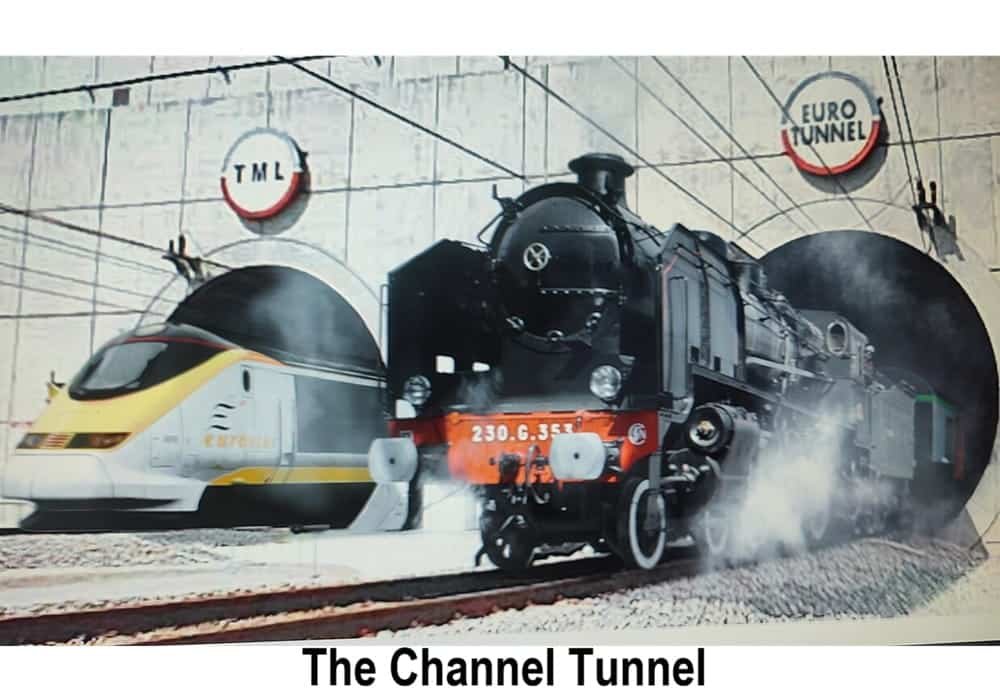
For generations, travel across the English Channel involved navigating turbulent waters and dense fog at sea. Construction of the Channel Tunnel changed that situation completely, when the British Prime Minister Margaret Thatcher and the French President Francois Mitterand approved construction of this multibillion dollar project that would link England to mainland Europe.
To make this dream a reality, over 13,000 workers were operating 11 tunnel boring machines guided by lasers. These enormous tunnel boring machines, each longer than a football field, drilled through the soft chalk marl beneath the seabed.
The Chunnel actually consists of three parallel tunnels that have been dug to construct this channel link. Of these, two tunnels contain the fast-moving Eurostar train and freight trains, whereas the third tunnel is used for ventilation purposes and for maintenance and emergency evacuation access.
The final test of human engineering precision took place in December of 1990, when finally the British and the French teams were able to meet under the ground. After breaking through the final wall, they shook hands through a small gap, being pleased with their success, since the tunnel matched perfectly except for several inches. Channel Tunnel makes it possible to travel from London to Paris in less than three hours with an average speed of 99 mph.
2. The Lærdal Tunnel
- Location: Sogn og Fjordane, Norway
- Construction Period: 1995 – 2000 (Opened November 27, 2000)
- Length: 15.2 miles (24.5 km)
- Type: Mountain Road Tunnel
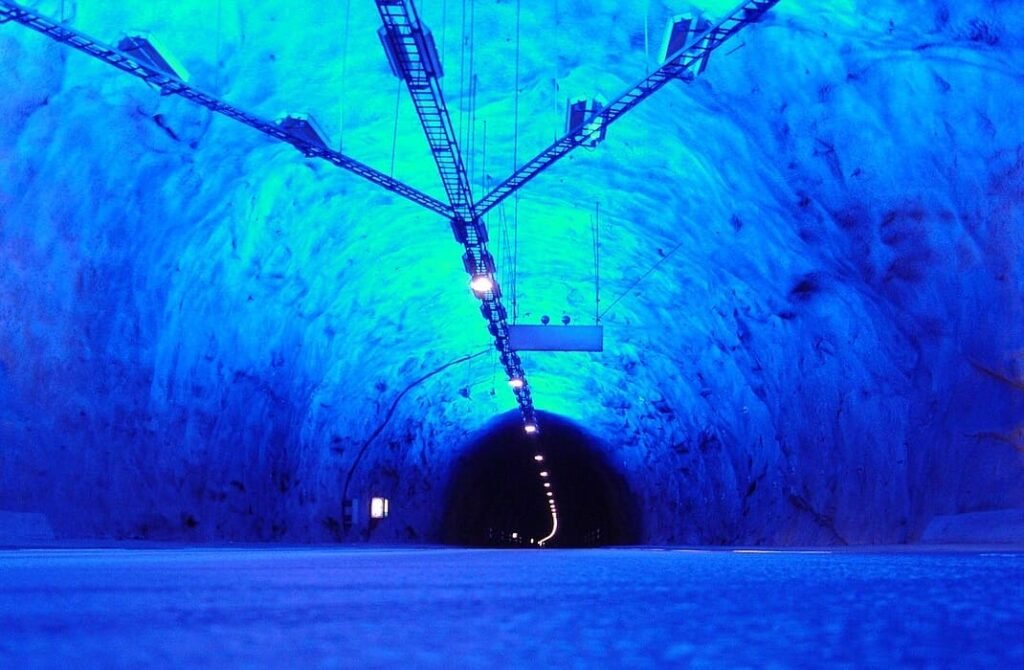
Lærdal Tunnel is the world’s longest road tunnel, stretching about 24.5 km on the E16 between Aurland and Lærdal in Norway, and it is one of the most famous tunnels in the world. Driving for a long time in a dark enclosed space can be exhausting for commuters, leading to something called “highway hypnosis.” Being aware of the dangers, the engineers who designed the world’s longest highway tunnel completely abandoned the conventional design.
In order to ensure safe passage as part of the main road route between Oslo and Bergen, through a mountain range, they paid attention to the psychological effects of the trip on the driver. Rather than creating an unending gray tunnel, they divided the 20 minutes’ drive into segments with the creation of three cavern-like rest areas along the route.
These cavernous spaces are illuminated in a very bright blue and neon yellow light that imitates the rising sun of Scandinavia. The change of setting helps drivers stay alert, providing us with some psychological relief and transforming the unpleasant process into an enjoyable experience, like watching a science fiction movie.
A total of 2.5 million cubic meters of solid rock was removed by blasting. The pathway is completely open to the public without toll charges, thus providing a great example of safety-focused and creative engineering.
3. The Gotthard Base Tunnel
- Location: Swiss Alps (Saint-Gotthard Massif), Switzerland
- Construction Period: 1999 – 2016 (Opened June 1, 2016)
- Length: 35.5 miles (57.1 km)
- Type: Deep Alpine Rail Passage
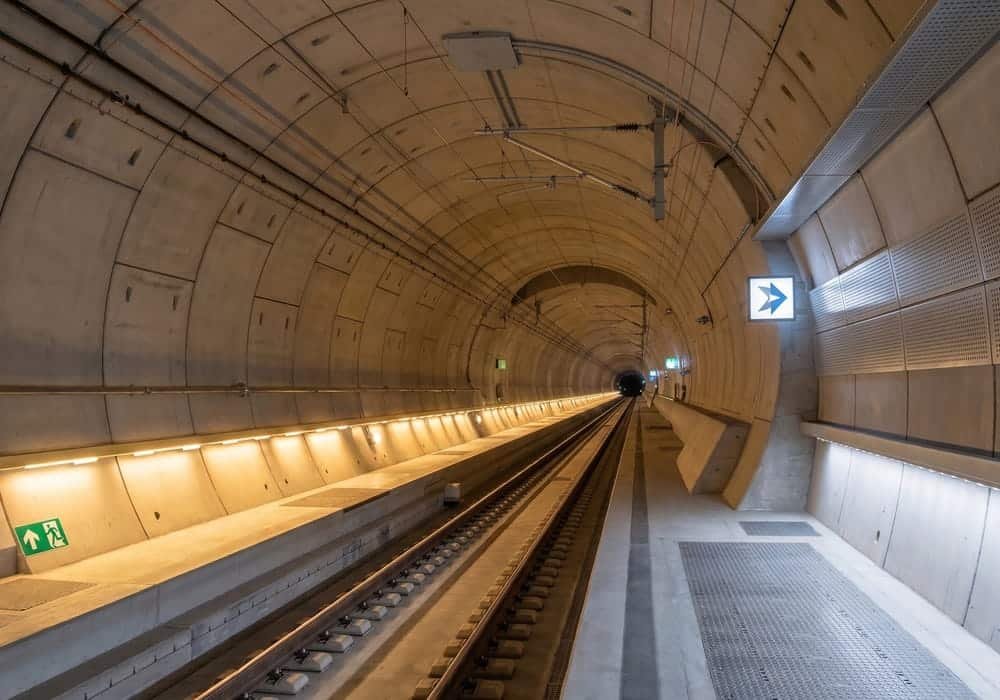
Beneath the snow-capped peaks of the Swiss Alps, engineers completed the longest tunnel in the world and one of the most ambitious tunneling projects of the modern era. Rather than simply digging a tunnel, they managed to drill an entirely straight and perfectly flat high-speed rail corridor through the heart of the mountain range, which had long stood in the way of trade across Europe.
Before the tunnel opened, huge freight trains had to struggle to reach the top of these icy, high-altitude inclines. The solution to this problem came after almost two decades of hard work by workers. This was made possible by four tunnel boring machines standing nearly three stories tall, chewing through 24 million tons of rock.
Working conditions deep inside the tunnel were extremely challenging. Miners operated nearly 7,500 feet below the mountain summits, where the crushing weight of the rock overhead and geothermal heat pushed ambient tunnel temperatures to a staggering 113°F (45°C). Massive refrigeration and ventilation networks were mandatory to keep the air breathable.
Ever since its star-studded opening, the tunnel has revolutionized travel across Europe. Passengers can now travel at speeds of 155 mph through utter darkness on fast trains that shave up to an hour off travel times from Zurich to Milan. Even more importantly, the tunnel today carries millions of tons of freight annually, which was previously transported via mountain highways, and now can move it into a modern electric rail network.
4. The Seikan Tunnel
- Location: Tsugaru Strait, Japan
- Construction Period: 1971 – 1985 (Opened March 13, 1988)
- Length: 33.46 miles (53.85 km)
- Type: Undersea Rail Link
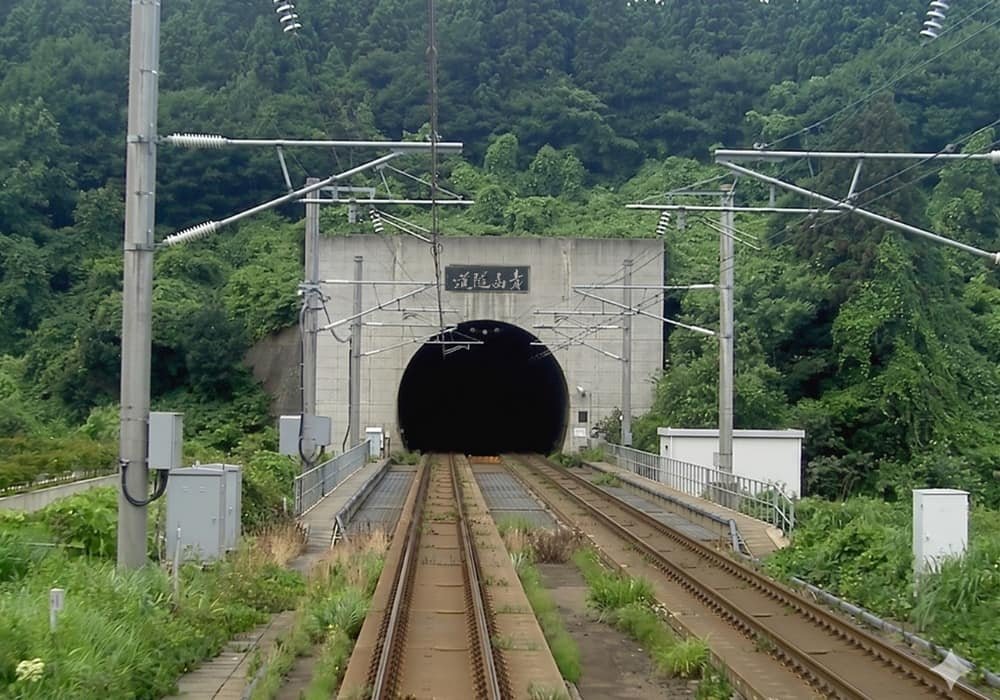
In 1954, the sinking of five passenger ferries during a typhoon in the treacherous Tsugaru Strait claimed more than 1,400 lives. In response, the Japanese government decided to establish a permanent link beneath the strait.
Construction became a 17-year battle against difficult geological conditions. While digging the tunnel in the English Channel, workers were able to dig through the relatively soft chalk beneath, but in Japan, the workers faced a highly unpredictable combination of volcanic ash, cracked rock, and fault lines for earthquakes.
To prevent flooding from the Pacific Ocean from flooding the workspace, engineers developed a system that involved injecting massive amounts of liquid grout into cracks in the rocks before every blast. However, seawater broke through the tunnel walls four times, and many months of emergency pumping were required to save the site.
The completed rail track lies 787 feet under the water surface. The rail track has two emergency underwater emergency shelters with separate oxygen supplies. Currently, there are large automatic pumps that pump 16 tons of water from the tunnel each minute to ensure that the track remains dry for the bullet trains to safely run.
5. The Thames Tunnel
- Location: London, England
- Construction Period: 1825 – 1843 (Opened March 25, 1843)
- Length: 1,300 feet (396 meters)
- Type: Historic Underwater Pedestrian and Rail Bore
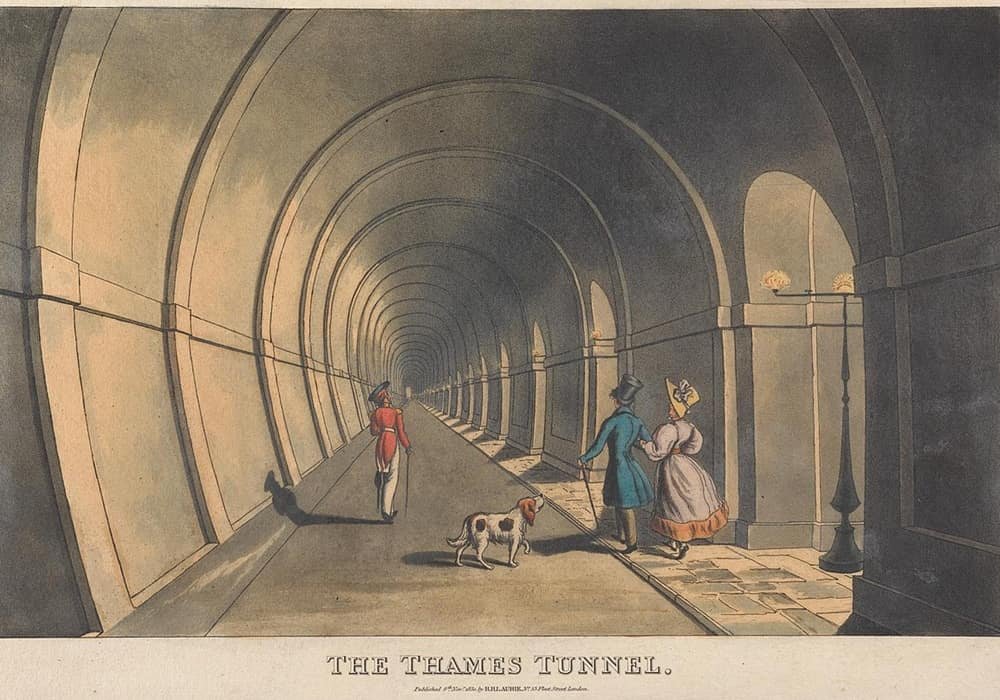
Running beneath London’s River Thames, the Thames Tunnel is one of the most significant engineering achievements in history. Built in the 19th century, it was the world’s first successful tunnel built beneath a navigable river. Engineer Marc Brunel developed the revolutionary tunneling shield for this project, a method that later influenced tunnel construction around the world.
This massive iron structure protected workers on multiple levels, allowing them to excavate small sections of the riverbed through front openings before gradually moving the shield forward. As the tunnel advanced, the newly excavated sections were immediately reinforced with strong brick lining.
Construction took nearly eighteen years due to financial difficulties, gas leaks, and repeated flooding, with the river breaching the site at least five times. Despite these challenges, the tunnel was finally completed and opened as a pedestrian route, quickly becoming a popular attraction in London.
Although it initially featured shops and entertainment spaces, the tunnel was later converted for railway use in 1869. Today, Thames Tunnel remains in operation as part of London’s transport network, standing as a lasting symbol of early modern tunnel engineering.
6. The Tunnel of Eupalinos
- Location: Island of Samos, Greece
- Construction Period: 6th Century BC (Around 550 BC)
- Length: 0.64 miles (1,036 meters)
- Type: Ancient Hand-Carved Aqueduct
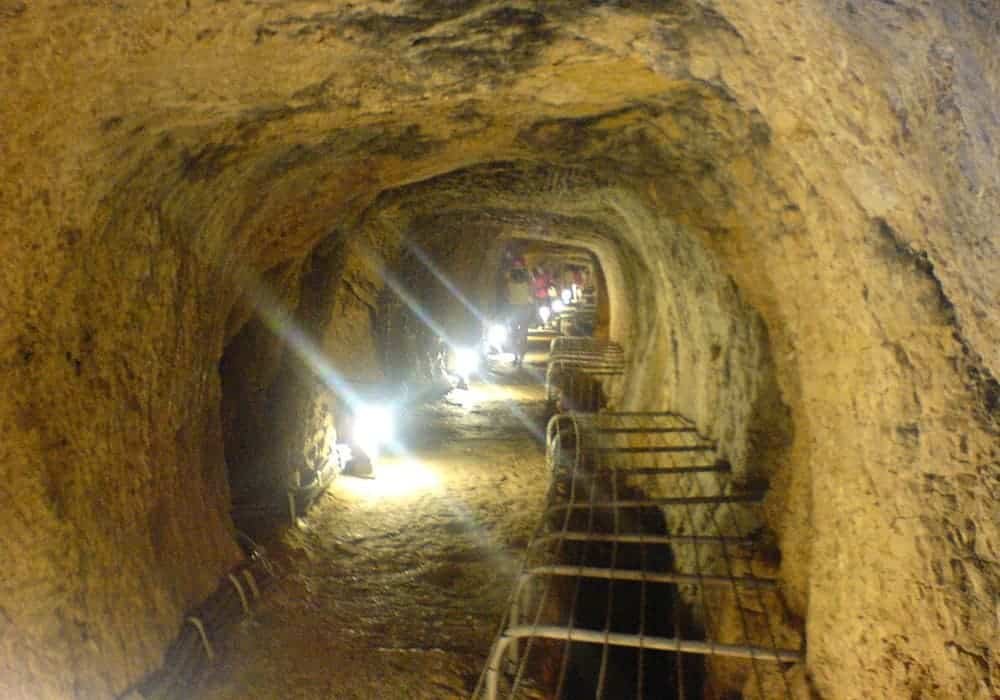
The tunnel was carved into the rock of Mount Kastro more than two-and-a-half thousand years ago. This remarkable underground channel represents one of the greatest achievements of ancient engineering. At the order of the king of Samos, it was constructed as an aqueduct for bringing fresh spring water from outside the walls of the city, thus ensuring that invading armies could not cut off the city’s water supply during a siege.
The reason why this old structure enjoys legendary fame around the world is because of the amazing construction method used. It is considered one of the earliest known tunnels excavated simultaneously from both ends. It is remarkable how without compasses or maps, the old Greek architect, Eupalinos, relied entirely on geometric principles.
To make sure that the two crews did not fail to meet due to the darkness of inside the mountain, Eupalinos cleverly altered the survey line near the expected midpoint. He ensured that both crews adjusted their paths at a sharp angle, making sure that they were bound to cross each other so they would intersect despite any surveying errors.
The two crews successfully met deep inside the dark mountain rock with a staggering margin of error of less than twenty feet. This ancient marvel served for centuries, standing tall as a testament to the early birth of advanced mathematics, engineering, and precision in humans.
7. The Holland Tunnel
- Location: New York City to Jersey City (Under the Hudson River), USA
- Construction Period: 1920 – 1927 (Opened November 12, 1927)
- Length: 1.6 miles (2.6 km)
- Type: Historic Mechanically Ventilated Underwater Highway Bore
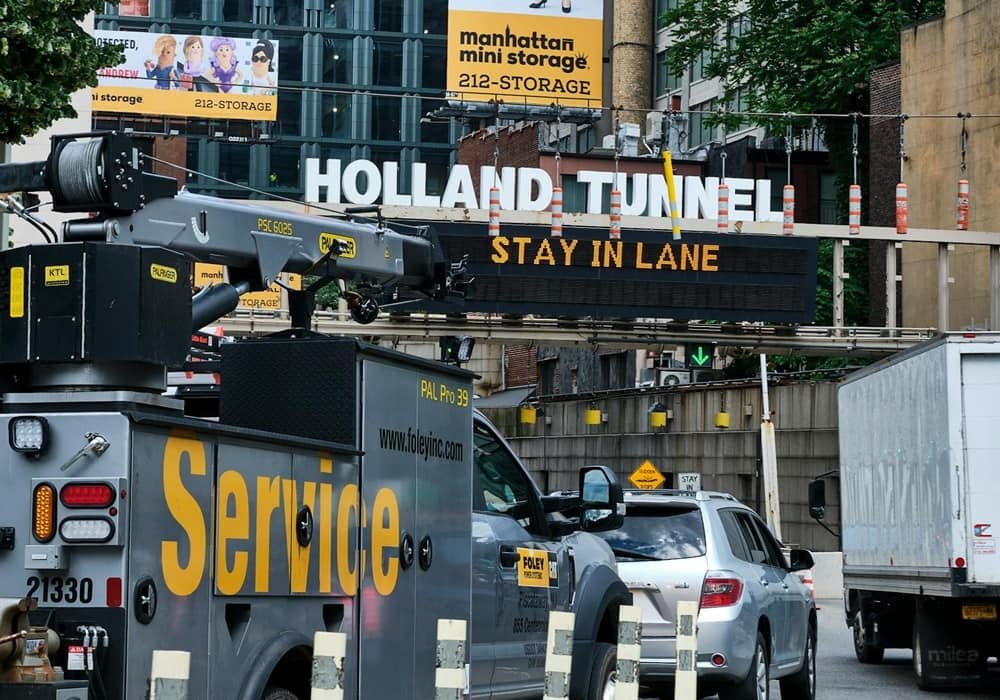
This iconic route runs beneath the busy waters of the Hudson River and connects Manhattan, one of New York’s most famous landmarks and boroughs, with New Jersey. The beginning of the 1920s found local business choked by inefficient ferry service along the river, unable to keep up with the a sudden rise in car traffic. There was an urgent need for a permanent highway link.
The project faced a major scientific challenge that many experts had considered impossible, namely to protect drivers from toxic carbon monoxide exhaust inside a long enclosed space. Chief engineer Clifford Holland and his team found a solution to this lethal predicament: they installed a large mechanical ventilation system with 84 massive, 10-story tall electric fans.
These huge fans extract clean air through an ongoing pipeline running along the tunnel floor, while drawing out contaminated air from the tunnel at the same time, replacing all the air inside the tunnel every ninety seconds. Workers excavated the two parallel tunnels from the bottom up, digging through dangerous, shifting river silt while enduring extremely difficult conditions inside pressurized steel shells called tunneling shields.
Sadly, the pressures associated with the construction of the tunnel contributed to Clifford Holland’s death from a nervous breakdown and heart attack just a few days prior to completion of the successful drilling of the tunnel walls. The tunnel remains one of the world’s most famous tunnels, with more than 100,000 cars passing through its gates each day.
8. The Mont Blanc Tunnel
- Location: Alps (Connecting Chamonix, France to Courmayeur, Italy)
- Construction Period: 1959 – 1965 (Opened July 19, 1965)
- Length: 7.2 miles (11.6 km)
- Type: Alpine Highway Mountain Pass
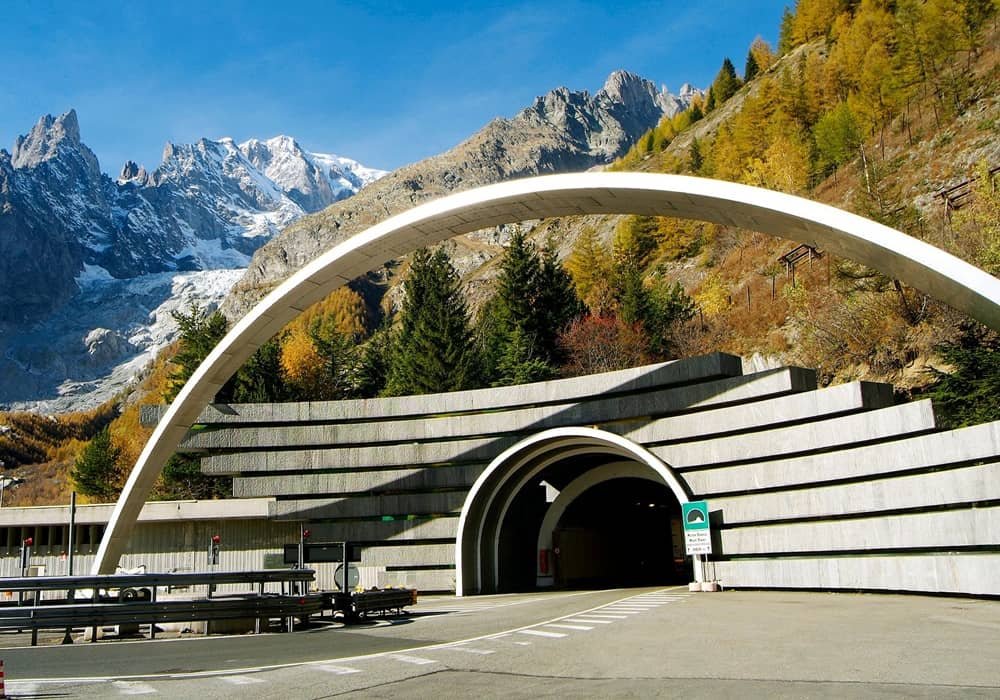
This historic high-mountain tunnel is located beneath Mont Blanc, Europe’s highest peak, and is a huge landmark in the history of international transport. Prior to its construction, goods had to travel through dangerous, icy mountain roads, which were completely closed by heavy winter snows for more than half of the year between France and Italy.
To drill a path through the crushing weight of the solid granite peaks, French and Italian excavation crews started from opposite sides of the mountain, slowly blasting toward each other. All the way, the laborers were in great danger as they struggled with sudden flooding, pockets of poisonous gas and severe rock bursts as a result of the tremendous pressure of the mountain above.
The one-tube highway was a complete transformation of European business as it allowed for a permanent trade route that used to take a full day to cross the Alps now takes just a few minutes. Its binational management structure was a model adopted by others around the world for managing a large-scale border crossing between two nations.
After a tragic, high-profile truck fire in 1999, the entire interior was remodeled with a range of modern safety features, costing millions of dollars. Mont Blanc Tunnel one of the world’s most closely monitored road tunnels, with hundreds of automatic fire suppressors, computer controlled thermal sensors and pressure controlled under-ground shelter rooms to protect the thousands of cars that pass through each day.
9. The Tokyo Bay Aqua-Line
- Location: Tokyo Bay (Connecting Kawasaki and Kisarazu), Japan
- Construction Period: 1989 – 1997 (Opened December 18, 1997)
- Length: 9.4 miles (15.1 km) total — 6.0-mile undersea tunnel portion
- Type: Hybrid Marine Bridge-Tunnel System
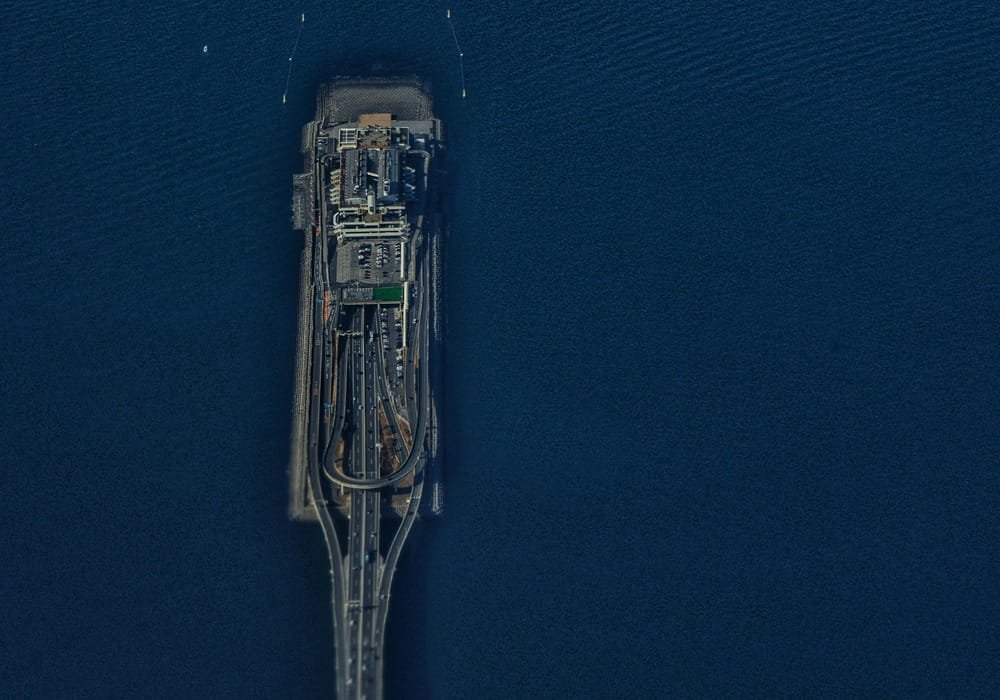
The Tokyo Bay Aqua-Line is one of Japan’s most remarkable transportation projects, combining a bridge and an undersea tunnel in one crossing. It significantly reduced travel time between Kawasaki and Kisarazu, cutting what was once a long coastal journey into a much shorter drive. Designed as a hybrid bridge-tunnel system, it provides an efficient route across the busy waters of Tokyo Bay.
From the Chiba side, the vehicles start their journey on a 2.7-mile-long bridge over the waves. Then, the roadway drops, plunging into the ocean to become a six-mile undersea pipe that sits on the bottom of the bay.
Builders created “Umi-hotaru” (the Firefly of the Sea) at precisely where the bridge plunges into the sea, a five-story artificial island. It is a popular tourist stop with shops and restaurants, but also as the home to the massive ventilation fans that bring in fresh air into the dark lanes below.
`The soft, unstable silt of the active bay floor had to be stabilized in innovative ways to be able to push the large boring machines through. The final concrete cylinder is equipped with strong steel lining that are specifically designed to flex without cracking during the regular, severe and unpredictable earthquakes that hit the Japanese coast.
10. The Atal Tunnel
- Location: Rohtang Pass, Himachal Pradesh, India
- Construction Period: 2010 – 2020 (Opened October 3, 2020)
- Length: 5.6 miles (9.02 km)
- Type: Record-Breaking High-Altitude Highway Pass
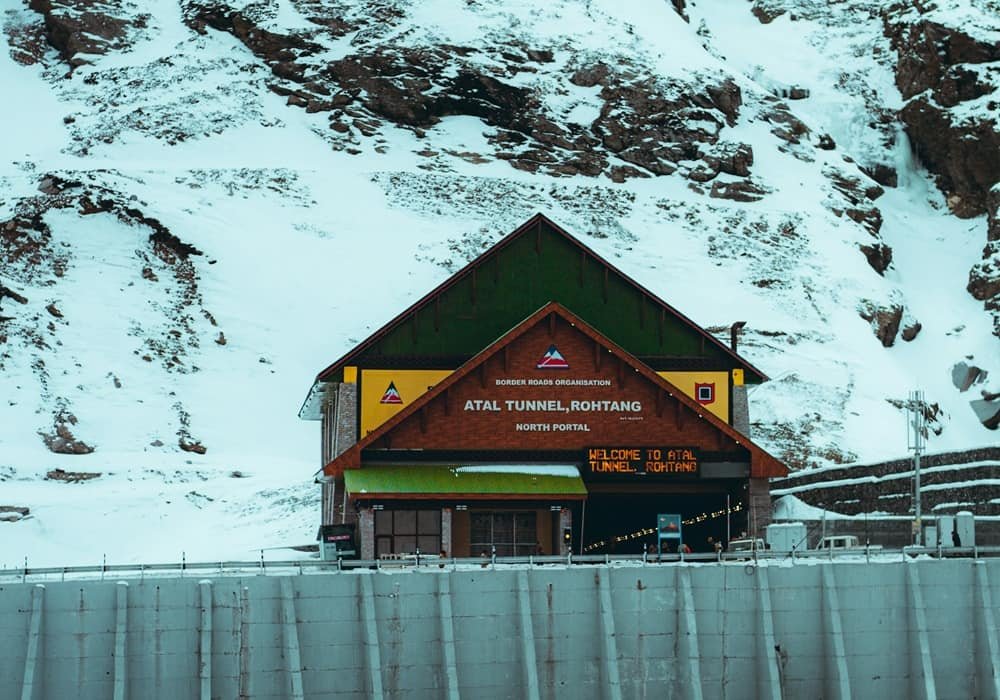
This engineering marvel runs through the Pir Panjal range of the Himalayas and is one of the world’s most famous high-altitude road tunnels, sitting at about 10,000 feet above sea level. Before tunnel was built, the Rohtang Pass was known for being very hazardous for travelers who had to endure large amounts of snowfall, mudslides, and avalanches that blocked access to these isolated valleys for six months out of every year.
Constructing a road tunnel at such a high altitude turned out to be a major engineering challenge. The engineers of the Border Roads Organisation faced their most difficult geological challenge when they encountered the Seri Nullah fault area, which was made up of broken rocks for 500 meters, with large volumes of water and mud continually overflowing the working space for nearly four years.
To ensure safe passage that drivers are safe at such great depths within the mountain core, the tunnel was designed with all the latest safety features in mind. Located below the main two-lane road is an emergency evacuation passage lined with modern safety systems, including automatic fireproof doors placed at intervals of 150 meters along the tunnel.
The tunnel greatly improved regional connectivity and the local economy of the entire area by providing a permanent passage, no matter the season. The pass saves travelers more than four hours from Manali to Keylong through shaving time from this difficult route, which transports thousands of people and crucial winter supplies each day in the area.
These famous tunnels are far more than transportation routes, they are extraordinary examples of human engineering and problem-solving. Whether carved by ancient builders or constructed using modern technology, each tunnel reflects the determination to overcome natural barriers and improve connectivity around the world.