Last Updated on 8th December 2025 by admin
Canada is home to some of the most impressive peaks in North America, that rise very high above the expansive wilderness, icy valleys, and isolated landscapes which are never really visited by many people. These mountains stand high out of the ragged terrain of the Yukon, British Columbia and the Saint Elias Mountain Range creating one of the wildest and most breathtaking parts of the earth. Although most tourists know that Canada has national parks, lakes, forests, and wildlife, the highest mountains of the country are also considered to be one of its most significant natural resources.
These mountains provide a phenomenal view of the wild geography of Canada, revealing the raw magnitude and beauty of the northern Canadian scenes. This article will take you on an exciting and scenic adventure through the top 10 tallest mountains in Canada, which are listed from highest to lowest.
| Rank | Mountain Name | Height (m) | Height (ft) | Location |
|---|---|---|---|---|
| 1 | Mount Logan | 5,959 m | 19,551 ft | Yukon, Saint Elias Mountains |
| 2 | Mount Saint Elias | 5,489 m | 18,009 ft | Yukon / Alaska (Border) |
| 3 | Mount Lucania | 5,240 m | 17,190 ft | Yukon, Saint Elias Mountains |
| 4 | King Peak | 5,173 m | 16,972 ft | Yukon, Saint Elias Mountains |
| 5 | Mount Steele | 5,073 m | 16,644 ft | Yukon, Saint Elias Mountains |
| 6 | Mount Wood | 4,850 m | 15,910 ft | Yukon, Saint Elias Mountains |
| 7 | Mount Vancouver | 4,812 m | 15,787 ft | Yukon / Alaska (Border) |
| 8 | Mount Slaggard | 4,742 m | 15,558 ft | Yukon, Saint Elias Mountains |
| 9 | Mount Fairweather | 4,653 m | 15,266 ft | British Columbia / Alaska |
| 10 | Mount Hubbard | 4,557 m | 14,951 ft | Yukon / Alaska (Border) |
1. Mount Logan
Height: 5,959 meters (19,551 feet)

Mount Logan, which is situated in the remote wilderness of the Kluane National Park in Yukon is a tallest mountain of Canada and one of the most massive peaks in the world. The sheer size is amazing with large base and various summits joined by long ridges of ice. It is named after Sir William Edmond Logan, one of renowned Canadian geologists, and has long been a representation of the rugged Canadian identity of the North.
Mount Logan is a spectacular mountain not just because of its elevation, but because of its size and its harsh weather. Temperatures on higher mountains may fall to very low conditions even in summer, and the conditions of climbing are extremely severe. The surrounding scenery is dominated by huge icefields and glaciers which give the impression of untouched nature and near otherworldly landscape.
With all its challenge and beauty, Mount Logan has become the favorite of the world climbers who will go miles to see the beauty and the challenge that Mount Logan has presented to the globe. Non-climbers can also experience the mountain by sightseeing flights around the mountain, and not forgetting the view they can have of this icy giant.
2. Mount Saint Elias: Yukon Territory and Alaska
Height: 5,489 meters (18,009 feet)

Mount Saint Elias is the second-highest mountain in Canada and the third-highest mountain in North America, which spans the border between Canada and the United States. This most incredible and towering peak soars high above the gulf of Alaska, forming one of the strongest vertical reliefs on the continent.
It is named after the Cape Saint Elias that was discovered by the Danish explorer Vitus Bering. The mountain is also known by its great wild and unpredictable weather in addition to its great height. The Pacific Ocean storms have the tendency of sweeping over the area and thus climbing is very difficult.
The mountain has a sharp, commanding look due to the steep slopes and huge glaciers that have fascinated the explorers since over a century. The combination of beauty, difficulty, and remoteness of Mount Saint Elias makes it one of the most dramatic mountains in Canada that attracts only the most professional mountaineers who are ready to cope with its extreme conditions.
3. Mount Lucania: Yukon Territory
Height: 5,240 meters (17,190 feet)

The third-highest mountain in Canada is Mount Lucania located far in the rugged Saint Elias Mountains of the Yukon. Explorers Bradford Washburn and Robert Bates were the first people to climb this mountain in 1937, and their mission was a legendary one because the conditions under which they had to work were very difficult.
They landed on a glacier in a light plane, after which they had to walk out on foot, as the snow melted, and this made their expedition one of the most challenging in the history of North American mountaineering. The mountain itself is isolated, frozen and encircled with large bodies of ice, posing a real challenge of stamina and navigation.
The ridge of Mount Lucania is the most amazing with the glimpses of the neighboring mountains and glacier expanses, however, to get there, the technical experience and skills of handling the complete isolation are necessary. Mount Lucania is a great mountain that is highly regarded and whose dramatic history and pristine landscape make it an interesting place among climbers.
4. King Peak: Yukon Territory
Height: 5,173 meters (16,972 feet)

Another high mountain in the Saint Elias Range is King Peak, which is found close to Mount Logan. King Peak is a great mountain despite being eclipsed by its bigger neighbor. The summit is rocky with sharp ridges, snowfields and glaciers which cut across the landscape making it dramatic and rugged in appearance.
It is among the most isolated of the highest mountains of Canada because of its remote location and strenuous conditions. The climbers are faced with a grave task as the weather is unpredictable and the storms would develop at any moment.
Nevertheless, who ever makes it to the top of it, is rewarded with some of the most breathtaking scenes of the high-lying scenery around it, such as the mighty Logan Massif. King Peak still reminds of the raw, untamed beauty of the Canadian wilderness to the north and still appeals to elite mountaineers who are looking to find solitude and challenge.
5. Mount Steele: Yukon Territory
Height: 5,073 meters (16,644 feet)
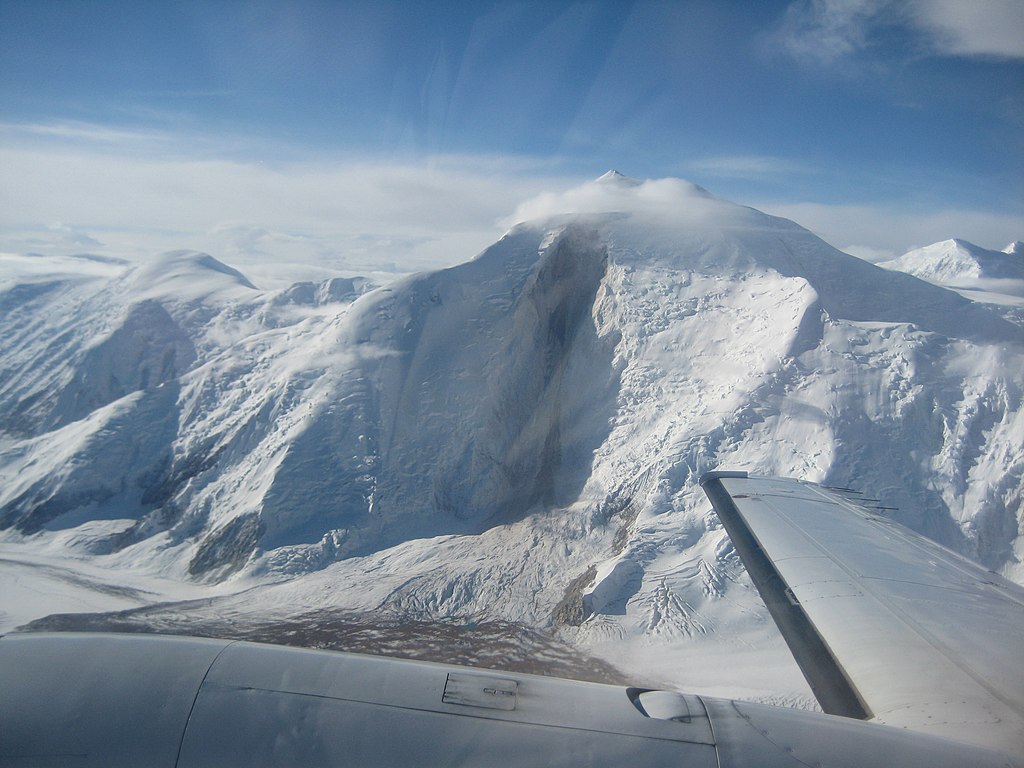
The fifth highest mountain of Canada is the Mount Steele which was named after the historic North-West Mounted Police leader Sir Sam Steele. It is in the middle of the Saint Elias Mountains and is recognized to have high ice-falls and glaciers full of crevasses.
The summit is very conspicuous in its appearance, and its acute ridges and snow-white precipices soaring above the rest of the icefields. Though not such a notoriously tough mountain as Mount Logan or Mount Saint Elias, Mount Steele nonetheless poses a good challenge to climbers because of unpredictable bad weather and the danger of avalanches.
It is beautiful because it is remote and pristine, with the endlessly vast snow fields that melt into the horizon. Mount Steele is an amazing experience, especially to those who appreciate the wilderness above the sea level, which they can observe either through the air or when they walk to the mountain during an expedition.
6. Mount Wood: Yukon Territory
Height: 4,850 meters (15,910 feet)

Another spectacular mountain is Mount Wood which is also found in the Kluane National Park of Yukon. It sharply emerges out of the icy terrain of the Saint Elias Mountains, and is famous due to its graceful form and protruded summit ridge. The mountain ranges are heavily carved by snow and wind producing a beautiful natural design that varies according to the seasons.
Mount Wood is not the preferred mountain by a number of climbers as compared to other high mountains in the area, but it is a beautiful and iconic mountain. It is remote and difficult to reach, which also makes it attractive to more experienced mountaineers, who want to follow a path less traveled.
Tourists flying over the area usually look at Mount Wood which appears during scenic flights with its frozen ridges and impressive silhouette that can be seen among the other peaks. Mount Wood is an outstanding feature of the Canadian alpine landscape that leaves a memorable impression with its height, beauty, and wilderness.
7. Mount Vancouver: Yukon Territory
Height: 4,812 meters (15,787 feet)

Mount Vancouver is located on the border between Canada and Alaska and is among the most unique mountains in the Saint Elias Range. It is made up of a number of summits such as the Good neighbor peak and the main peak of the mountain of Vancouver all joined together with amazing ridges.
The mountain is named after the British naval officer and explorer George Vancouver who mapped most of the Pacific Northwest. Its sharp slopes and dramatic elevation add to its strong appeal to the landscape. Large glaciers, snow fields and rugged ridges fill all the surrounding area that characterize the wilderness of the area.
Mount Vancouver is one of the most stunning mountains in Canada, despite being extremely hard to climb. Its icy peak can be observed on clear days that occur infrequently but offer an incredible view to anyone who travels the area.
8. Mount Slaggard: Yukon Territory
Height: 4,742 meters (15,558 feet)

Mount Slaggard is an isolated and rugged mountain in the distant part of the Saint Elias mountains. It is one of the highest, most beautiful mountains in Canada though not as famous as some of the more prominent ones in the area. It has a very strong and dramatic profile, as its long ridges and sharp slopes make it stand out, particularly as seen by the surrounding valleys.
This mountain is named after a British adventurer named Harold Slaggard and it perfectly blends into the wild and icy landscape that characterizes this Yukon section. Mount Slaggard is not climbing because of its remote position and unpredictable weather and it is peaceful and untouched area of the Canadian alpine world.
People who dare approach it tend to speak of the feeling of a pounding silence and the natural sublimity, as the peak rises undisturbed among the surrounding glaciers.
9. Mount Fairweather: British Columbia and Alaska
Height: 4,653 meters (15,266 feet)

Mount Fairweather is among the most spectacular mountains in west coast, North America and is on the border between British Columbia and Alaska. The name of this mountain may indicate a serene environment but the thing is different. Mount Fairweather is a mountain of severe nature and the Pacific Ocean is always flooded with storms.
This establishes a dramatic backdrop of churning clouds, excessive snowfalls as well as changing visibility at a very high rate. Mount Fairweather is very beautiful despite the harsh environment, as it sticks out of the sea level to the skyscraping peak. This sharp ascent makes it one of the most vertical reliefs of the mountain in the globe.
It is particularly beautiful in the peak, as seen through Glacier Bay or when it is clear, on an uncommon day at the ocean. The mixture of sea views and mountain grandeur make Mount Fairweather one of the most recognizable high mountains in Canada.
10. Mount Hubbard: Yukon Territory and Alaska
Height: 4,557 meters (14,951 feet)

One of the most remarkable mountains in the Saint Elias Mountain Range is Mount Hubbard which borders the Yukon territory of Canada and the U.S. state of Alaska. The mountain is a dramatic piece of land soaring out of huge glaciers and steep valleys, which show the primitive strength of this mountainous northern setting.
The mountain was named in honor of Gardiner Greene Hubbard who was the first president of the National Geographic Society, the mountain has been considered to be dramatic and the ridges in the mountain are sharply defined and topped up with a summit crown. The area around Mount Hubbard is characterized by extreme weather conditions that are unpredictable and storms may occur with very little notice and sometimes all around the range making it hard-going to a climber.
Although these challenges exist, the mountain is an intriguing place to visit to people who are attracted to wild nature. Its elevation, its icy slopes and the panoramic view of mountains around it make the mountain Hubbard an indelible addition to the alpine landscape of Canada and an appropriate inclusion in the list of tallest mountains of the country.
Canada’s tallest mountains represent some of the most unbelievable mountains in North America in the combination of vast glaciers, steep mountains, and rough wilderness that cannot be found anywhere in the world. The mountains, as high as Mount Logan and as beautiful as Mount Fairweather, form much of the Canadian identity of the north and are still a source of adventure, endurance and natural beauty. Whether explored from the air, admired from distant viewpoints, or challenged by experienced climbers, these peaks offer a breathtaking look at the sheer scale of the Canadian wilderness.