Last Updated on 11th December 2025 by admin
Lake Retba, famously known as Lac Rose, is one of the most remarkable natural sites in West Africa. This pink coloured lake is found in Senegal and has drawn the attention of scientists, photographers and travelers over decades. Providing beautiful coloring of rose and coral to the flourishing industry of salt-gathering, and its strong cultural importance, Lake Retba is more than a beautiful location- it is an ecosystem of life which is influenced by nature, tradition, and people.
In this detailed guide, we’ll explore everything that makes Lake Retba so special, such as its its location, geological features and the science behind its pink color. Also get to know about the microorganisms that live in its salty waters, the centuries old methods of extracting salt, tourism, culture significance, environmental issues and how it has compared to other pink lakes in the world. By the end, you will know why this spectacular lake still becomes a source of amazement to anyone visiting it.

Location and Geography
Lake Retba is located in the Cap Vert Peninsula, which is located directly northeast of the vibrant capital city of Dakar in Senegal. It occupies an area of about three square kilometers but its influence on the area is massive. The lake is located near the Atlantic Ocean with only high sand dunes that create a natural barrier between the saltwater lake and the open sea.
Its charm is supplemented by the landscape around. There are warm golden dunes, which extend along the shore and form a strong contrast with the pink shine of the water. In certain places the lake shows calmness and a mirror-like surface, and, in others, the wind causes slight ripples reflecting various shades of pink color based on the sunlight. The mixture of color, texture and scenery has seen Lake Retba being among the most photographed natural wonders in Africa.
The lake itself is shallow and is typically only a few meters deep. This shallow contributes to its salinity and even its color since the sunlight penetrates into the water easily and reacts with the microorganisms dwelling within it.
Why Lake Retba Turns Pink
The most famous thing about the lake is the bright pink color of the lake. But what causes this unusual phenomenon?
The answer lies in a type of algae called Dunaliella salina. These microorganisms are highly salty and Lake Retba offers the ideal environment they can grow. Under bright sunlight, the algae develop reddish colour, which disperses in the water and gives the lake its famous pink colour.
The shade of pink is not always the same. It changes depending on:
- The season
- Salt concentration
- Sunlight intensity
- Temperature
- Water level
Water evaporates rapidly and the salinity increases during the dry season that typically occurs between November and June. This will result in darker and more rich pink. In rainy season the water is more diluted and the colour tends to turn to light colours.
Visitors are used to compare it with a magical or dream-like scenery, especially during the early mornings and in the late afternoon, when soft sunlight compliments the natural color.
Extreme Salinity and Unique Microorganisms
One of the saltiest lakes in the world is Lake Retba. During certain seasons of the year, its salinity is as high as 40 percent, which is almost ten times more than the ocean. Not many organisms can live under such circumstances but the lake has a fascinating array of salt-loving species.
Dunaliella salina algae
These algae are the main cause of making the lake pink in colour. They have some carotenoids- natural pigments present in carrots and some fruits as well which protect the algae against the hot sunlight and enable it to survive the high salty conditions.
Halophilic bacteria
Halobacteria are also found in the lake and are microorganisms that survive under very salt conditions. These bacteria are useful in the degradation of organic materials and also in the ecological balance of the lake in general.
These organisms together make a very distinct environment which is not only beautiful, but also scientific. Scientists tend to go to Lake Retba to understand how life can take extreme conditions and some scientists have even gone to examine the possibility of relating to how life can survive in other planets.
Traditional Salt Extraction Industry
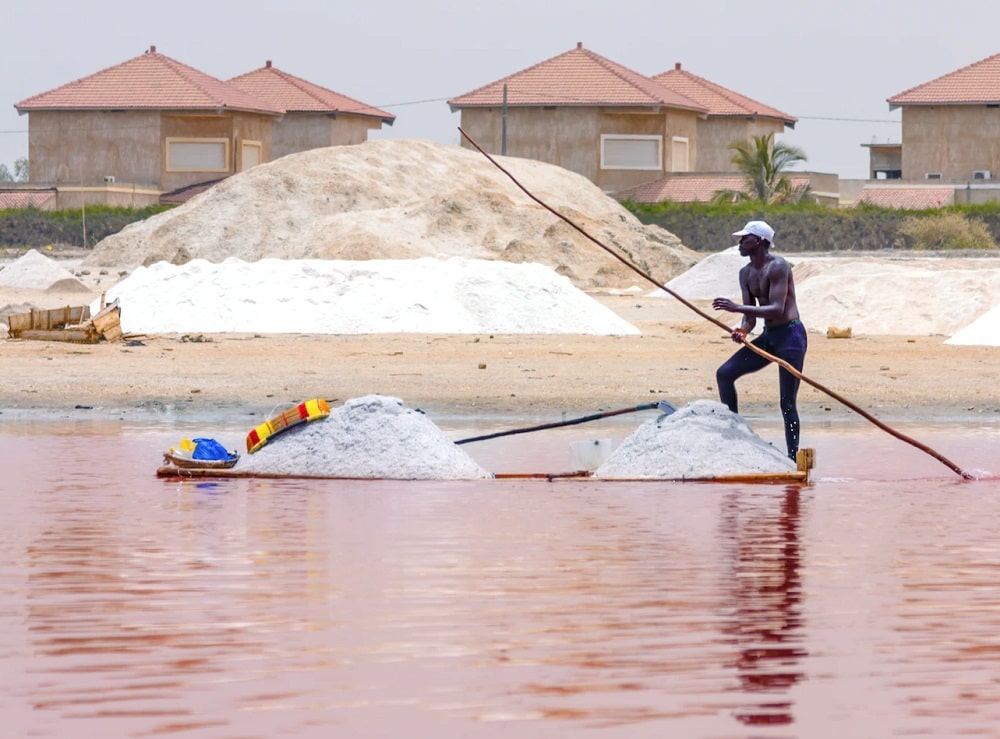
The salt-harvesting industry of Lake Retba is one of the most impressive features of it. This lake has been a great source of income to the local communities over the generations. There is too much salt in it and the workers can afford to walk into the shallow water and collect salt that naturally settles on the lake bed.
How Salt Harvesting Works
Workers get into the lake during the dry season by wooden boats and basic tools. They scoop the salt off the bottom and fill it in their boats, and take it ashore where it is stacked in great piles on white, to dry in the sun.
Cultural and economic importance
The harvesting of salt is physically strenuous. To preserve their skin against the harsh salt, workers usually apply shea butter on their bodies. This industry is the source of livelihood of many families, and the tradition has been inherited over decades.
The salt obtained here is perfect and valued in its mineral qualities. It is not only sold locally but also internationally, where it plays a major role in the economy of the region.
A symbol of resilience
It is very strong to see workers picking salt by hand in the middle of pink waters and white salt hills; it reminds people of the strength of a human being and the tradition. One of the best iconic images that relate to Lake Retba is it.
Tourism and Attractions
Lake Retba is one of the leading tourist spots in Senegal in recent years. This strange colour attracts visitors worldwide who visit it to enjoy the calm atmosphere.
Popular activities include:
- Boat rides across the pink water
- Photography, especially during sunset
- Camel rides along the sand dunes
- Bird watching, as the area attracts many species
- Kayaking and paddleboarding
- Cultural tours to meet salt-harvesting communities
It is one of the most interesting places the tourists visit to understand the ways salt is harvested. Numerous visitors also love to accompany the harvesters on a short-term basis to learn the process and to appreciate the effort. This interaction has the advantage of keeping the local cultures going and enhances the relationship between the locals and tourists.
Environmental Concerns and Conservation Efforts
Despite being a beautiful natural phenomenon, Lake Retba has a number of environmental problems. The ecosystem has been stressed due to increased tourism and salt extraction. Without proper management, the natural balance in the lake may be upset.
Key concerns include:
- Over-harvesting of salt
- Pollution from tourism activities
- Disturbance of microorganisms
- Potential changes in water levels
- Climate change impacts
Conservation groups and government organisations have come up with guidelines that are sustainable in protecting the lake. All these are to make sure that salt harvesting is safe to the workers, the tourism is respectful and future generations will see the natural colour of the lake.
How Lake Retba Compares to Other Pink Lakes
Lake Retba is usually referred to together with other popular pink lakes in the world. The lakes are unique in their own way.
Lake Hillier (Australia)
It is famous due to its bright pink colour and is visible even from the sky. It is coloured by both algae and pink-coloured bacteria.
Lake Masazirgol (Azerbaijan)
This lake also becomes pink but the color is much lighter and less intense than Lake Retba.
Why Lake Retba stands out
The colour of Lake Retba is more drastic according to the seasons. The close proximity to the ocean, its low depth, and the high population of Dunaliella salina algae contribute to its colour being especially vivid at some time of the year. Also, it has a long history of salt harvesting making it culturally important, unlike other pink lakes.
Cultural Significance and Local Traditions
Other than beauty, Lake Retba is a rich cultural symbol to the surrounding populations, particularly the Fulan. The lake is thought to have medicinal powers by many locals and some of the traditional ceremonies are still conducted by the shores of the lake.
There is a close relationship between the local people and the lake. The salt harvesting is a cultural heritage and tradition that links generations as well as an economic activity. The people who live around the lake have family stories, methods and rituals that have been maintained over the decades. These traditions are the manifestation of the lifestyle that admires nature and appreciates the collaboration of the community.
Lake Retba is one of the most beautiful natural wonders in the world – where science, culture and beauty have met to the optimum harmony. Its sparkling pink waters, intriguing micro-organisms, centuries-old salt-gathering provides it with a unique tourist attraction.
The need to protect this fragile ecosystem at this wonderful lake is even greater as more and more people visit it and are amazed by the beauty of the lake. The lake can be sustained by maintaining environmentally-friendly ways of doing things and valuing the cultural heritage linked to the lake so that the lake can continue to be a representation of nature and human strength across many generations.