
Last Updated on 25th March 2026 by admin
The Trevi Fountain (Fontana di Trevi) is one of the most famous landmarks in Rome, known for its stunning Baroque design and timeless beauty. Located in the heart of the Eternal City, it attracts millions of visitors every year. Here, we are going to explore the rich history, interesting stories, and architecture of The this iconic fountain (Fontana di Trevi).

Trevi Fountain Brief History
The Trevi Fountain is one of the most iconic masterpieces of Baroque architecture, was built in the 18th century. Construction began in 1732 under architect Nicola Salvi and was completed in 1762 under the designs of Salvi by Giuseppe Pannini, making it one of the most famous landmarks in the world.
The name “Trevi” has its origin in the Latin words “Treium Vorum” which mean three roads that met at the location of the fountain. Gradually, Treium Vorum became Trevi, and the name of the famous fountain has been associated with it since that time.
But why was this world famous fountain built? In its very essence, the fountain appeared due to a very simple necessity, the necessity of the source of the clean and potable water in Rome. The increasing population in Rome during the 18th century was always faced with one challenge, which was getting fresh water.
Although the city was blessed with the grandeur of aqueducts, they were unable to quench all the thirst of the Roman people. The Trevi Fountain came into play at this point.
The fountain was located strategically to the end terminal of one of the ancient aqueducts, which was the Aqua Virgo, to supply clean water to the residents of the area. The decorative nature of the design and sculptures was not only an aesthetic element, but also honored the significance of water and paid tribute to Oceanus, the Roman god of water.
The Legend of Trevi
At the very center of Rome, there is a legend, carved on the very stone of the city. The Trevi Fountain is a place of marvel with its monumental architecture and historic background that draws the attention of travelers all over the world to explore its mysteries. Even it is listed at the top of the famous fountain in Rome, even in the world.
A Wishful Beginning:
The mythical history of the fountain dates back to the first century B.C. In ancient Rome clean potable water was a luxury and the aqueducts in the city were not capable of satisfying the thirst of the population in totality. Introduction to a young Roman girl, Trivia, who had tripped over a secret spring of clear water.
The deep gratitude of Roman soldiers was received because of her selfless gesture of sharing this treasure with them when they were parched. To remember this kindly act the soldiers resolved to raise a magnificent fountain on the same spot that the spring had been discovered. This gave birth to the Trevi Fountain, which is a sign of hope and goodwill.
It was designed to supply clean water while symbolizing generosity and abundance. It has since become a great masterpiece in the heart of Rome, where it receives thousands of visitors who, in tribute to their gratitude, drop coins into the water hoping to ever see this immortal city again. Therefore, the wishful origin of the Trevi Fountain has left an ineffaceable mark in history that serves as a reminder to the strength of the simplest acts of goodness.
A Love Story:
In addition to its historical value, this monument is dipped in the magic of love and romance. Its popularity as a mark of love credits a lot to the 1954 film masterpiece, “Three Coins in the Fountain.” The movie is a masterpiece of narrating a story of three young ladies, all of whom work and live in Rome, but have a thing in common their love and romance.
At the core of the plot is the Trevi Fountain itself, upon which these three women make their wishes by throwing coins into its crystalline waters. Each coin is a distinct wish that concerns love, whether it is to find a soulmate, to restore the love of a lost love or just to feel the wonders of love in the Eternal City.
As the coins shine in the depths of the fountain, they are bringing with them the dreams and desires of the characters and this is indicative of the perennial faith of the power of the fountain to bring wishes to the heart. This film image has permanently connected the Trevi Fountain with the ideas of love and fate, with the imagination of any romantic in the world.
Visitors all over the world today still find inspiration in this love story, as they also join in the tradition of throwing the coins in the fountain, all the time wishing that their love dreams will come to pass with all the beauty and timeless nature of Rome.
The Fountain’s Architecture
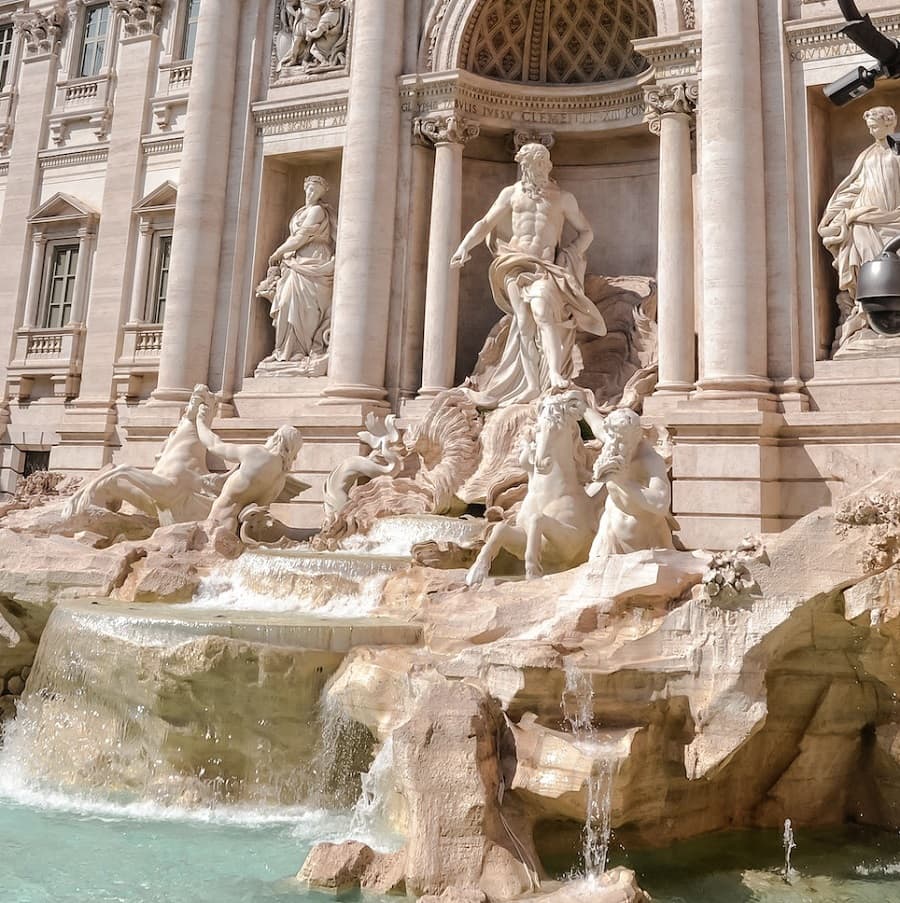
The Trevi Fountain is not just a work of art piece; it is a piece of architecture that has created an indelible mark in the design of architecture globally. The architectural beauty of this iconic fountain is a sign of greatness and artistic idea of that period that invites travelers all over the world to watch its beauty.
Baroque Beauty:
The Trevi Fountain is a beautiful piece of baroque architecture, which was created by an Italian architect, Nicola Salvi, in the 18th century. It is very elaborate in its design and very ornate and it serves as evidence of Baroque style that are in excessive details and dramaticism, making it one of the most famous tourist attractions in Italy.
The main piece of the fountain is Oceanus, the Roman god of water, riding on a chariot drawn by two powerful seahorses. This monumental work of art is majestic and artistic and is a demonstration of the talent of the people who managed to bring the vision of Salvi to reality.
All the parts of the Fountain are decorated with elaborate carvings, reliefs, and statues, and this detail of the work testifies to the attention to detail that characterized Baroque architecture. Oceanus pours water beautifully down his hands into the basin beneath, and the sight and sound are fascinating.
The Trevi Fountain invites the visitor to experience a sensory experience, having a chance to enjoy the visual spectacle, the calming effect of running water, and the depth of artistic work of the Baroque period. It is a great masterpiece of architecture which commands the greatness of Rome and the strength of Baroque beauty which will remain forever.
Mythological Marvel:
The Trevi Fountain has a stunning mythological wonder in the center of the entire structure that gives it depth and meaning, in addition to the already beautiful structure. This main character is none other than Oceanus, the ancient Roman deity of water and his appearance cannot be described as anything but awe-inspiring.
Oceanus is presented in a splendid chariot, pulled by two splendid seahorses. This is a monumental sculpture which is carved and sculpted in detail as the symbol of the great significance of water in the history and culture of Rome. It is a tribute to the aqueducts that used to provide the city with the life-givers of water and gave it its existence and prosperity.
The magnificence of Oceanus and his chariot on the top of the fountain is a praise of efforts and abilities of the artists who worked hard to make this masterpiece. When a visitor looks at this mythological wonder, it takes them back to the time when gods and legends formed part of the day to day activities in Rome.
The splash of the water of the hands of Oceanus falling into the basin of the fountain below provides some element of grace and calm to the image, forming a harmonious combination of sculpture and water, which is typical of the Baroque fountains.
Trevi Fountain’s Statue Showcase

The Trevi Fountain is decorated with a beautiful collection of the famous statues and sculptures, each one is elaborately made and loaded with symbolism. The following are a few words describing the important statues:
- Oceanus: The main and central figure of the fountain is the Roman god of water called Oceanus. He is shown riding on a chariot that is being pulled by two strong seahorses. Oceanus is a high and stately figure that symbolizes the significance of water to the Rome city.
- Abundance and Salubrity: There are two statues called Abundance and Salubrity, which stand before Oceanus. Abundance is usually depicted with a sheaf of wheat in his hand, which signifies prosperity and Salubrity has a cup that a snake is drinking and this symbolizes health and well-being.
- Travertine Rock: The rocks and structures that surround the statues create an impression of a natural grotto. The water flows through a variety of spouts and crevices forming a symbiosis of art and nature.
- The Tritons: On either side of Oceanus, there are two figures of the Tritons, half-men, half-fish. They are observed domesticating seahorses with the focus made on the strength and the mastery of the waters.
- Niche Statues: There are four statues within the niches above the central arch each with distinct concepts. The statues depict Agrippa, the commissioner of the Aqua Virgo aqueduct construction, the Virgin Aqueduct, the purity; the Healthiness- the purity of the water, and the Virility- the power of the water.
- Reliefs and Ornamental Details: There are elaborate reliefs and decoration type all over the facade of the fountain representing different scenes and motifs which contribute to the whole grandeur of the fountain.
These sculptures and statues all give a story with the eyes, which praise the values of water, health, abundance, and the timeless heritage of Rome. They bring the Trevi Fountain to the list of the most glorious and symbolic artworks in the world.
A Coin for a Wish

Along with its architectural stature and mythological wonder, the Trevi Fountain is known by an ancient legacy that attracts tourists worldwide – the act of tossing a coin into its crystalline waters.
The Tradition:
The famous tradition of throwing a coin over your left shoulder using your right hand is one of the most persistent traditions related to the Trevi Fountain. This ancient ritual is attended by visitors of all ages, nationalities, and backgrounds, with a desire in their hearts and a sense of wonder in their eyes.
The Magic Number:
However, there is much more to this tradition than meets the eye. It is not a single coin that is tossed but three. All the coins are symbols of these different desires: one to come back to Rome, one to get in love in the Eternal City, and one to be sure of a marriage in the future. It is an intergenerational belief, a secret communicated quietly to those who have been in the presence of the Trevi Fountain.
This is another element of magic to the charm of the fountain as it becomes a venue where dreams are thrown to the crystal clear waters hoping that they would come true. The coins sparkle as they touch the surface and with them comes the wishes of millions of people who have been enchanted by the magic of this beautiful landmark of Rome.
It is a reminder that wishes do not simply get wished in this magical part of Rome, but there is a possibility of them coming true, and maybe, therefore, the Trevi Fountain can be seen as a place of hope, dreams, and everlasting romance of the Eternal City.
Trevi Fountain in Popular Culture
The popularity of the Trevi Fountain is much greater than its beauty and historical value; it has made an unerasable mark on popular culture, not only in Italy but all over the world.
The Dolce Vita:
The most recognizable image of the Trevi Fountain in the contemporary pop culture is perhaps the movie by Federico Fellini, “La Dolce Vita,” of 1960. In this movie masterpiece, the this beautiful fountain is a setting to one of the most renowned scenes in the movie history.
Marcello Mastroianni and Anita Ekberg enter its waters and form an unforgettable scene which has since become associated with the very notion of “La Dolce Vita” or “The Sweet Life”. This movie brought the Trevi Fountain into the limelight of the world and solidified its image as a place of glamour, sophistication and seeking out life pleasures.
The Papal Blessing:
The Trevi Fountain does not just stop at the silver screen. The fountain received the blessing of Pope Urban VIII in 1629 which was a turning point in the history of this particular fountain. This papal endorsement not only improved the prestige of the fountain but also cemented the status of the fountain as a sacred monument in the centre of Rome.
The fountain is therefore a distinctive site in the crossroads of religious and cultural history, which makes it a complex cultural icon.
Today’s Trevi Fountain

Though the Trevi Fountain is full of history and tradition, the Fountain still engages the contemporary Rome, intriguing its visitors by its ancient beauty and magic.
A Tourist Attraction:
Today, the fountain is not just a historical relic; it’s a bustling tourist attraction that draws visitors from every corner of the globe. Tourists and locals alike gather around its magnificent basin, admiring the intricate details and feeling the cool mist from the cascading waters. The fountain’s allure has transcended generations, making it an essential destination for those seeking an authentic Roman experience.
Spectacular Illumination:
When the sun is setting over Rome, the fountain is changing in a phenomenally beautiful way. The fountain is beautifully illuminated and the Baroque elements are bathed in warm and magical light. The light effects over the falling waters provide additional element of magic making the play a romantic place, which attracts couples, tourists as well as locals. It is a great place to take an evening walk and make an amazing sight that leaves one in a state of wonder and awe.
The Trevi Fountain is located in the very center of Rome and serves both as a living monument to the history of Rome and as a source of inspiration and magic. The beauty of the place, wishes and all the magic which can bring only this legendary landmark attracts visitors today, as it attracted it centuries ago.
Conclusion
Fontana di Trevi with all its alluring beauty, rich history, and legendary customs is a micro-cosm of beauty and allure of Rome. Its timeless presence as the icon of love, history and artistry still attracts the hearts of the visitors of the Eternal City.
Don’t miss the chance to experience the magic of the Trevi Fountain yourself. Be it the legends, the architecture or the romance, the Trevi Fountain should feature in an experience that you will never forget about the spirit of Rome.