
Last Updated on 28th March 2026 by admin
The Greek statues are best known because of their exceptional craftsmanship, realistic features and their influence on the art world. These are fascinating works of art that have stood the test of time and impress people by their beauty and cultural importance. The Greek statues have always been glorified by their great attention to the details, facial expressions, and graceful poses.
In the article, we take a trip back in time to learn about the 15 most famous Greek statues, their historical background, artistic preferences, and their legacy.
1. Venus de Milo (Aphrodite of Milos)
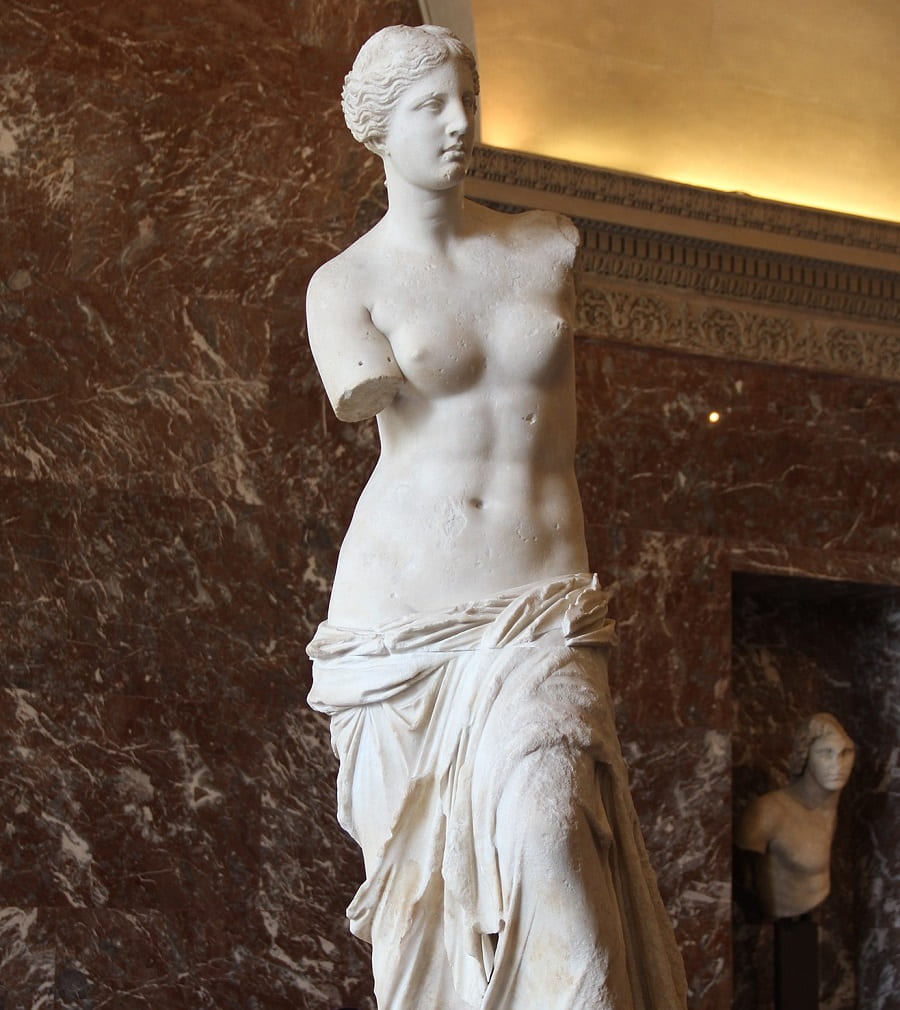
Aphrodite of Milos or the Venus de Milo statue is a legendary masterpiece that has been fascinating art lovers and historians over the centuries. This marble sculpture was made in 100 BCE and portrays the Greek goddess of beauty and love, Aphrodite. The statue depicts the goddess in a graceful slightly bent position, without her arms. It stands about 6ft 8 inches tall and this ancient masterpiece is one of the famous Greek statues.
The Venus de Milo is an example of the Hellenistic style in art, with a focus on details and movement. The flowing drapery of the sculpture and the graceful facial features embody the magnificence of the divine beauty of Aphrodite. Even without the arms that have been lost, the magical quality of the statue has only become more enigmatic, speculations may be drawn on what she originally had, perhaps a mirror, or possibly an apple.
The Venus de Milo was discovered in 1820 on the island of Milos and immediately became known worldwide. It was later acquired by the world’s largest museum, the Louvre in Paris, where it has been a famous exhibit. The statue continues to attract visitors from around the world, reflecting its cultural importance and lasting fascination.
Venus de Milo is one of the monuments that can be referred to as a monument of beauty and art of ancient Greece. Nothing is more attractive than its physical beauty but the emotional appeal that it creates thus can be considered a lasting symbol of love and beauty and how art can outlive time and to enchant generations.
2. Discobolus (Discus Thrower)
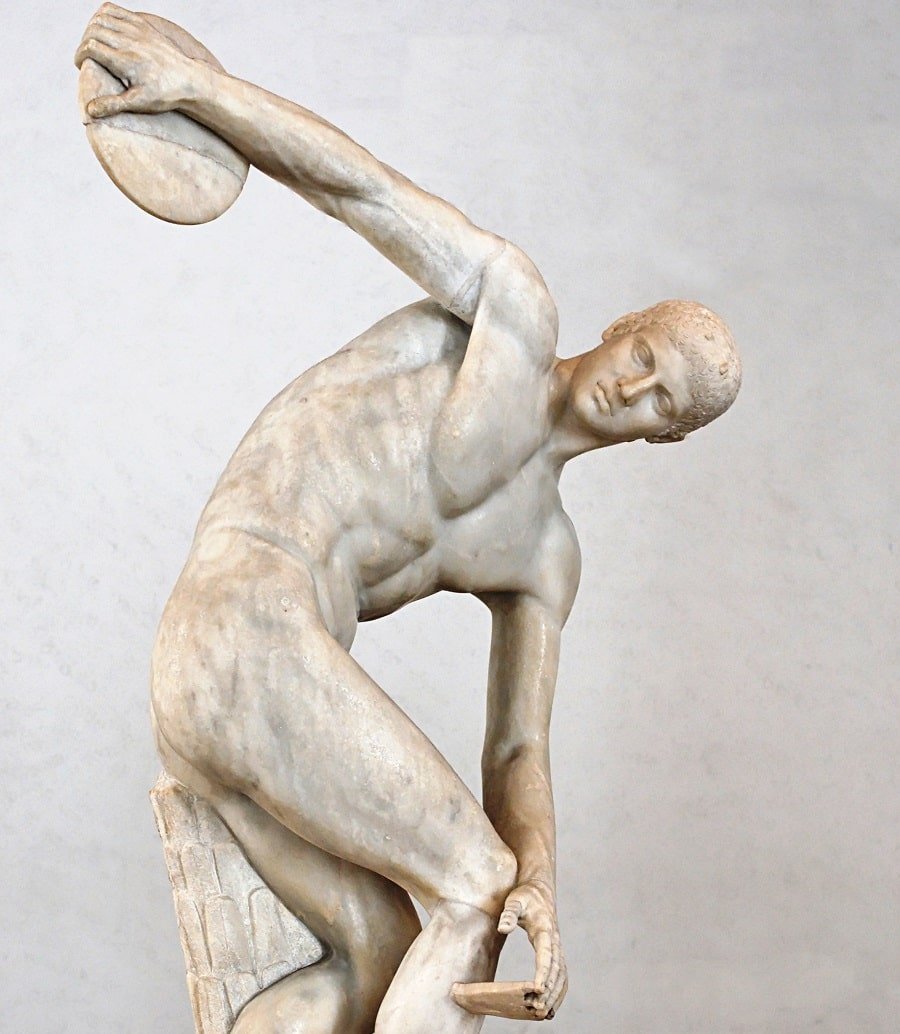
The Discobolus, or Discus Thrower, is an ancient and one of the most famous Greek statues as it reflects the sporting abilities and beauty of the human form. This wonderfull piece of art was created by the renowned artist Myron in the 5th century BCE and it captures a decisive moment of an athlete in his motions as he is about to release the discus.
The Discobolus presents a perfect example of the athletic body, where every muscle and the sinews are sculpted to reflect the impression of power and motion. The athletic posture of the athlete, his leg is straight behind, and the other one is carrying all the weight of the body with a sense of controlled energy and concentration. This movement composition is captivating because viewers can see the frozen action of concentration intensity.
Though the original bronze sculpture is lost, but some marble copies and Roman replicas survived to help us see the mastership of the sculptor. The Discobolus still inspires awe and admiration its artistic quality and eternal representation of human athleticism.
The Discobolus is nowadays the representation of human success and beauty, which even crosses the time and motivates the generations. The impact of it is evident in such areas as sports or art, where the pursuit of perfection and glorification of the human form are valued.
3. Winged Victory of Samothrace
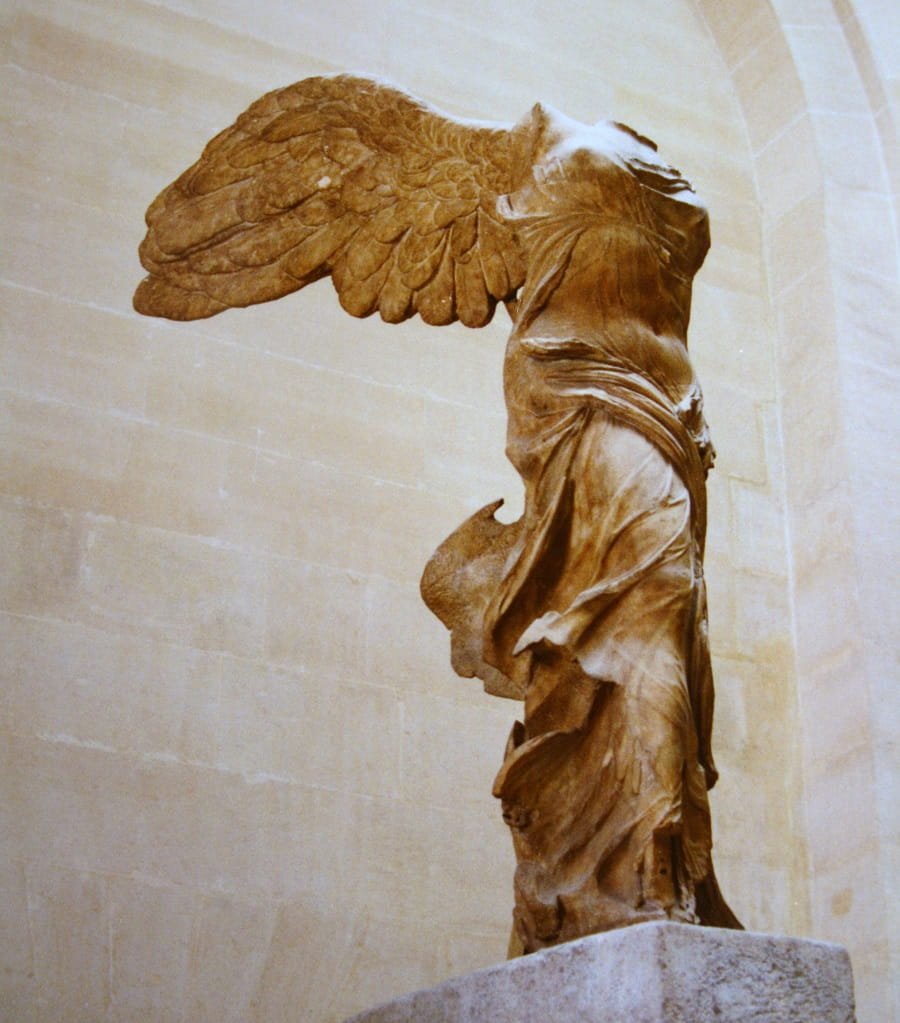
The Winged Victory of Samothrace, also known as the Nike of Samothrace is one of the famous Greek statues, even most famous statues in the world. It is a great Hellenistic sculpture that can be regarded as a monument of the artistic success of ancient Greece. Created in the 2nd century before Christ, this work of art portrays the Greek goddess of victory, Nike in a movement and powerful manner.
The Winged Victory of Samothrace is a fascinating statue standing on the top of a massive staircase of the Louvre Museum. The sculpture depicts Nike on the bow of a ship and her wings are spread, as though she has just landed. The complexity of the garments that are draping her body and the clothes that are blown about create an impression of motion and show the skill of the sculptor in her ability to create the illusion of the flowing cloth.
The Winged Victory of Samothrace is praised because of the excellent attention to details and the lightness of the depiction of the wings of the goddess. It seems the feathers are caught in a light breeze which further contributes to the dynamic movement. Even though the statue is fragmented, its head and arms are missing, the grandeur and magnificence of the sculpture is still evident, and the piece amazes the audience by its image of ethereal beauty.
It is one of the popular Greek statues not only the praise of the artistic masterpiece but also the victory and triumph. Her dominating figure and her winning posture represent the spirit of Success and Nike becomes the epitome of the ideal and dreams of the ancient Greek civilization.
4. Statue of Zeus at Olympia

The Statue of Zeus at Olympia was a giant masterpiece, which was one of the Seven Wonders of the Ancient World. This was a fear-inspiring sculpture of Zeus, the king of gods, made by a renowned sculptor Phidias, and sitting on a massive throne.
The Statue of Zeus at Olympia was a masterpiece and it expressed the talents and capabilities of the ancient Greek sculptors. It was about 40 feet high and was decorated with gold, ivory, and precious stones. The workmanship and attention to detail were impeccable, and there were elaborate carvings and fancy decorations on the throne and the god garments.
The statue was located in the Temple of Zeus in Olympia in Greece and was a holy and sacred religious and cultural icon. It was intended to honor and celebrate Zeus, and his power, majesty, and divine authority.
Unfortunately, neither the statue nor the temple has survived as the ancient fire and earthquakes destroyed them. But the old descriptions, images and records of the magnificence of the statue have enabled us to conceive of how magnificent it was and to feel its impact on future generations of artists.
Statue of Zeus at Olympia is a monumental example of the greatness and artistic level of ancient Greece. It is a reminder of what the art and sculpture of the ancient Greeks could accomplish and it is still a legacy that makes one awe and admire even to today.
5. Laocoön and His Sons

The Laocoon and His Sons sculpture is a masterpiece and one of the famous Greek statues, that hold awe-inspiring power and dramatic narration of the ancient Greek art. The marble sculpture was made in the Hellenistic era and shows the tragic scene of the Greek mythology when Laocoon, a Trojan priest, and his two sons are in a knot and are tortured by the sea serpents.
The sculpture impresses the viewers by its unbelievable detail and an extremely bright depiction of pain, anguish, and despair. The bodies of Laocoon and his sons are contorted and agonizing in the grasp of the serpents to create an impression of pain and desperation. It is incredible how the artist managed to capture the human form in such an emotionally charged manner.
The Laocoon and his Sons sculpture is displayed in Vatican Museums and remains a prime attraction, attracting people worldwide. Its influence is both in the artistic value and the cultural value. The statue is the symbol of conflict between men and the godly forces which frequently determined the lives of ancient Greeks.
This remarkable work is a sad reminder of the human condition and vulnerability of life. It touches upon the issues of victimhood, sacrifice, and the unstoppable strength of destiny. The sculpture of Laocoön and His Sons demonstrates the enduring power of art to express deep emotion and captivate audiences even today.
6. Aphrodite of Knidos
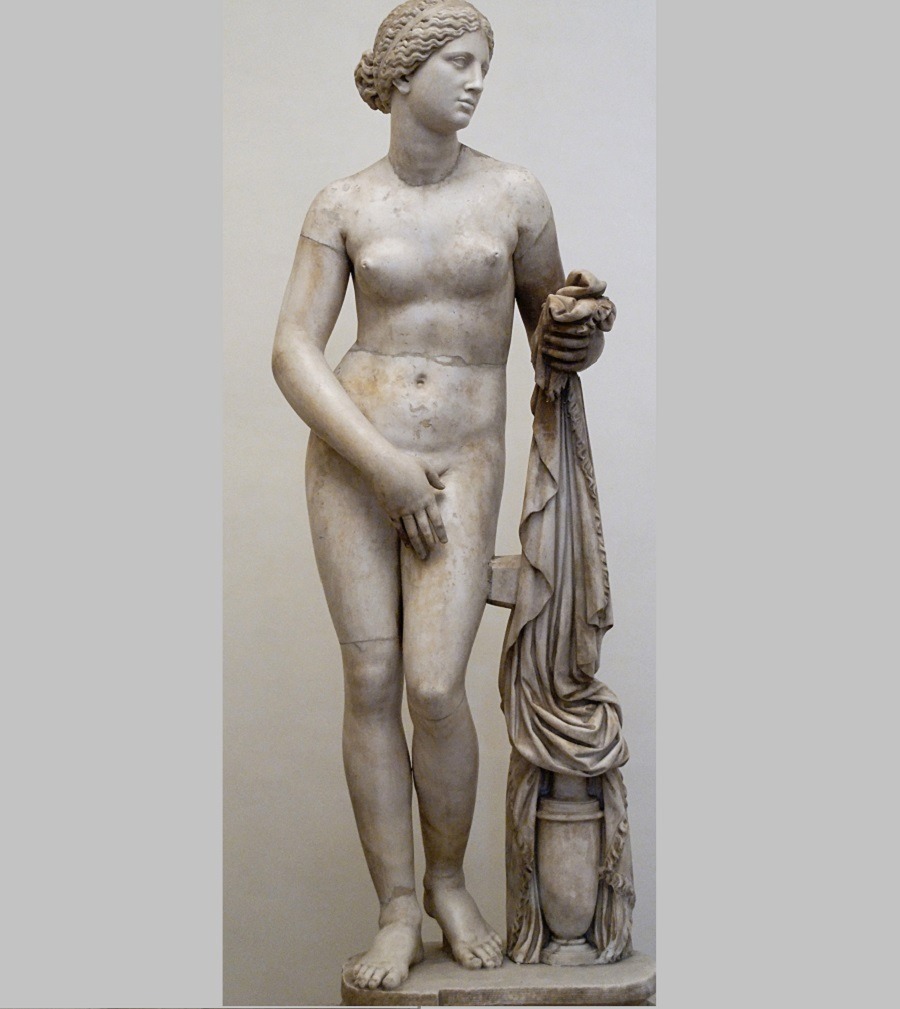
Sculpted by Praxiteles in the 4th century BCE, the Aphrodite of Knidos was the first step in the history of depicting female nudity in ancient Greek art. This is a beautiful marble sculpture of the goddess Aphrodite, the personage of love and beauty, in a humble but sensuous stance.
The Aphrodite of Knidos was the earliest life-size depiction of a nude woman in Greek sculpture. Praxiteles was not afraid to show how naked Aphrodite prepares to take a shower, hiding her nudity behind her hands and revealing her seductive charm. The statue defies the artistic conservatism of its period, presenting an amount of artistic naturalism and erotic grace never before seen in Greek art.
The art of the sculpture is quite perfect and the artist has paid attention to details, including the smooth curves of the body of Aphrodite, the movement of her drapery and the posture in a graceful motion. The small smile and calm look of the statue only add more attraction to it and create the feeling of divine beauty.
The Aphrodite of Knidos has significantly impacted the image of female beauty in art history. It represents the celebration of the female body and its relationship with the standards of love and attractiveness. The excellence of its beauty is still fascinating and fills awe and admiration in the people as how the female beauty was so well represented and the legacy of the ancient Greek art.
7. Riace Warriors
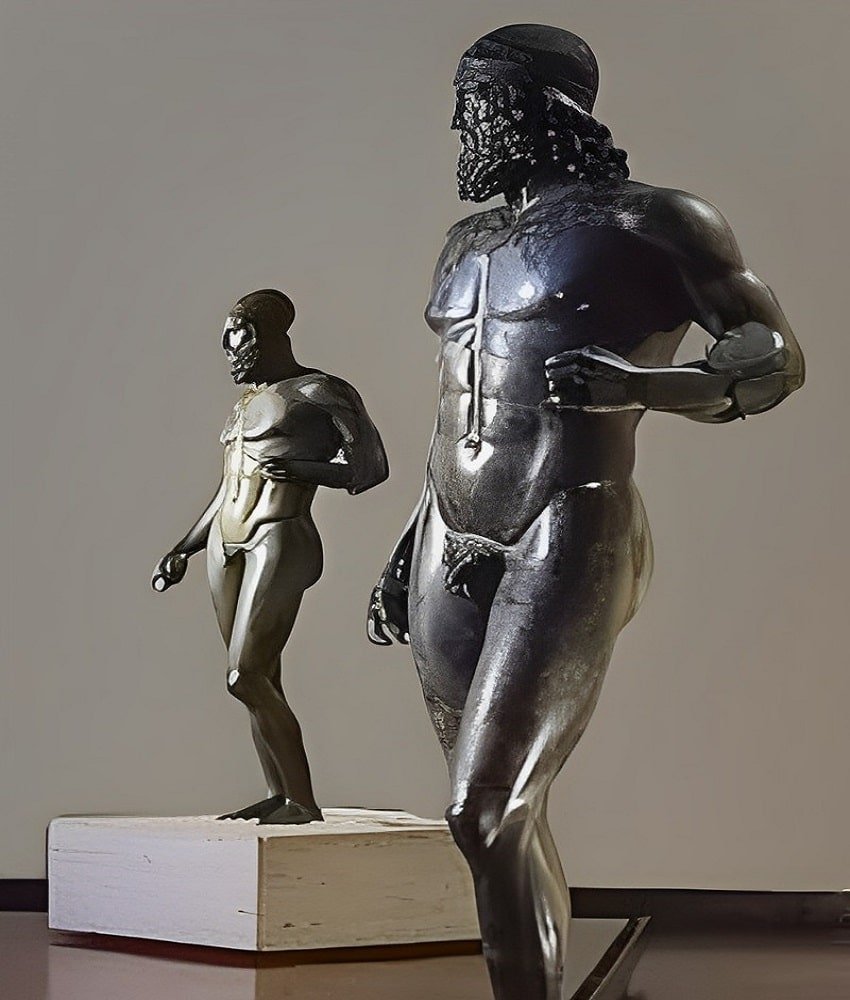
Riace Warriors are two bronze statues of Greek origin, which were found in 1972 in Riace offshore in Italy, and the two statues are a tribute to the art and skill of ancient Greek sculptors. These wonderful sculptures, which are dated 5 th century BCE, show two muscular warriors, referred to as the Riace Bronzes with detailed intricacies that summarize the spirit of human strength and heroism.
The statues reveal the art of anatomy and the art of using bronze as a sculpting material. The Riace Warriors are tall and proud with their well-cut features and the anatomically correct musculature. These sculptures are also animated by the attention to detail, e.g. the facial expression, the tune of the hair, the finely crafted armor.
The most incredible thing about the Riace Warriors is the superiority of the casting procedures used by the ancient Greece sculptors. The technical skills and artistic vision of the sculptors were evidence by the fact that the bronze that was spent to make the statues was cast in different parts and assembled. The naturalistic standing and dynamic functions of the statues create an impression of movement and realism as the sculptors manage to portray one moment of time.
Riace Warriors have provided a new perspective in the world of ancient Greek arts and its impact on the future generations. The sculptures have come to symbolize the ancient Greek bronze sculpture and this has captured the imagination of art lovers and scholars as well.
8. Hermes and the Infant Dionysus

Hermes and Infant Dionysus also called the Hermes of Praxiteles is an awe-inspiring marble creation that demonstrates the skill and expressive quality of Greek sculpture in the ancient period. This masterpiece by Praxiteles was made in the 4 th century BCE when the god Hermes was holding the young Dionysus in his hands.
The carving demonstrates the mastery and consideration of the detail of Praxiteles making it one of the most recognizable Greek statues. The smoothness of the drapery, the gentle hug of Hermes, the calmness of the faces of both figures gives a significant impression of emotional attachment. The elegantly cut lines, including the smooth lines and hair, give the sculpture a graceful and beautiful look.
The original statue is preserved in the Archaeological Museum of Olympia (though partially damaged), but it is equal as Roman copies and replicas keep its great artistry. The Hermes and the Infant Dionysus sculpture is one of the evidences of the skill of Praxiteles in depicting the human form with unsurpassed realism and sensitivity.
The god Hermes and the young Dionysus are the subject of the sculpture, which is a major mythological story. The messenger of gods, Hermes, is hugging Dionysus, the wine and ecstasy god, in his arms. This description is symbolic of the divine connection and interaction of various human facets.
9. Artemision Bronze
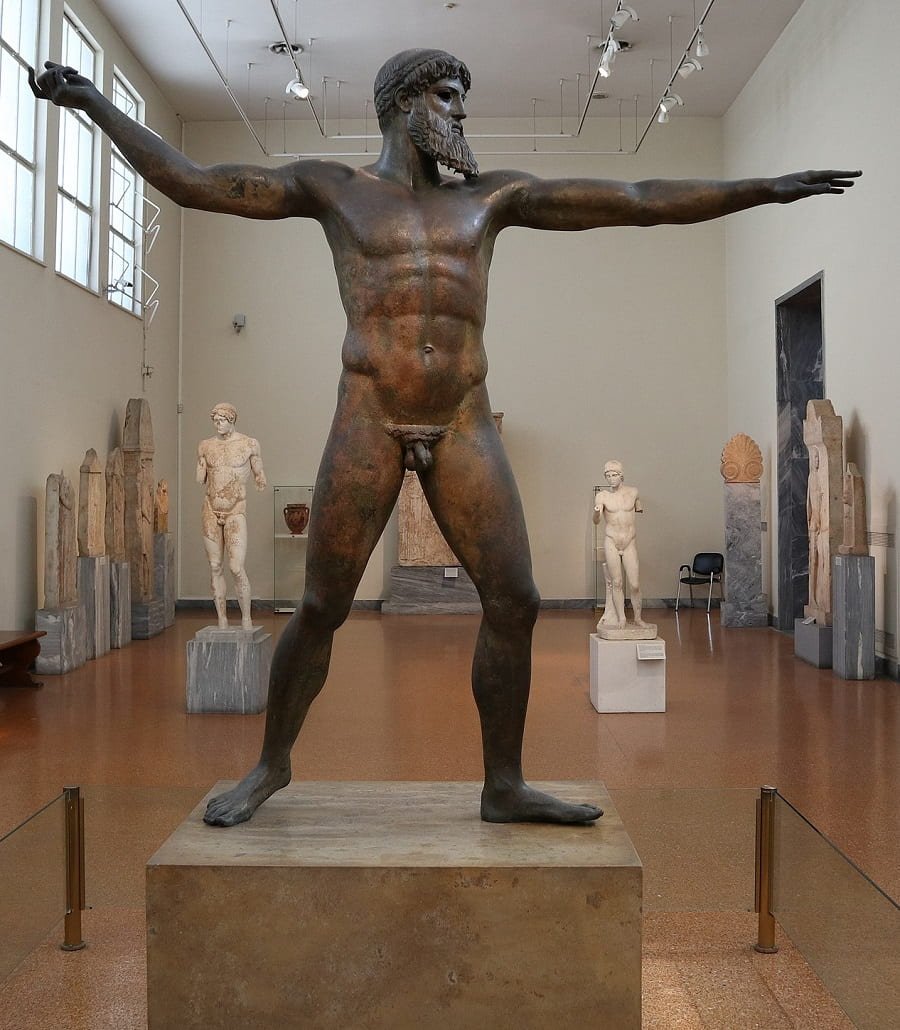
The Artemision Bronze, believed to represent either Zeus or Poseidon, is an important ancient Greek bronze sculpture from the 5th century BCE. This great sculpture, which was found in the sea, off Cape Artemision, Greece, demonstrates the high level of bronze casting, which ancient Greek sculptors had, as well as their skills to depict the human body in perfect detail.
Though the exact identification of the statue is still a question, it is believed to be that of Zeus, the king of the gods or of Poseidon, the god of the sea. The strong and dominating size of the figure with its muscular body and lively pose expresses a feeling of influence and deity.
The Artemis Bronze is about six feet and ten inches in height and is an excellent piece of work by ancient Greek sculptors in their ability to work with the bronze. Fine workmanship is seen in the elaborate detail of the features of the face, the curling strands of hair, and in the perfect musculature. The naturalistic manner and the realistic features of the statue make it an outstanding piece of art of ancient Greek sculpture.
The Artemision Bronze discovery illuminates the artistic accomplishments of ancient Greece and their extensive impact on the development of the later styles. This grandiose sculpture stands out to date, and it is a reminder of the timeless legacy and artistic skills of ancient Greek sculptors.
10. Dying Gaul

The Dying Gaul is a powerful Hellenistic sculpture that portrays a wounded Gaul warrior in his final moments. This one of the famous Greek sculptures was created during the 3rd century BCE, the statue captures the intense emotions of pain, defeat, and bravery.
The sculpture depicts a Gaul warrior lying on the ground, his body twisted in anguish and his expression tormented. The intricate details, such as the contorted pose, the meticulously rendered facial features, and the meticulous rendering of the warrior’s weaponry and attire, contribute to the emotional intensity of the piece.
The Dying Gaul is a heart-rending demonstration of human anguish and the great cost involved when confronting war. It is a memorial to the Gauls, a Celtic people that gallantly fought against the invasion of the Roman Empire. The sacrifice of the warrior and his unconquerable spirit depicted in the statue connects with the audience, inspiring empathy and admiration.
This famous statue demonstrates the high level of skills and mastery of ancient Greek sculptors. That raw emotion can be expressed in stone is a manifestation of their control. The Dying Gaul remains praised to this day as an icon of powerful symbol of heroism and resilience, reminding the eternal nature of the themes of sacrifice and vulnerability of human existence.
11. Athena Parthenos
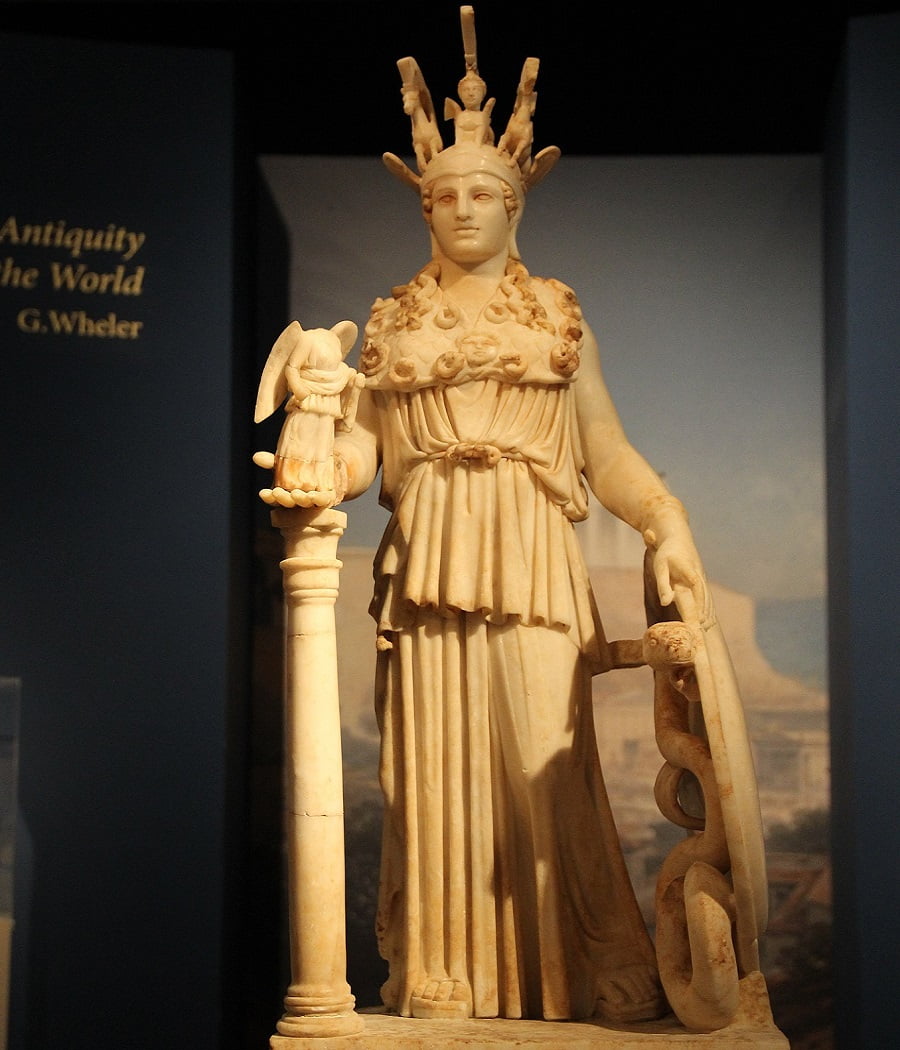
The statue of the renowned Greek sculptor Phidias is the awe-inspiring depiction of the Greek goddess Athena. It is a colossal chryselephantine statue (gold and ivory) that once adorned the Parthenon, the legendary temple on the Acropolis of Athens.
The statue was a masterpiece of ancient Greek sculpture, the original piece of art was composed of gold and ivory, it is one of the tallest statues of the Greek, more than 38 feet high, the Athena Parthenos statue. It portrayed the goddess of wisdom, courage and strategic warfare Athena with a beautiful detail and splendor. The sculpture was depicting Athena with a fully armed statue with a spear in one hand and a shield in the other.
Athena Parthenos statue was a masterwork of craftsmanship. Gold and ivory were used in its construction giving it a luxurious feel and the elaborate carvings and fine drapery accentuated the divine nature of the goddess. The face of the statue was calm and wise and it fascinated anyone who saw it.
The statue of Athena Parthenos had immense cultural implications besides being an art masterpiece. It was a representation of the protection of Athena over Athens and an indicator of the submission of the city to wisdom and knowledge. The fact that the statue was placed in the Parthenon, a temple to Athena, supported the devotion of the city to their deity.
12. Apollo Belvedere
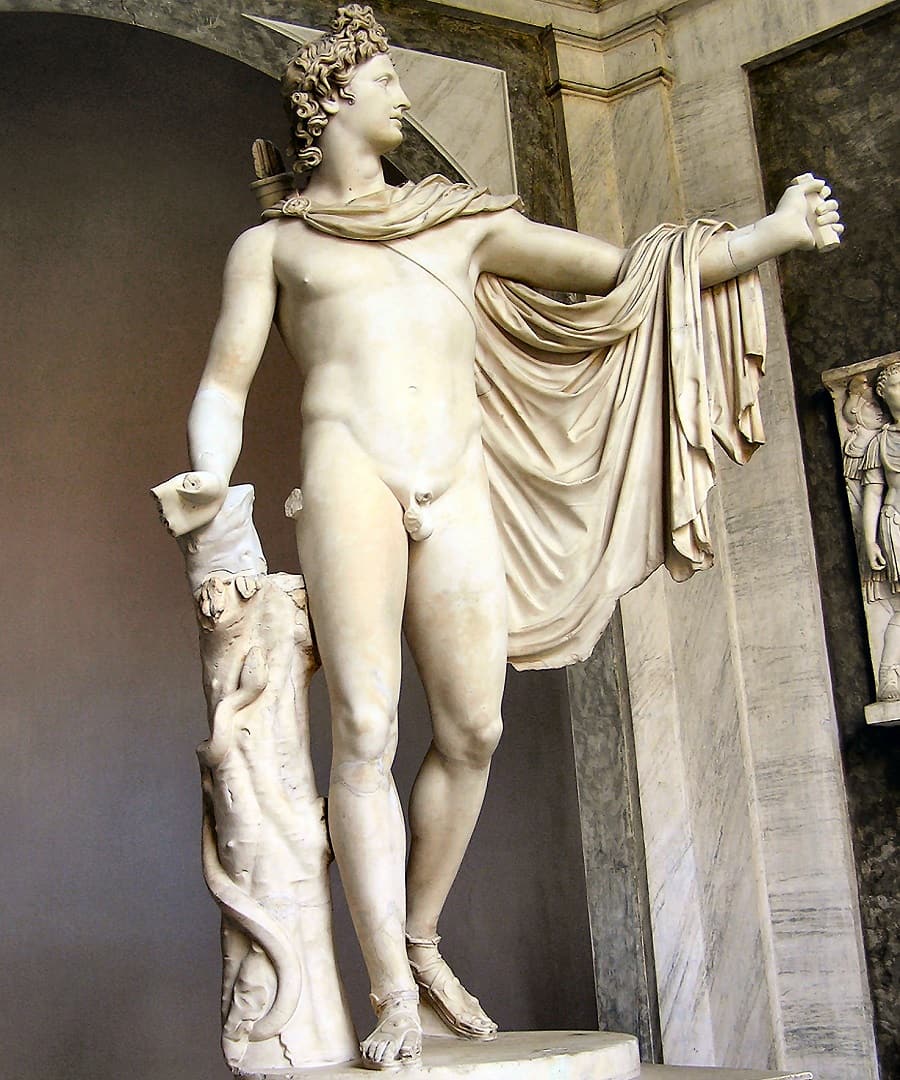
One of the renowned Greek marble sculpture is the Apollo Belvedere which portrays the Greek god Apollo. This iconic work was a Roman marble copy of a Greek bronze original and it represents the idealized beauty and elegance of the art in ancient Greece.
The Apollo Belvedere is a monument of the eternal beauty of classical art. The sculpture depicts Apollo in a motion, his arm in the air as though he was going to release his divine forces. All the details of the sculpture are full of grace and harmony, even the locks of his hair flowing over his head are graceful and harmonious.
The Apollo Belvedere is a representation of youthful beauty and the ideals of ancient Greek aesthetics. The perfectly balanced body of the god, his calm face and idealistic appearance have stimulated artists and admirers of art through centuries.
This great sculpture is named after Belvedere Courtyard located in the Vatican Museums, where it is located. It has penetrated the farthest corners of the world influencing the artistic portrayals of Apollo and creating an indelible mark on the artistic descendants.
The Apollo Belvedere is the masterpiece of the ancient Greek art, as well as of the divine perfection and the artistic excellence. Its eternal beauty still fascinates people, making it possible to enjoy the unity of physical beauty and spiritual forces that have characterized ancient Greek sculpture.
13. The Boxer of Quirinal
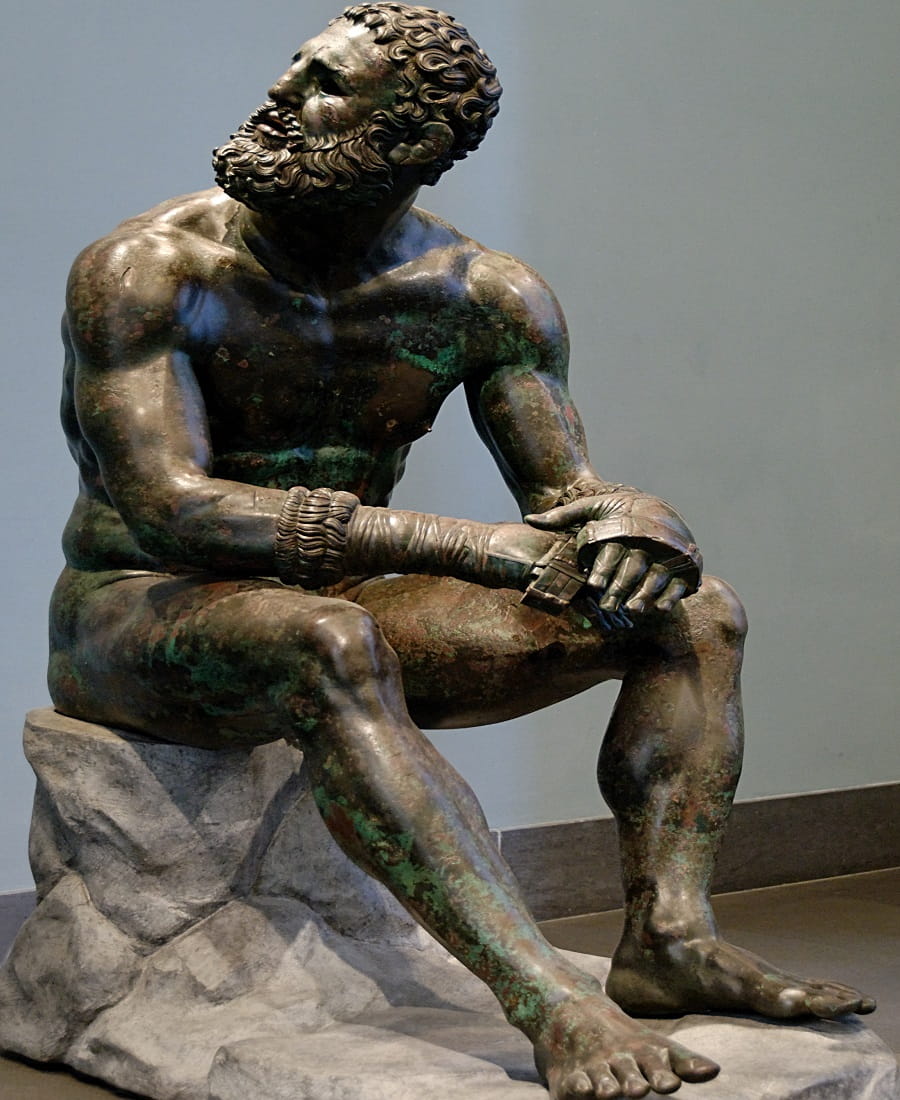
The Boxer of Quirinal or the Terme Boxer is a remarkable bronze figure that provided an insight into the sporting life of ancient Greece and the physical and emotional impact of sport on its participants. Created in the 1st century BCE, this is a captivating sculpture of a tired and beaten boxer who showed the grit, determination, and vulnerability of these venerated competitors.
The statue also demonstrates the distressed body of the boxer, and his muscular body is clearly seen as having the wounds and bruises. His face displays a feeling of fatigue, suffering and stoic determination. The attention of the sculptor to detail, to the expressive features of the face of the boxer and the texture of his skin and even the correctness of his boxing gloves give the sculpture an amazing element of realism and the emotional aspect.
Boxer of Quirinal is a symbol of tribulations and sacrifices that the players in ancient Greece made. It is a commemoration of their hard work, patience and spirit. This statue is a rare insight into the corporeality and the intensity of emotion of ancient Greek athletic events and gives a lot of information to the values and ideals of the ancient Greek society.
This beautiful Boxer of Quirinal statue is one of the most popular Greek statues, that captivating presence continues to captivate viewers, inspiring admiration for the indomitable spirit of athletes throughout history.
14. Antikythera Ephebe
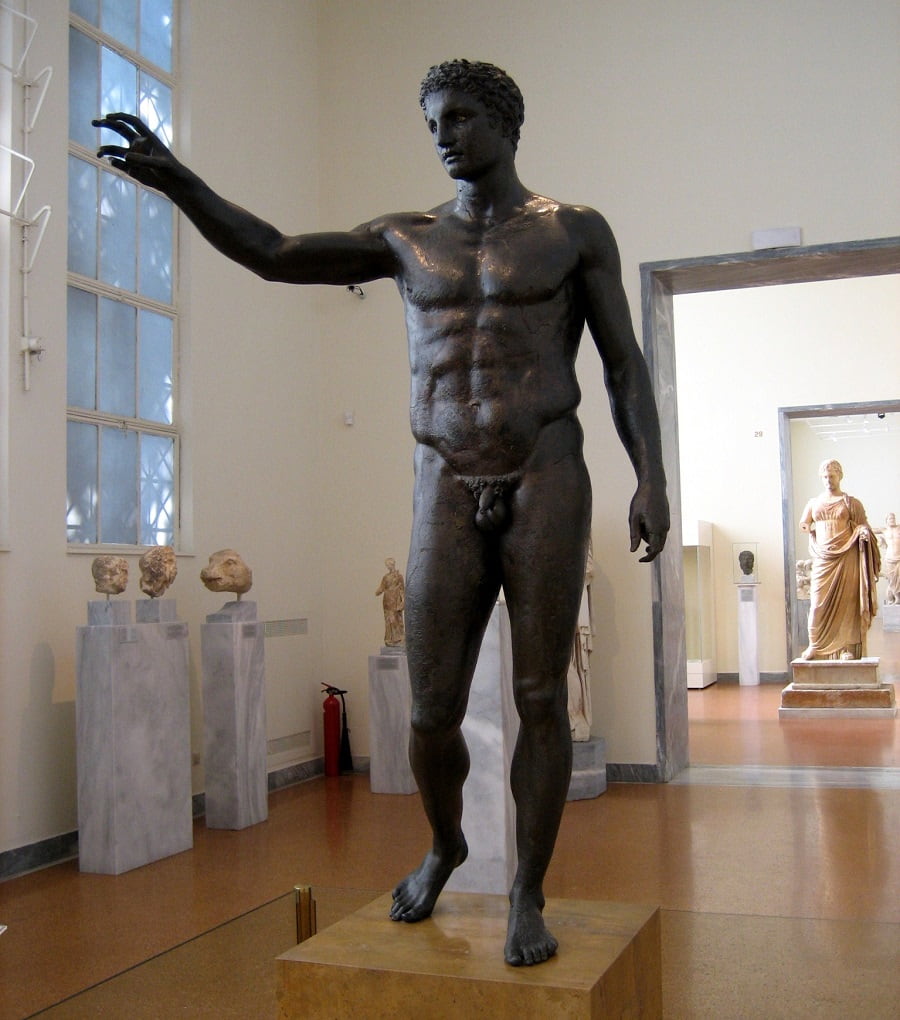
The Antikythera Ephebe is an interesting work of bronze that provides an insight into the artistic and technological supremacy of ancient Greece. This is a well-known Greek statue that was found in a shipwreck in the coast of Antikythera, Greece and is estimated to date back to the 1st century BCE.
The Antikythera Ephebe is a representation of a young man in a contrapposto pose where one leg is straining the weight of the entire body with the other one being relaxed. The fine details, both the muscles so finely and accurately worked, and the exquisite features of the faces, display the great power of the ancient Greek bronze sculptors.
The Antikythera Ephebe is unusual because of its mysterious presence. The figure is still not properly identified; some theories suppose that it might be a god or a hero or even a winning sportsman. The fact that the statue has mystery is also an attraction to the statue and it encourages speculation and interpretation.
The Antikythera Ephebe is not only a work of art but it also holds historical and scientific importance. The Antikythera shipwreck in which the statue was discovered provided numerous items and the famous Antikythera Mechanism- an ancient analog computer. This great finding illuminated the technological advancement of the ancient Greeks.
15. The Charioteer of Delphi
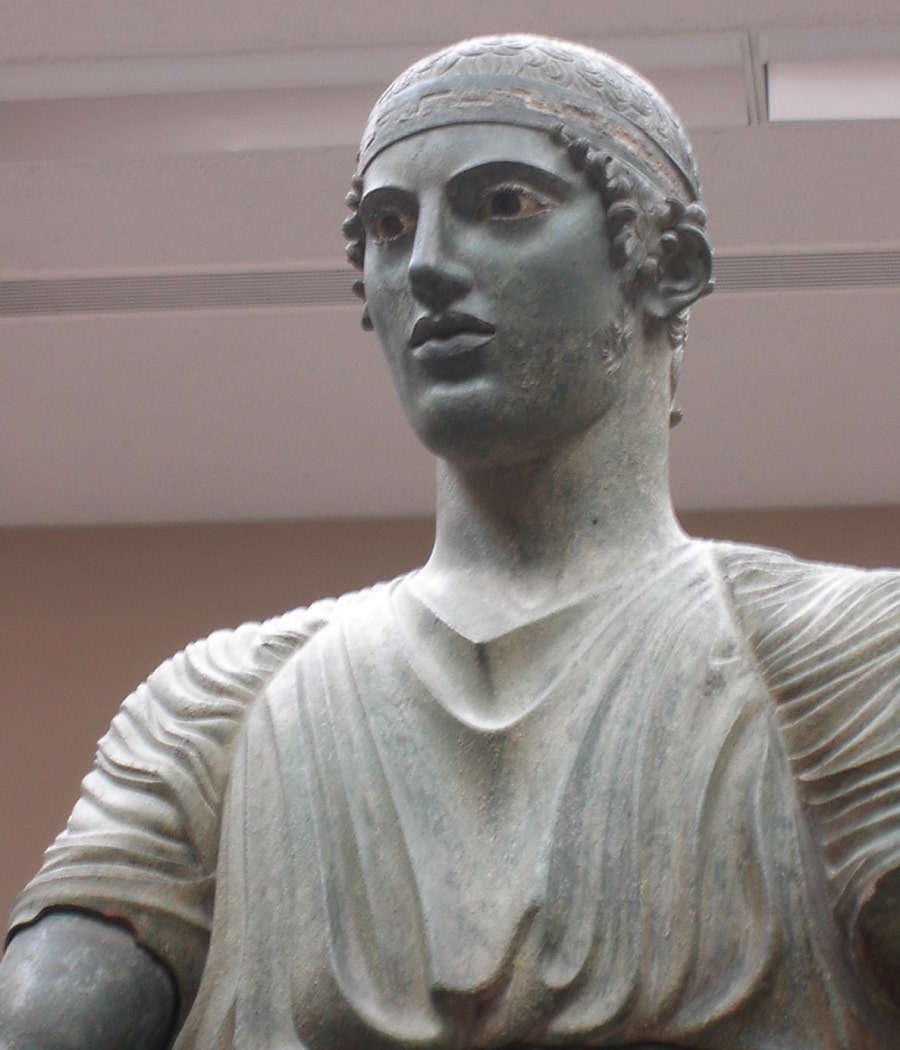
Charioteer of Delphi is a unique bronze sculpture that can be considered as the evidence of the victory and glory of ancient Greek chariot racing. This is a fascinating sculpture, carved in the 5th century BCE, that incites a charioteer in the winning position in a state of high concentration and emotion.
The Charioteer of Delphi stands out as a striking example of the classical Greek style of sculpture. The statue is almost life-size tall and exhibits the perfection of the human body, the small details making the figure look alive. The eyes of the charioteer are slightly turned down and his concentration creates the impression of unbending determination and concentration.
The smooth lines of the statue, including both the facial expression and the finely executed clothes, are typical of the work of ancient Greek sculptors. Drapery of the robes of the charioteer and their numerous folds and flowing motion provide the sculpture with a certain dynamism.
The Charioteer of Delphi reminds us of the greatness and importance of the chariot racing of the ancient Greek society. It is a reminder of victory and pride and it is a reminder of the athleticism, skill, and intense competition that defined these races. The elegance of the beauty of the statue and the impressive aura which accompanies it up to this day make people admire the achievements of ancient Greeks.
Finally, the 15 Greek statues that were discussed in this article are a demonstration of the perfect artistic works of ancient Greece. Every sculpture represents a different feature of Greek mythology, history, and cultural value and continues to have a lasting impact on the world of art. Their beauty and craftsmanship and the skill of telling stories have made these famous Greek statues remain popular and they remain as the milestones in the history of art