
Last Updated on 26th November 2025 by admin
Science is a means of study that is the this whole universe, from the smallest particles to the greatest functions of the brain. There is always something new and intriguing to explore. In this article, we will explore about some of the difficult yet amazing science facts that will inspire amazement and wonder. With respect to physics, biology or other interconnected areas or subjects; these facts will give you a new appreciation in the natural world surrounding us and for the incredible scientists who have discovered. Check out these below 10 amazing scientific facts that will blow your mind:
Table of Contents
1. Amazon Forest is the Lungs of the Earth

The Amazon is the largest rainforest in the world at 2.7 million square miles (6.7 million sq km). One of the most fascinating aspects is in its ability to produce oxygen and dispose carbon dioxide which helps to regulate the Earth’s climate. The Amazon rainforest is commonly referred to the “Lungs of the Earth”.
The Amazon rainforest spans over nine different countries: Brazil, Peru, Colombia, Bolivia, Venezuela, Suriname, Guyana, French Guiana, and Ecuador. The Amazon River also flows here, which is one of the most famous rivers in the world. The Amazon River is also largest river in the world based on several volume measurements which carries more water than any other river.
2. The Journey of Photons
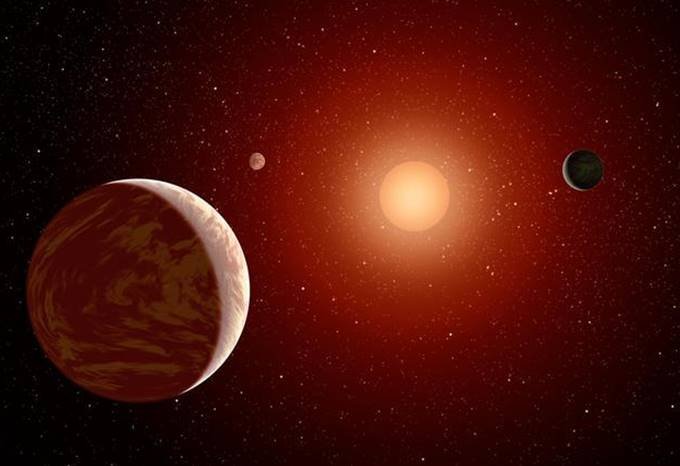
As we already know that, all the light that we receive is in the form of a stream of photons that are propagating through the space-time continuum as electromagnetic waves. However, an interesting science fact is that photons take 40,000 years to travel from the core of the Sun to the surface, and only 8 minutes to make the journey to the Earth.
The photons are being constantly absorbed and re-emitted by the atoms in the plasma that comprises the Sun’s composition, thus slowing its journey. This process, commonly known as radiative transfer, takes several thousand years to occur.
3. The Fundamentals of Atoms and their Properties
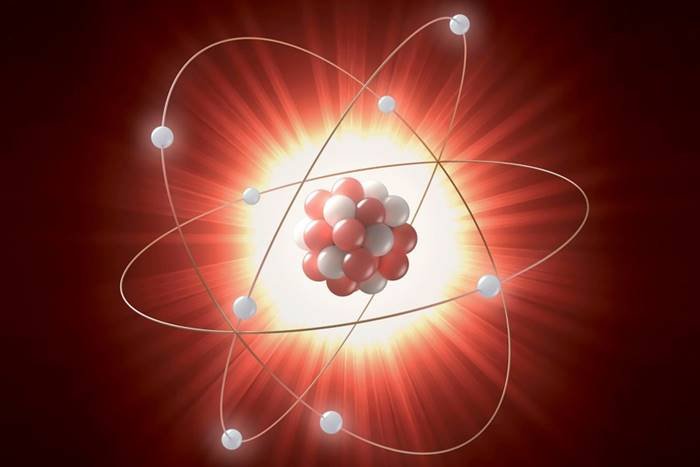
Every material in the universe is made up of atoms – an atom is the smallest possible particle of an element that can exist alone, or in combination with other atoms. The atom is the smallest component unit of a chemical element that retains the properties of that element. Believe it or not, there are 8 times as many atoms in 1 teaspoon of water compared to the number of teaspoons in the entire Atlantic Ocean.
It is an amazing scientific fact because atoms are so small, and because they are so small, they can become exceedingly numerous with small amounts of sample matter.
4. A Human Walk about 75,000 Miles in their Lifetime
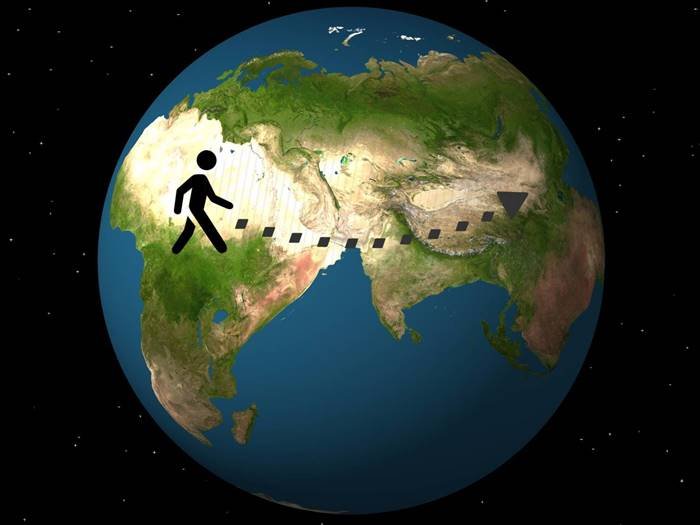
Have you thought about how many miles the average person walks in their life? The average person in their lifetime walks about 75,000 miles; If someone walked in a complete circle around the earth, then the person would have completed three-earth walk in their lifetime.
In other words, that is like walking around the equator three times or walking from NYC to Los Angeles and back literally more than 20 times!
5. Venus & Uranus Rotates Clockwise

There are 9 planets in our solar system, including Mercury, Venus, Earth, Mars, Jupiter, Saturn, Uranus, and Neptune. With the exception of one, all of these planets rotate in a counter-clockwise motion as viewed from their North Poles, with only Venus and Uranus rotating opposite direction. Venus and Uranus rotate in a clockwise direction from above the planet’s North poles. The rest of the planets rotate in a counter-clockwise motion as viewed from their North Poles.
Venus rotates slowly and takes approximately 243 Earth days in order to complete a rotation of 360 degrees, whereas Uranus’ axial tilt is at a much steeper angle than the other planets at 98 degrees.
6. Babies have Around 100 more Bones than Adults

As we know, an adult has a total of 206 bones, but did you know a baby contains about 305 bones, which is about 100 more than an adult? This unusual scientific fact is due to the baby not having too many bones; but instead, most of the baby’s bones are not completely formed, and the different bones are separated by soft cartilage, which has yet to become hard bone tissue.
When the baby continues to develop, some of these unformed bones become formed and fuse into the next bone making the total number of bones decrease. When a person becomes an adult, most of the cartilage in their body becomes bone tissue and allows for a lower bone count.
7. Incredible Length of DNA in the Human Body
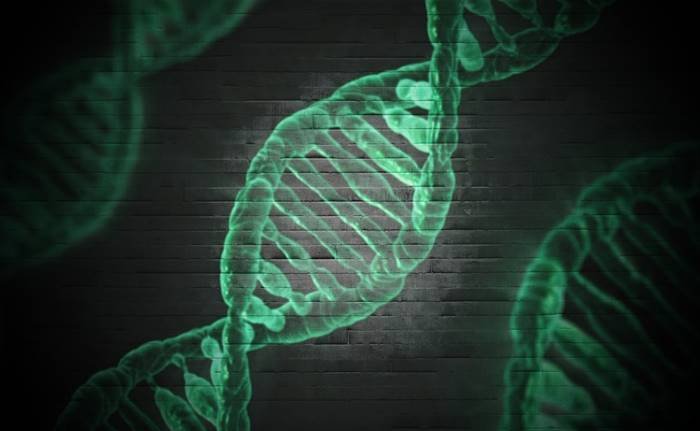
DNA, or deoxyribonucleic acid, is the genetic material found in nearly all organisms, including humans. However, here’s another incredible scientific fact that will amaze you. Did you know that there is enough DNA in the average human body, if stretched end-to-end, it is estimated to be 93 billion miles or 150 billion kilometers long? This is far enough to stretch from the sun to Pluto and back 17 times!
In each cell of the human body, the total length of DNA is estimated to be about 2 meters long and we are made up of trillions of cells in the human body. After doing the math, in a typical person, the total length of DNA amounts to around 150 billion kilometers of DNA, or roughly 93 billion miles.
8. Some Chemical Elements Explode when Contact with Water

Some metals are highly reactive, they explode on contact with water. These chemical elements include lithium, potassium, rubidium, sodium, and cesium.
This is due to the amazing scientific fact that these elements have a low ionization energy, meaning they will more easily give an electron to become positively charged ions. In reaction with water, they produce hydrogen gas and result in a very alkaline solution that can be dangerous if mishandled.
9. Human Produces about 2.4 million Red Blood Cells per Second
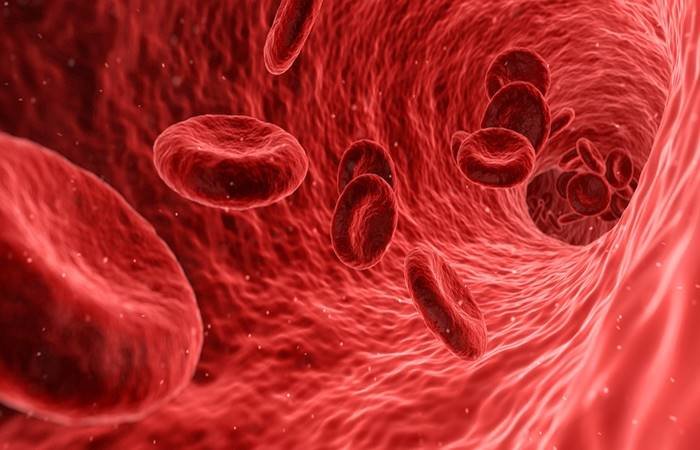
Are you aware of this fascinating scientific fact that an adult human’s body will produce around 2.4 million red blood cells every second on average, and is primarily carried out in the bone marrow. It takes 60 seconds for one blood cell to travel the entire circuit of the body.
Such production is required to replace the close to 1011 (100 billion) red blood cells that are either lost, destroyed or unused daily, through normal bodily function. Red blood cells are essential because they carry oxygen from the lungs to the tissues of the body as well as assisting with the elimination of carbon dioxide from the body.
10. Babies Comes with Only One Cup of Blood

Here’s one of the amazing scientific facts to learn: when a newborn baby arrives in this world, there is only one cup or 8 ounces of blood in their body at birth. This is owing to our fetal circulatory system that functions to circulate oxygen and nutrients through the placenta and not through our lungs and blood system.
Because of this, the blood volume of a newborn baby increases greatly during the first weeks, once the lungs begin to function, and the circulatory system begin to fulfill their role in supporting the body. Another interesting fact about babies: Approximaely 1 out of 3,000 newborns is born with at least one tooth. These are called natal teeth and may be fully formed or just small, soft nubs.
In summary, science is an inexhaustibly intriguing subject that continuously surprises us with new discoveries and knowledge about the world around us. By learning about amazing science facts, we begin to understand, and more importantly appreciate, the detail and complexity of the natural world, as well as the amazing work of scientists who have dedicated their lives to quarrying, or contributing, knowledge to its understanding.