Last Updated on 26th November 2025 by admin
Introduction
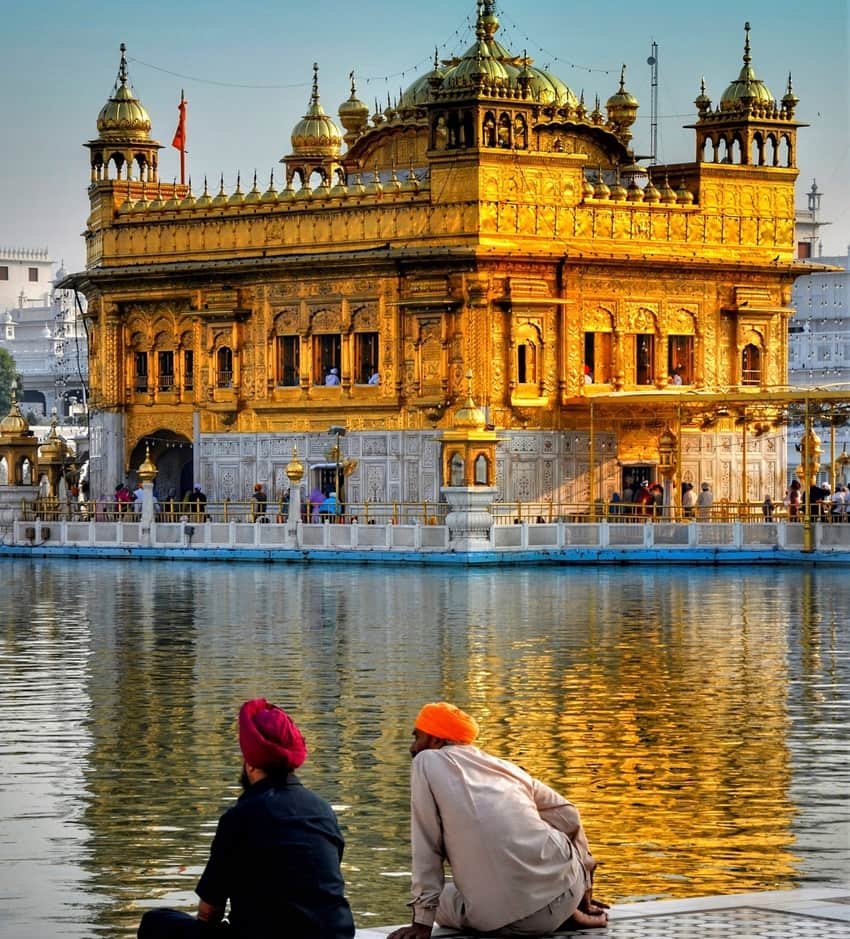
The world-famous Golden Temple (located in Amritsar, Punjab i.e. in Northern part of India), one of the greatest religious places. The Golden Temple, officially known as Sri Harmandir Sahib, is the holiest shrine of the Sikh faith. It is a magnificent architectural marvel that attracts millions of pilgrims and tourists from around the world each year, making it one of the famous landmarks in India.
History of the Golden Temple
Guru Arjan Dev was the fourth Sikh Guru who constructed the Golden Temple in the 16 th (1581) century. He built a central pool, called the Amrit Sarovar that became a center of spiritual practice and congregations. The temple was originally called Harmandir Sahib, which means “the abode of God.” It was called the “Golden Temple” in the 19th century due to the exterior being gilded.
The Golden Temple has undergone trials and tribulations throughout its history. Guru Arjan Dev was jailed and executed in 1609 by Mughal emperor Jahangir because of his adamant stand against religious persecution. During the 18 th century, the temple was destroyed again by the Afghanistan invaders. But it was carefully repaired by Sikh warriors, the Khalsa, every time.
The founder of the Sikh Empire was Maharaja Ranjit Singh who transformed the Golden Temple in the early 19th century. He made an exquisite rebuilding, of marble and copper on gold foil.
The Golden Temple has been demolished and reconstructed many times in the course of its history. The temple was extensively damaged in the year 1984 in the Operation Blue Star, an Indian military action to clear Sikh militants in the complex of the temple. The temple was after restored to its former magnificence.
Architecture of the Golden Temple
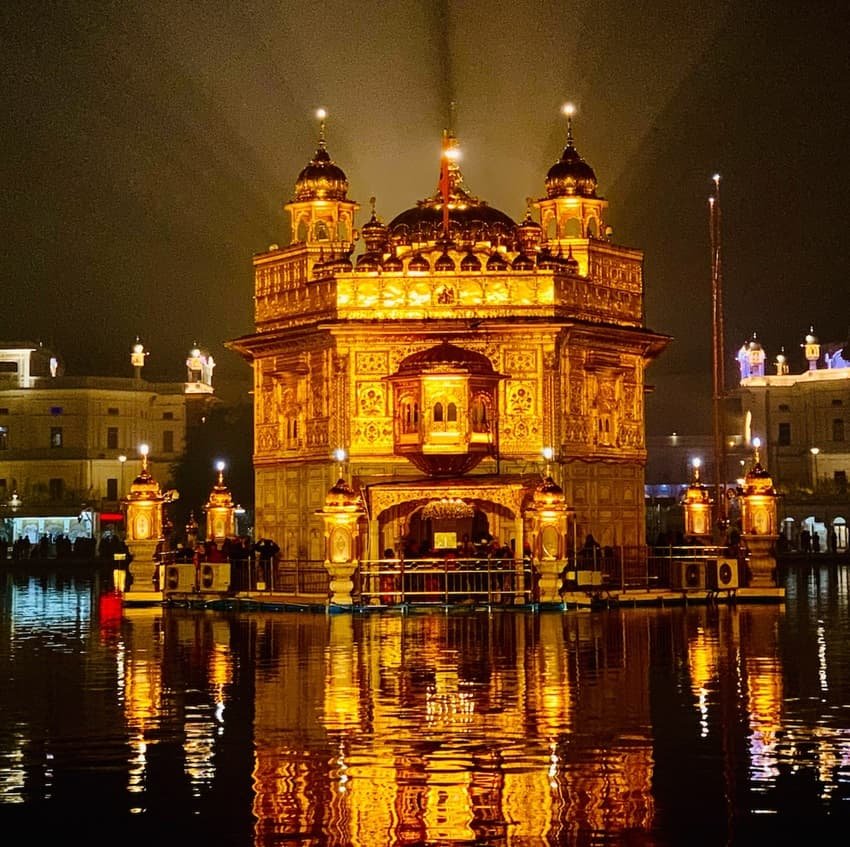
Sri Harmandir Sahib, the design of this great architectural wonder is a combination of Hindu-Rajput and Indo-Islamic designs. It is very symbolic in its design and in expressing the main idea of Sikhism. The temple itself is a four-story building, which is constructed of white marble and granite. It is very symbolic in its design and in expressing the main idea of Sikhism.
Key Features of the Golden Temple’s Architecture
Central Shrine: The main worshiping hall is known as Harmandir Sahib, which is a two-story building constructed at a square platform in the center of the Amrit Sarovar, the holy pool. The bottom part is marble and the top one is covered with gold leaves which gives the temple its golden look historically.
Amrit Sarovar: The Amrit Sarovar or pool of nectar is a sacred pool, which is said to enclose the main shrine. Sikhs find it as a sacred site to take a bath and conduct ablutions. The water in the pool is said to be purifying and curing.
Four Entrances: There are four entrances of the Golden Temple and each faces a specific direction. This is an allusion to the fact that the temple was accessible to all types of people in society and that they could access the divine in any direction.
Golden Dome: The Golden Temple has a golden dome, the main adornment of the temple where it is crowned, and this is located on the central shrine. The dome is also covered with elaborate florid designs and represents the focus of Sikhism on spiritual awakening and Divine inspiration.
Marble Parikrama: This is the marble parikrama or walkway, which is encircling the main shrine and the Amrit Sarovar. It offers a route through which worshippers can walk around the sacred place, where they make prayers and meditate on their religious experience.
Intricate Artwork and Decor: The Golden Temple has detailed artwork and decoration such as marble inlay and gold leaf and painted frescoes. These features resemble the rich heritage of art of the Indian subcontinent and add to the beauty that is awe-inspiring to the temple.
The architectural style of the Golden Temple is a monument to the rich Indian culture and the distinct character of Sikhism. It is an icon of peace, unity, and spirituality, which inspires the people in the world.
The True Meaning of “Harmandir Sahib”
The famous Golden Temple is located in the center of “Harmandir Sahib” (also known as Harimandir Sahib). The spiritual destination also starts when one comes to know about “Hari” (which is also considered a name for Lord Vishnu in Hinduism) that means “the supreme power” and “mandir” that means “temple”. Therefore, Harmandir Sahib is the temple of supreme power that one can feel by sitting there near to the golden temple.
Guru Sahib’s sacrifice to feel the energy of spiritualism
Fifth Sikh Guru Arjan Dev who laid the foundation stone of Golden Temple illustrates to us that how the spiritualism is produced from sacrificing the life to sit above the place of firework. It was the month of June when Guru Sahib was punished to face the warmth of the fire. How the legs of Guru Sahib are burnt and Guru Sahib feels nothing because he himself thinks that he is in nothingness where the joy of spiritualism can be implemented.
Visiting the Golden Temple
A visit to the Golden Temple can be a very enriching experience that provides one with an insight into the core of Sikhism. The Golden Temple is open 24 hours every day of the week. The temple has a welcoming nature at all times. Nevertheless, the morning and evening hours are the most crowded time in the temple. The following is a detailed pack list on how to plan your visit:
Planning Your Trip
Time to Visit: The Golden Temple is open 24 hours daily and 7 days a week. The most frequented however are during the early morning during which the opening ceremony (Palki Sahib) takes place and in the evening during which the closing ceremony (Ardas) takes place.
Dress Code: Decent dressing is needed. Do not wear shorts, sleeveless tops or low cut clothes. Wear a scarf or bandana on your head, and take of your shoes, before entering the complex of temples.
Langar: The temple provides a free meal to everyone that is vegetarian, called langar. It is an excellent experience of Sikh hospitality, and sense of community.
Preparation and Conduct
Respectful Conduct: Attitude should be respectful and quiet while in the temple area. It is not advisable to have loud discussions, take photographs or use mobile phones in the sanctum sanctorum.
Head Covering: Cover your head with a scarf or bandana, it is a sign of respect. It is also available at the kar seva (volunteer service) stall at the entrance which can be borrowed.
Footwear Removal: Make sure to remove your shoes before entering the temple complex area. Shoe racks are also provided where footwear is stored.
Experiencing the Temple
Amrit Sarovar: Take a dip in the Amrit Sarovar, the holy pool around the temple to witness its spiritual cleansing power.
Holy Scriptures: Granthis (scriptural readers) recite the Sikh holy book of the sacred scriptures-one of them, the Guru Granth Sahib.
Langar: Participate in the langar, the communal meal, to experience the Sikh tradition of hospitality and equality.
Golden Dome: The temple was decorated with some of the most beautiful marble and gold leaf on its grand dome.
Surroundings: Explore the temple complex, including the Central Sikh Museum, which showcases Sikh history and artifacts.
Celebrating Festivals in Golden Temple
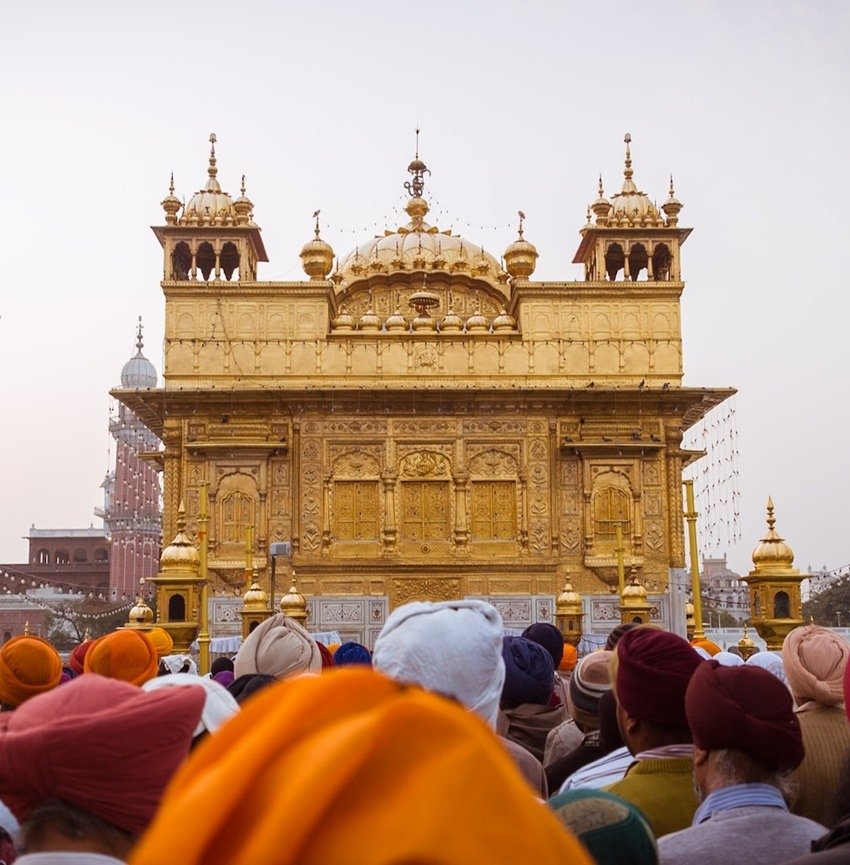
The temple is lively all year round with the colorful celebrations of the rich traditions and history of Sikhism. The following are some of the most significant festivals that are observed at the Golden Temple:
Guru Nanak Jayanti: It is a festival that is celebrated on the anniversary of the birth of Guru Nanak Dev, the Sikhism founder. Langur Mob is celebrated on the full moon day during the Kartik (October-November month). The Golden Temple is lit up and covered with flowers during the festival, and the Guru Granth Sahib, the sacred book of Sikhism, is read throughout the festival.
Baisakhi: This is a festival commemorating the founding of the Khalsa, the Sikh community, by Guru Gobind Singh Ji in 1699. It falls on the first day of the month of Vaisakh (April-May). The festivities include a Nagar Kirtan or a procession, where the holy book, Guru Granth Sahib, is taken through the streets of Amritsar.
Diwali: It is a festival of lights celebrated by the people of all religions living in India. On this occasion, the Golden Temple celebrates this festival with special lighting arrangements including fireworks.
Maghi: This is a major festival that signals the beginning of the harvest season in Punjab. Celebrated on the last day of the month of Maghar, that is, in January-February, a big fair is held at the Golden Temple complex during the festival.
Besides these major festivals, many other smaller festivals and celebrations take place around the year at the Golden Temple. This provides opportunities for Sikhs to get together in order to celebrate their faith and culture.
If you are visiting the Golden Temple during a festival, then you should keep in mind that there are going to be crowds and make your arrangements accordingly. It would also do you a world of good to learn more about the customs peculiar to the festival you are attending.